WVXU: Coronavirus hitting rural communities hard
UC assistant professor Diego Cuadros explains latest national trends for COVID-19

WVXU's Cincinnati Edition talked to a University of Cincinnati epidemiologist about how mortality rates from COVID-19 are surging now in rural America.
Assistant professor Diego Cuadros, director of UC's Health Geography and Disease Modeling Lab, told host Michael Monks that the pandemic is especially dire in rural counties of high-infection states.
Cuadros is part of UC's Geospatial Health Advising Group, which has issued several policy briefs to help health officials respond to the global pandemic. The group is composed of health, geography and statistical modeling experts from the UC College of Pharmacy and the UC College of Arts and Sciences.
"We started in Ohio analyzing health data in Ohio and looking at differences between rural and urban areas. The epidemic spread faster in urban than rural areas. But that was in the early stages of the epidemic," Cuadros said.
But now, Cuadros said, rural areas are seeing a surge in infections with higher mortality rates in rural counties of high-infection states. This is cause for concern because the population in rural areas skews older than that of urban areas. Likewise, rural areas typically have fewer medical resources, particularly intensive-care units.
"The epidemic doesn't behave exactly the same everywhere," Cuadros said.
Listen to the Cincinnati Edition segment.
Read more about Diego Cuadros' work in the latest issue of UC Magazine.
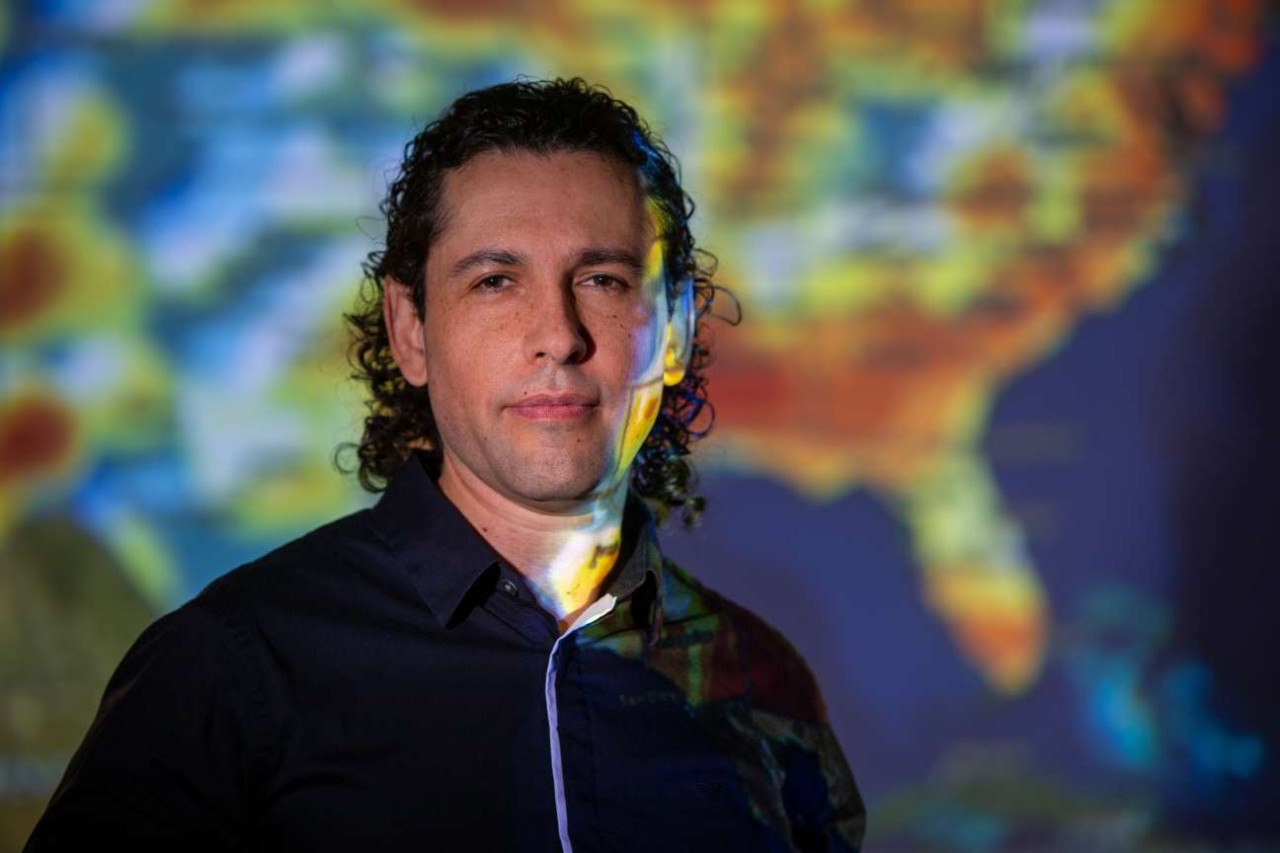
Featured image at top: UC assistant professor of geography Diego Cuadros is part of UC's Geospatial Health Advising Group, which has been tracking the COVID-19 pandemic in Ohio and the United States. Photo/Andrew Higley/UC Creative + Brand

A bivariate map compares mortality rates in the early months of the COVID-19 pandemic compared to the most recent months. Dark green indicates high mortality rates in the early part of the pandemic. Purple indicates high mortality in more recent months. And black represents high mortality on both periods. Graphic/UC Geospatial Health Advising Group
Related Stories
Sugar overload killing hearts
November 10, 2025
Two in five people will be told they have diabetes during their lifetime. And people who have diabetes are twice as likely to develop heart disease. One of the deadliest dangers? Diabetic cardiomyopathy. But groundbreaking University of Cincinnati research hopes to stop and even reverse the damage before it’s too late.
Is going nuclear the solution to Ohio’s energy costs?
November 10, 2025

The Ohio Capital Journal recently reported that as energy prices continue to climb, economists are weighing the benefits of going nuclear to curb costs. The publication dove into a Scioto Analysis survey of 18 economists to weigh the pros and cons of nuclear energy. One economist featured was Iryna Topolyan, PhD, professor of economics at the Carl H. Lindner College of Business.
App turns smartwatch into detector of structural heart disease
November 10, 2025

An app that uses an AI model to read a single-lead ECG from a smartwatch can detect structural heart disease, researchers reported at the 2025 Scientific Sessions of the American Heart Association. Although the technology requires further validation, researchers said it could help improve the identification of patients with heart failure, valvular conditions and left ventricular hypertrophy before they become symptomatic, which could improve the prognosis for people with these conditions.