Discover: Why silk is among best for face masks
UC biologist Patrick Guerra talks about his silk research to fight coronavirus

Discover Magazine talked to University of Cincinnati biologist about why silk works better than other materials in making homemade face masks to prevent the spread of COVID-19 infections.
Guerra, an assistant professor of biology in UC's College of Arts and Sciences, conducted tests using cotton, silk and synthetics.
Guerra became interested in helping to find a solution to a national shortage of personal protective equipment at the start of the global pandemic to protect medical professionals like his wife.
Guerra, an expert in moths and butterflies, is familiar with the amazing natural properties of silk used in their cocoons.
"The caterpillars basically build these hydrophobic layers so they're all cozy in their own sleeping bag," Guerra told Discover. "And then if it rains, it takes a lot of saturation to water log it."
Guerra and his postdoctoral researcher, Adam Parlin, conducted experiments in his lab that found silk worked better than cotton or synthetics are repelling moisture. The study was published in the journal Plos One.
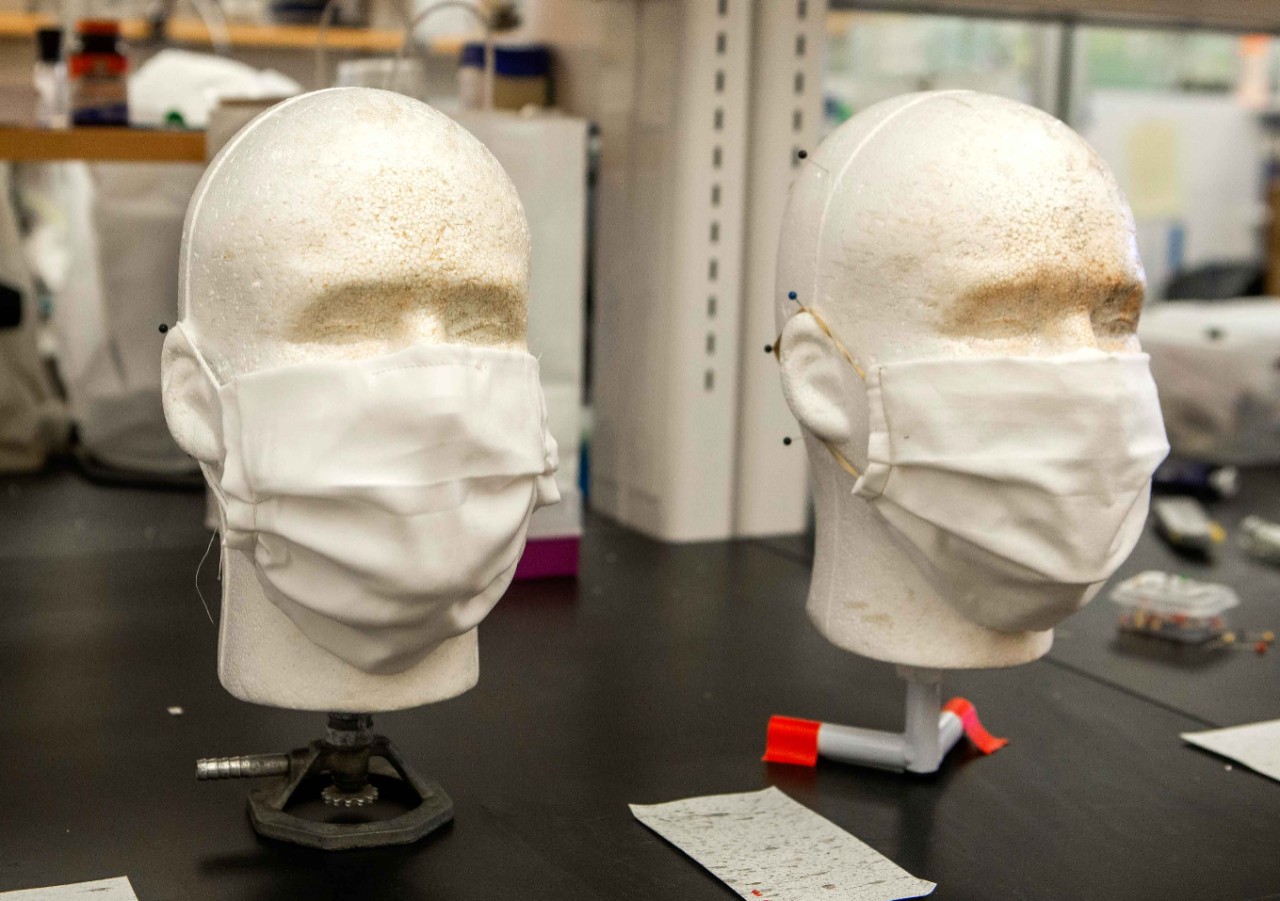
Featured image at top: UC biology researchers say silk face masks work better than cotton or synthetic material to repel coronavirus. Photo/Joseph Fuqua II/UC Creative + Brand

UC assistant professor Patrick Guerra talks to Discover Magazine about why silk face masks might work better than cotton or synthetics at repelling coronavirus. Photo/Lisa Ventre/UC Creative + Brand
Related Stories
Sugar overload killing hearts
November 10, 2025
Two in five people will be told they have diabetes during their lifetime. And people who have diabetes are twice as likely to develop heart disease. One of the deadliest dangers? Diabetic cardiomyopathy. But groundbreaking University of Cincinnati research hopes to stop and even reverse the damage before it’s too late.
Is going nuclear the solution to Ohio’s energy costs?
November 10, 2025

The Ohio Capital Journal recently reported that as energy prices continue to climb, economists are weighing the benefits of going nuclear to curb costs. The publication dove into a Scioto Analysis survey of 18 economists to weigh the pros and cons of nuclear energy. One economist featured was Iryna Topolyan, PhD, professor of economics at the Carl H. Lindner College of Business.
App turns smartwatch into detector of structural heart disease
November 10, 2025

An app that uses an AI model to read a single-lead ECG from a smartwatch can detect structural heart disease, researchers reported at the 2025 Scientific Sessions of the American Heart Association. Although the technology requires further validation, researchers said it could help improve the identification of patients with heart failure, valvular conditions and left ventricular hypertrophy before they become symptomatic, which could improve the prognosis for people with these conditions.