WVXU: Law professor weighs in on whether cities can swallow up communities

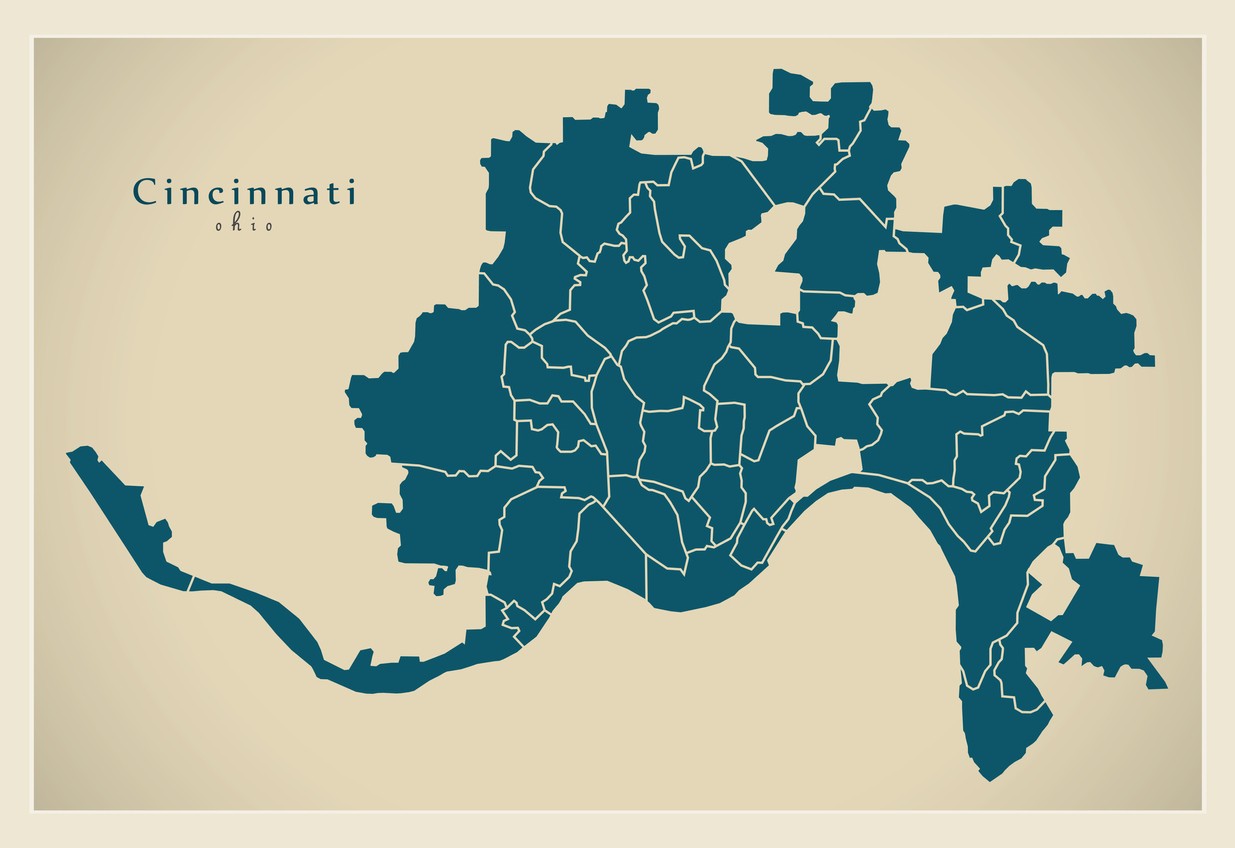
Many Cincinnatians have wondered how the Elmwood Place and St. Bernard communities have managed to exist as separate and independent municipalities within the city of Cincinnati. Nate Ela, assistant professor of political science and law at the University of Cincinnati College of Law, says it’s a matter of state law. The general rule is: in order for one city to annex another, voters in both communities have to approve it.
In a recent WVXU interview, Ela commented: "There was actually an attempt to annex Elmwood Place in 1912, but voters there rejected that."
He stressed that the “notion of independence, of self rule and self identity is important.” Ela shared that several years ago a study from a Manhattan Institute think tank concluded that everyone would be better off and be more efficient if Norwood and Elmwood Place joined Cincinnati.
But that didn’t go over to well.
"The response from people in Norwood and Elmwood Place was 'Why don't you go think about something else? This is our city. We like our city. We feel attached to our city and we're not going to disband it because somebody from outside says that would be more efficient,' " he says. "There's definitely a sense if you grew up in a place, you become attached to that place, you feel invested in having the ability to control the rules and laws that apply to your city."
Listen to the full interview on WVXU’s OKI Wanna Know broadcast.
Photo credit: istockphoto.com
Tags
Related Stories
Sugar overload killing hearts
November 10, 2025
Two in five people will be told they have diabetes during their lifetime. And people who have diabetes are twice as likely to develop heart disease. One of the deadliest dangers? Diabetic cardiomyopathy. But groundbreaking University of Cincinnati research hopes to stop and even reverse the damage before it’s too late.
App turns smartwatch into detector of structural heart disease
November 10, 2025

An app that uses an AI model to read a single-lead ECG from a smartwatch can detect structural heart disease, researchers reported at the 2025 Scientific Sessions of the American Heart Association. Although the technology requires further validation, researchers said it could help improve the identification of patients with heart failure, valvular conditions and left ventricular hypertrophy before they become symptomatic, which could improve the prognosis for people with these conditions.
Why the need for public schools
November 10, 2025

UC Law professor Joseph Tomain argues for continued government support for public schools in the online publication, The Conversation.