Science News for Students: Parasite survives seal's deep dives
UC biologist Joshua Benoit explains how a tiny louse can dive deep with elephant seals

University of Cincinnati biologist Joshua Benoit explained to Science News for Students how a tiny parasite the size of a sesame seed can withstand the extreme atmospheric pressure of diving more than a mile below the ocean's surface with its host – an elephant seal.
Elephant seals are champion divers. They can hold their breath for more than 90 minutes while diving for food a mile deep. This depth would crush even many modern submarines.
But not only do the seals survive the trip, but their parasites called seal lice do as well.
The Institute of Biology of Marine Organisms in Argentina put seal lice to the pressure test under lab conditions and found that most survived pressures equal to diving 6,500 feet.
Benoit told Science News for Students that it makes sense that lice that live on seals must be evolved to go where the seals go.
Benoit has studied other "extremophiles" in Antarctica. Extremophiles are creatures that live on the fringes of what's considered possible in extreme environments. Benoit's research found that a wingless fly in Antarctica cover their eggs in a kind of antifreeze to protect them from routine freezing and thawing.
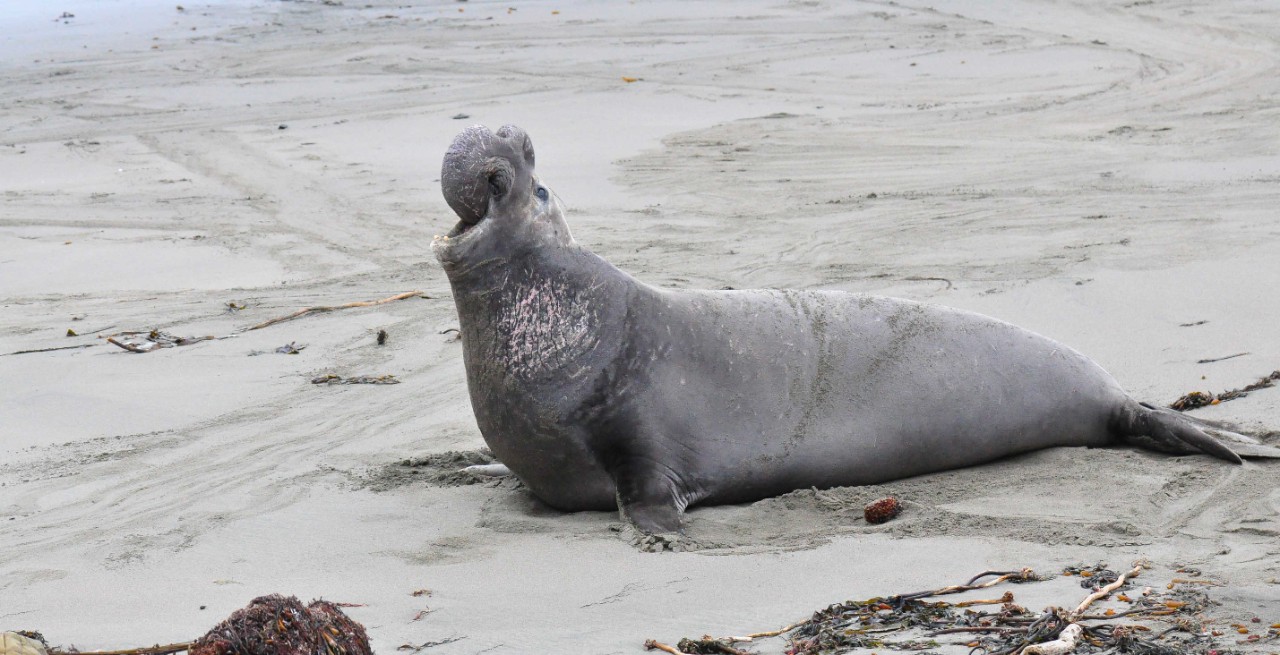
Featured image at top: A northern elephant seal. Photo/Michael Miller

UC biologist Joshua Benoit studies insects in his UC lab. Photo/Joseph Fuqua II/UC Creative + Brand
Related Stories
Sugar overload killing hearts
November 10, 2025
Two in five people will be told they have diabetes during their lifetime. And people who have diabetes are twice as likely to develop heart disease. One of the deadliest dangers? Diabetic cardiomyopathy. But groundbreaking University of Cincinnati research hopes to stop and even reverse the damage before it’s too late.
Is going nuclear the solution to Ohio’s energy costs?
November 10, 2025

The Ohio Capital Journal recently reported that as energy prices continue to climb, economists are weighing the benefits of going nuclear to curb costs. The publication dove into a Scioto Analysis survey of 18 economists to weigh the pros and cons of nuclear energy. One economist featured was Iryna Topolyan, PhD, professor of economics at the Carl H. Lindner College of Business.
App turns smartwatch into detector of structural heart disease
November 10, 2025

An app that uses an AI model to read a single-lead ECG from a smartwatch can detect structural heart disease, researchers reported at the 2025 Scientific Sessions of the American Heart Association. Although the technology requires further validation, researchers said it could help improve the identification of patients with heart failure, valvular conditions and left ventricular hypertrophy before they become symptomatic, which could improve the prognosis for people with these conditions.