The Wall Street Journal: Does a Dedicated Workspace Make WFH Life Better?
UC ergonomics expert says poor office space posture poses carpal tunnel and other risks

The COVID-19 pandemic has forced employers across the nation to ask workers to operate from home. Often that comes with little guidance in creating an office work space that takes proper ergonomics into account. Kermit Davis, PhD, UC expert in office ergonomics and professor in the College of Medicine, spoke with the Wall Street Journal about how this may be affecting the health of workers.
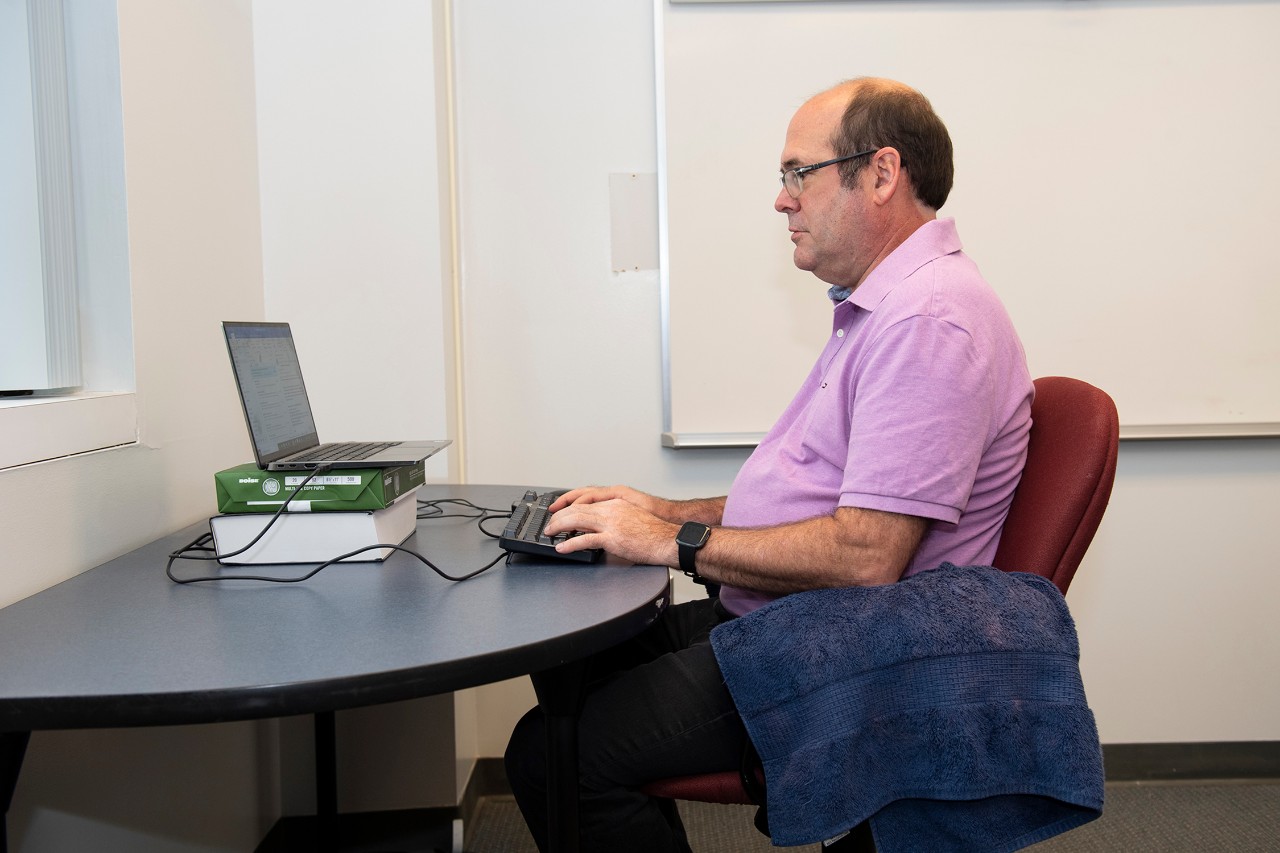
A recent survey by Davis found that 75 percent of at-home workers reported hunching over laptops, which can add up to 10 pounds of pressure on the neck and upper back for every inch you dip forward. Also, working for a laptop on the kitchen table can pose some risks for carpal tunnel if you are leaning into the table from a chair. The survey findings were published in Ergonomics in Design.
The Wall Street Journal interview with Davis is available online. (Note a subscription may be required though a copy is also available emailing cedric.ricks@uc.edu)
Read a UC story about research from Dr. Davis.
Featured photo of Kermit Davis, PhD, taken by Colleen Kelley/ UC Creative + Brand.
Related Stories
Sugar overload killing hearts
November 10, 2025
Two in five people will be told they have diabetes during their lifetime. And people who have diabetes are twice as likely to develop heart disease. One of the deadliest dangers? Diabetic cardiomyopathy. But groundbreaking University of Cincinnati research hopes to stop and even reverse the damage before it’s too late.
Is going nuclear the solution to Ohio’s energy costs?
November 10, 2025

The Ohio Capital Journal recently reported that as energy prices continue to climb, economists are weighing the benefits of going nuclear to curb costs. The publication dove into a Scioto Analysis survey of 18 economists to weigh the pros and cons of nuclear energy. One economist featured was Iryna Topolyan, PhD, professor of economics at the Carl H. Lindner College of Business.
App turns smartwatch into detector of structural heart disease
November 10, 2025

An app that uses an AI model to read a single-lead ECG from a smartwatch can detect structural heart disease, researchers reported at the 2025 Scientific Sessions of the American Heart Association. Although the technology requires further validation, researchers said it could help improve the identification of patients with heart failure, valvular conditions and left ventricular hypertrophy before they become symptomatic, which could improve the prognosis for people with these conditions.