Earth.com: Steelhead follow their instincts
UC research unlocks mysteries of endangered trout's migration

Earth.com highlighted work by University of Cincinnati biologist Michael Booth to unlock the migration secrets of an endangered California fish.
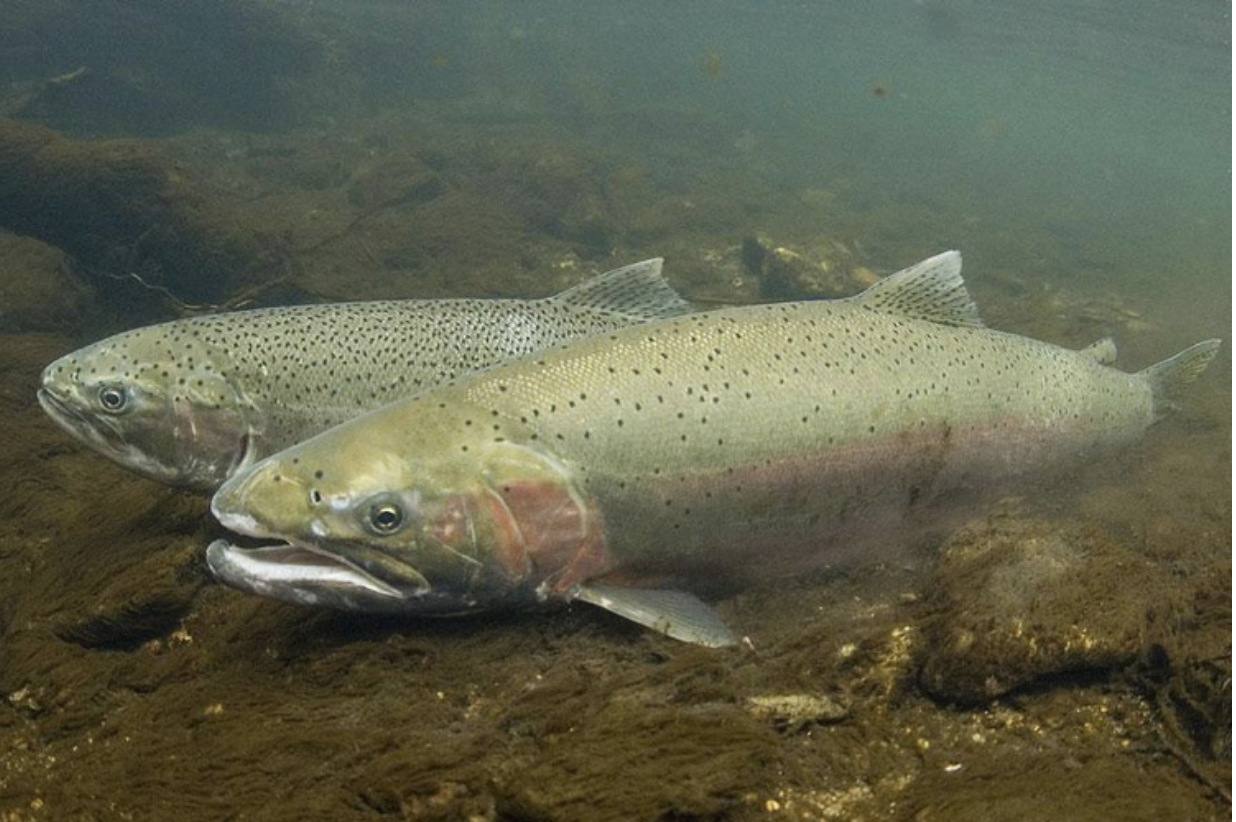
Booth, a UC visiting assistant professor of biology, spent years studying southern California's steelhead in the Santa Clara River outside Los Angeles. This subpopulation of rainbow trout migrates to the Pacific Ocean, where the growing fish hunt and feed until they return to their natal freshwater streams to spawn.
While working at the United Water Conservation District, Booth used 19 years of records from a designated fish trap on southern California’s Santa Clara River to identify potential environmental drivers that spur some fish to make the arduous trip to the Pacific Ocean
He found that steelhead migration was triggered by the lengthening daylight of spring rather than factors like recent rains, which had little correlation to migration.
The study was published in the North American Journal of Fisheries Management.

UC visiting assistant professor Michael Booth poses in his office, which is decorated with illustrations of fish. Photo/Joseph Fuqua II/UC Creative + Brand
Since the river in most years is only navigable after storms get water flowing again, Booth hypothesized that heavy rains triggered the steelhead’s movement to the ocean.
“We thought the fish would migrate when the river was flowing and wouldn’t migrate in years without storm events,” Booth said. “It turned out that wasn’t the case. They migrated regardless of whether the river was flowing to the ocean.”
Booth's research is significant because it could help wildlife managers and government regulators make more informed decisions about water use. The Santa Clara River is a major source of water for agriculture and people who live in the watershed. Knowing what months are crucial for steelhead migration could help wildlife managers avoid conflicts.
“It’s really hard for a water manager to decide this is when we can and can’t divert water if you have no data on when the fish are migrating,” Booth said.
Featured image at top: Steelhead. Photo/NOAA

UC visiting assistant professor Michael Booth studied endangered fish in California before coming to Cincinnati. Now he is studying Ohio's freshwater fish. Photo/Joseph Fuqua II/UC Creative + Brand
Related Stories
Sugar overload killing hearts
November 10, 2025
Two in five people will be told they have diabetes during their lifetime. And people who have diabetes are twice as likely to develop heart disease. One of the deadliest dangers? Diabetic cardiomyopathy. But groundbreaking University of Cincinnati research hopes to stop and even reverse the damage before it’s too late.
Is going nuclear the solution to Ohio’s energy costs?
November 10, 2025

The Ohio Capital Journal recently reported that as energy prices continue to climb, economists are weighing the benefits of going nuclear to curb costs. The publication dove into a Scioto Analysis survey of 18 economists to weigh the pros and cons of nuclear energy. One economist featured was Iryna Topolyan, PhD, professor of economics at the Carl H. Lindner College of Business.
App turns smartwatch into detector of structural heart disease
November 10, 2025

An app that uses an AI model to read a single-lead ECG from a smartwatch can detect structural heart disease, researchers reported at the 2025 Scientific Sessions of the American Heart Association. Although the technology requires further validation, researchers said it could help improve the identification of patients with heart failure, valvular conditions and left ventricular hypertrophy before they become symptomatic, which could improve the prognosis for people with these conditions.