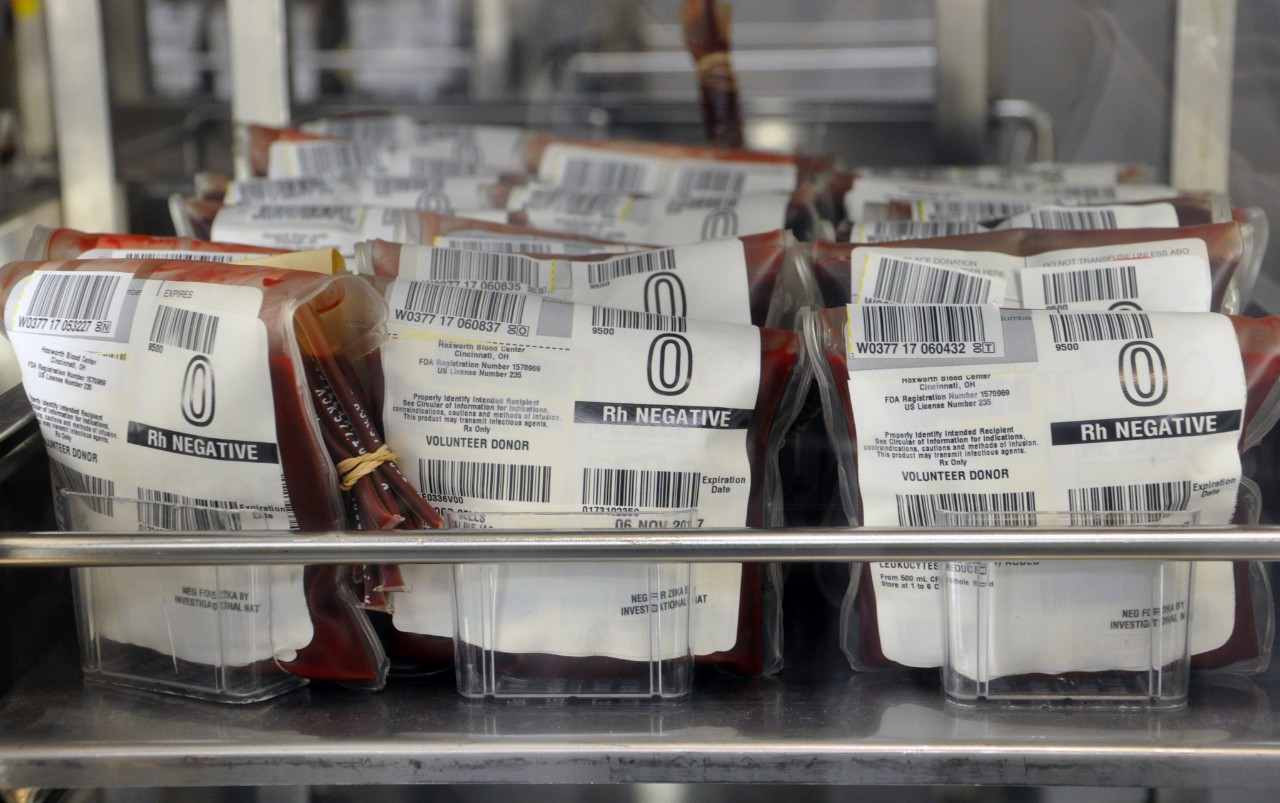
Critical appeal for Type O-negative donors
Heavy usage depletes local blood supply

Hoxworth Blood Center, University of Cincinnati is releasing a critical appeal for type O- negative blood. All eligible individuals are being asked to donate blood immediately.
“We are asking all eligible individuals with Type O- negative blood to donate as soon as possible,” reports Alecia Lipton, Hoxworth spokesperson. “Blood is being distributed to local hosopitals faster than it can be collected, and we cannot rely on acquiring blood from other communities at this time.”

Type O- negative blood is extremely valuable since it can be transfused to any other blood type in an emergency.
It is critical to have a healthy supply of O- negative blood on hand, according to Lipton, because it can be transfused to any other blood type in the event of an emergency or mass trauma.
“Recent heavy usage due to traumas and organ transplants, coupled with low donor turnout in recent weeks, has drained local supply of O- negative blood,” said David Oh, MD, Chief Medical Officer of Hoxworth Blood Center. “We urge the community to schedule a donation as soon as possible to ensure that patients in need will have lifesaving blood products available when needed."
Appointments are highly encouraged at this time, and masks are required. To schedule a donation, call (513) 451-0910 or visit www.hoxworth.org.
About Hoxworth:
Hoxworth Blood Center, University of Cincinnati was founded in 1938 and serves more than 30 hospitals in 18 counties in Southwestern Ohio, Northern Kentucky and Southeastern Indiana. Annually, Hoxworth collects more than 90,000 units of blood from local donors to help save the lives of patients in area hospitals. Hoxworth Blood Center: Saving Lives Close to Home.
Related Stories
Sugar overload killing hearts
November 10, 2025
Two in five people will be told they have diabetes during their lifetime. And people who have diabetes are twice as likely to develop heart disease. One of the deadliest dangers? Diabetic cardiomyopathy. But groundbreaking University of Cincinnati research hopes to stop and even reverse the damage before it’s too late.
App turns smartwatch into detector of structural heart disease
November 10, 2025

An app that uses an AI model to read a single-lead ECG from a smartwatch can detect structural heart disease, researchers reported at the 2025 Scientific Sessions of the American Heart Association. Although the technology requires further validation, researchers said it could help improve the identification of patients with heart failure, valvular conditions and left ventricular hypertrophy before they become symptomatic, which could improve the prognosis for people with these conditions.
Combination immunotherapy helps overcome melanoma treatment resistance
November 10, 2025

MSN highlighted research led by the University of Cincinnati Cancer Center's Trisha Wise-Draper showing a combination of immunotherapy medications can activate a robust immune response and help overcome treatment resistance in patients with refractory melanoma.