UC’s Advanced Research Computing Center gets $857K boost
NSF funding helps expand the research capabilities across the university


Prashant Khare is leading the effort to expand the Advanced Research Computing center.
The University of Cincinnati has received $600,000 in funding from the National Science Foundation to grow the Advanced Research Computing center (ARC), which was created in 2019 by UC’s Office of Research to accelerate computational and data-enabled research throughout the entire university. Along with the mandatory cost-share, half of which was supported by the Ohio Department of Higher Education, the total investment in ARC in the next three years will be $857,000.
“This support from NSF provides the much-needed computational resources to support the groundbreaking discoveries and innovation by researchers across the campus,” said Prashant Khare, an assistant professor of aerospace engineering and the principal investigator of this NSF grant. Khare is also the co-founder and the chair of the faculty advisory committee of the ARC.
This additional high-performance computing equipment and storage will bolster the center’s support of UC researchers who are experiencing increased data and analysis needs across the fields of basic sciences, engineering, medicine, arts, social sciences and beyond.
“This funding will not only enable high-impact research but also tremendously contribute to the development and training of computational scientists and engineers of the future,” Khare said. “This will play a significant role in realizing our vision of making UC the hub for computations in the coming decade, further strengthening UC’s leadership as a top-class research university.”
This funding will not only enable high-impact research but also tremendously contribute to the development and training of computational scientists and engineers of the future.
Prashant Khare, co-founder of ARC
In addition to providing resources to researchers, the ARC also serves as a training ground to prepare students for a rapidly changing and technology-focused professional environment.
“UC students entering the workforce must acquire technical skills for emerging fields — our region, especially, has the demand for high-performance/high-throughput computationally trained graduates to fill the ever-burgeoning needs of such professionals,” Khare said. “These are no longer the jobs of the future — the COVID-19 pandemic has highlighted this fact.”
Khare is also the principal investigator of a U.S. Office of Naval Research project that focuses on computational sciences relevant to the Navy and associated student training to identify technical skills lacking in new employees. He said the Navy’s need is echoed throughout the workforce.
The ARC initiative is a collaboration between the Office of Research, University of Cincinnati faculty, the Office of Information Technologies technical and research services teams, the College of Engineering and Applied Sciences technical staff, Indiana University Information Technology Service’s Chief HPC Systems Architect, and XSEDE Capabilities and Resource Integration HPC Systems Administration staff. This is the first high-performance computing (HPC) center on UC’s campus and will play a vital role in realizing the vision and goals of the Next Lives Here initiative.
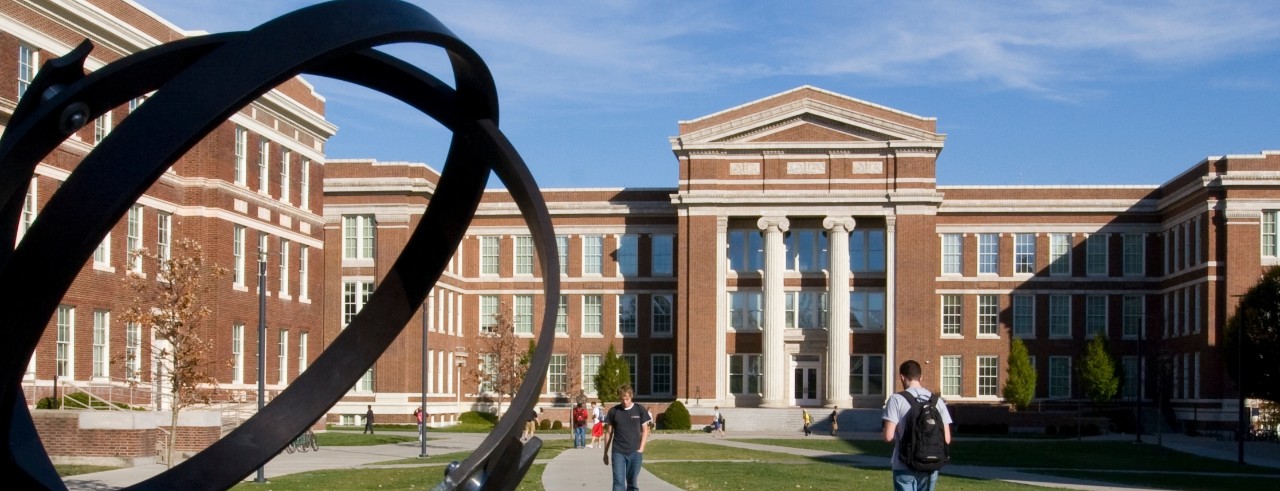
Featured image at top: Baldwin Hall on UC's campus. Photo/Corrie Mayer/CEAS Marketing.
Related Stories
Sugar overload killing hearts
November 10, 2025
Two in five people will be told they have diabetes during their lifetime. And people who have diabetes are twice as likely to develop heart disease. One of the deadliest dangers? Diabetic cardiomyopathy. But groundbreaking University of Cincinnati research hopes to stop and even reverse the damage before it’s too late.
Is going nuclear the solution to Ohio’s energy costs?
November 10, 2025

The Ohio Capital Journal recently reported that as energy prices continue to climb, economists are weighing the benefits of going nuclear to curb costs. The publication dove into a Scioto Analysis survey of 18 economists to weigh the pros and cons of nuclear energy. One economist featured was Iryna Topolyan, PhD, professor of economics at the Carl H. Lindner College of Business.
App turns smartwatch into detector of structural heart disease
November 10, 2025

An app that uses an AI model to read a single-lead ECG from a smartwatch can detect structural heart disease, researchers reported at the 2025 Scientific Sessions of the American Heart Association. Although the technology requires further validation, researchers said it could help improve the identification of patients with heart failure, valvular conditions and left ventricular hypertrophy before they become symptomatic, which could improve the prognosis for people with these conditions.