WVXU: UC finds pollution in ancient Maya reservoirs
The director of UC's Center for Field Studies talks about Tikal in Guatemala

WVXU's Cincinnati Edition spoke to University of Cincinnati biologist David Lentz about an exciting UC study that is shedding light on the fate of an ancient Maya city.
A diverse team of UC anthropologists, geographers, botanists, biologists and chemists collaborated on a study published in the Nature journal Scientific Reports that found toxic levels of pollution in ancient reservoirs in Tikal, an ancient Maya city in Guatemala.

David Lentz, executive director of UC's Center for Field Studies, collaborated on a new study of the ancient Maya in Tikal, Guatemala. Photo/Joseph Fuqua II/UC Creative + Brand
Lentz, executive director of UC's Center for Field Studies, told Cincinnati Edition that UC's findings are helping to explain why people eventually left the city, which had thrived for hundreds of years between the third and ninth centuries B.C.
UC sampled sediment at 10 reservoirs within the city and conducted an analysis on ancient DNA found in the sediment. The results showed evidence of toxic cyanobacteria that likely would have sickened anyone who drank the water.
Likewise, UC researchers also found toxic levels of the heavy metal mercury in the water. Lentz said the mercury likely came from cinnabar, a red-colored mineral the ancient Maya mined as a paint and pigment. During heavy storms, the pigment would have been washed into the reservoirs, contaminating the water.
"Even a little bit of mercury can be very dangerous," Lentz said.
UC's Maya research is featured in a new exhibit, Lessons from the Maya, on display now through January at the Cincinnati Museum Center.
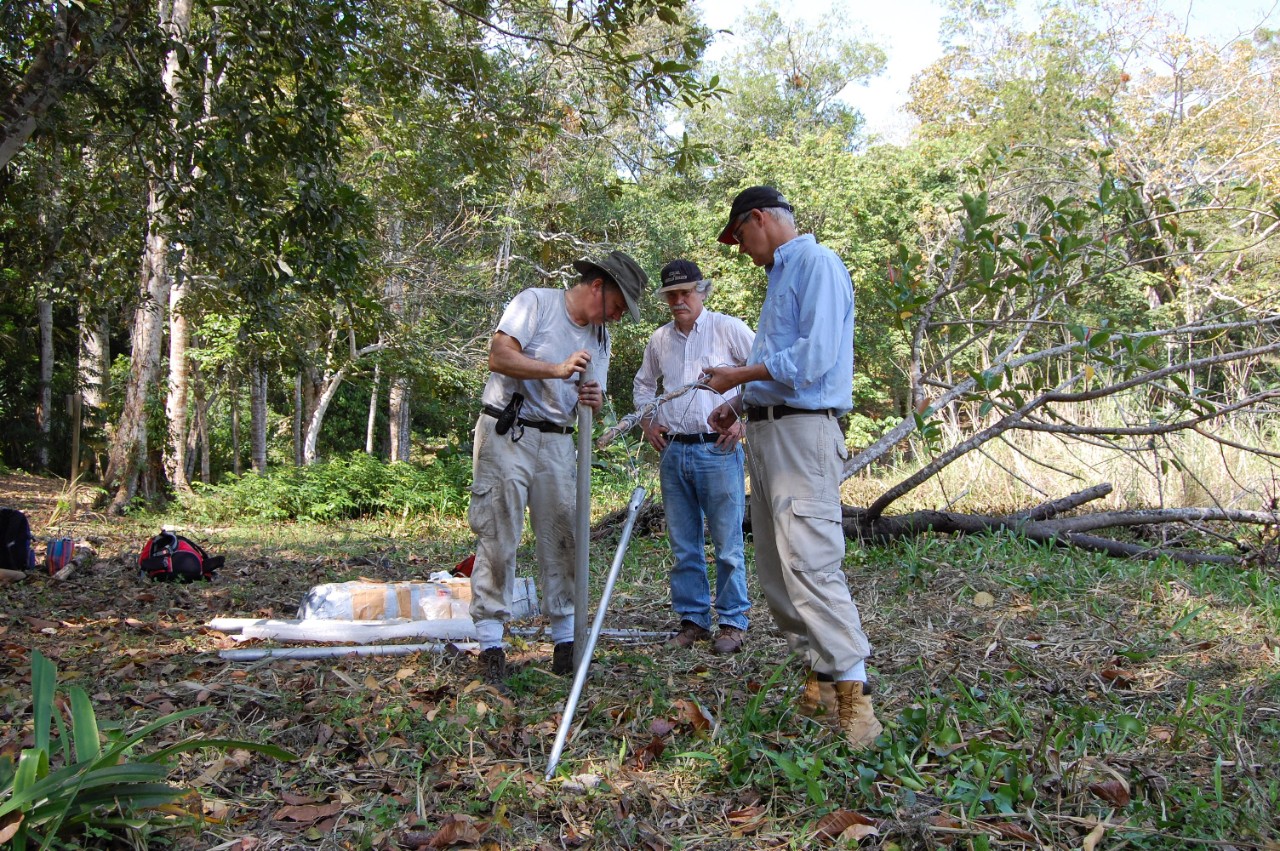
Featured image at top: UC researchers Nicholas Dunning, left, Vernon Scarborough and David Lentz set up equipment to take sediment samples during their field research at Tikal. Photo/Liwy Grazioso Sierra

A temple at the ancient Maya city of Tikal rises above the rainforest in Guatemala. Photo/David Lentz
Impact Lives Here
The University of Cincinnati is leading public urban universities into a new era of innovation and impact. Our faculty, staff and students are saving lives, changing outcomes and bending the future in our city's direction. Next Lives Here.
Stay up on all UC's COVID-19 stories, read more #UCtheGood content, or take a UC virtual visit and begin picturing yourself at an institution that inspires incredible stories.
Related Stories
Sugar overload killing hearts
November 10, 2025
Two in five people will be told they have diabetes during their lifetime. And people who have diabetes are twice as likely to develop heart disease. One of the deadliest dangers? Diabetic cardiomyopathy. But groundbreaking University of Cincinnati research hopes to stop and even reverse the damage before it’s too late.
Is going nuclear the solution to Ohio’s energy costs?
November 10, 2025

The Ohio Capital Journal recently reported that as energy prices continue to climb, economists are weighing the benefits of going nuclear to curb costs. The publication dove into a Scioto Analysis survey of 18 economists to weigh the pros and cons of nuclear energy. One economist featured was Iryna Topolyan, PhD, professor of economics at the Carl H. Lindner College of Business.
App turns smartwatch into detector of structural heart disease
November 10, 2025

An app that uses an AI model to read a single-lead ECG from a smartwatch can detect structural heart disease, researchers reported at the 2025 Scientific Sessions of the American Heart Association. Although the technology requires further validation, researchers said it could help improve the identification of patients with heart failure, valvular conditions and left ventricular hypertrophy before they become symptomatic, which could improve the prognosis for people with these conditions.