UC student develops tool for health care workers interacting with COVID-19 patients
Tool helps providers treat patients with communication challenges

Clear, concise communication is one of the key elements for health care providers in treating patients. With many COVID-19 patients requiring treatment on ventilators and respirators, communication is a big hurdle. A doctoral student in the University of Cincinnati’s College of Allied Health Sciences (CAHS) is developing a tool designed to help bridge that critical gap.
The communication tool is the work of Chitrali Ramakant Mamlekar, a fourth-year doctoral student in the Communication Sciences and Disorders Department (CSD) in CAHS.

Chitrali Mamlekar of the UC College of Allied Health Sciences who developed a tool for health care workers to communicate with COVID-19 patients with communication challenges.
“In the absence of family members, patients are isolated. There needs to be a way for the patients to successfully communicate with their health care providers,” says Mamlekar.
Using their mobile device, the patient can indicate on the home screen of the app what COVID-19 symptoms they have, if they’ve been exposed to COVID-19, their travel history along with concerns and needs they have. In the travel history section, for example, the patient can report if they used public transport while traveling and if they went to a shopping venue or religious institution. Under the needs section, the patient can let the provider know if they need a mask, some water or have to go to the bathroom.
The design of the tool was guided by information gathered from a survey Mamlekar distributed during the third week of April 2020 to health care providers across the nation. Mamlekar says 222 surveys were returned, with providers indicating they had a problem communicating with COVID-19 patients. Of those respondents, roughly 75% indicated that they would be in favor of using a tool focused on patient/provider communication.

The patient concerns panel of the communications tool
“We spoke to a neurologist at UC Health and other health care providers to determine their needs and how the patient information form could best capture all this data,” says Mamlekar. “Using that input, we created a simple tool to support communication with people who are on a ventilator, wearing masks or are unable to speak because of respiratory challenges.”
The tool includes a page for patients to describe how they are feeling emotionally, if they are worried or have trouble sleeping. There is also a page for the patient to describe the location and severity of any pain they have.
Mamlekar earned her master’s in audiology and speech-language pathology in India and was interested in doing more work with augmentative and alternative communication (AAC), which encompasses the communication methods used to supplement or replace speech or writing for those with impairments in spoken or written language. While working in a medical setting in her hometown of Mumbai, she started applying for positions related to AAC. During that process, she learned of the American Speech and Hearing Association (ASHA), a professional association for speech–language pathologists, audiologists and speech, language and hearing scientists in the United States and internationally. Through the ASHA, Mamlekar became aware of the work of Aimee Dietz, PhD, professor in CSD in the UC college who specializes in the area of AAC interface design. Mamlekar moved to Cincinnati in 2016 after being accepted into the CAHS doctoral program.
Data about the communication tool will continue to be collected this summer. Mamlekar says she is looking to get feedback from health care providers on ways it can be improved. After that, she plans to write a grant to support transitioning the communication tool to a fully developed application. Learn more about the project here.
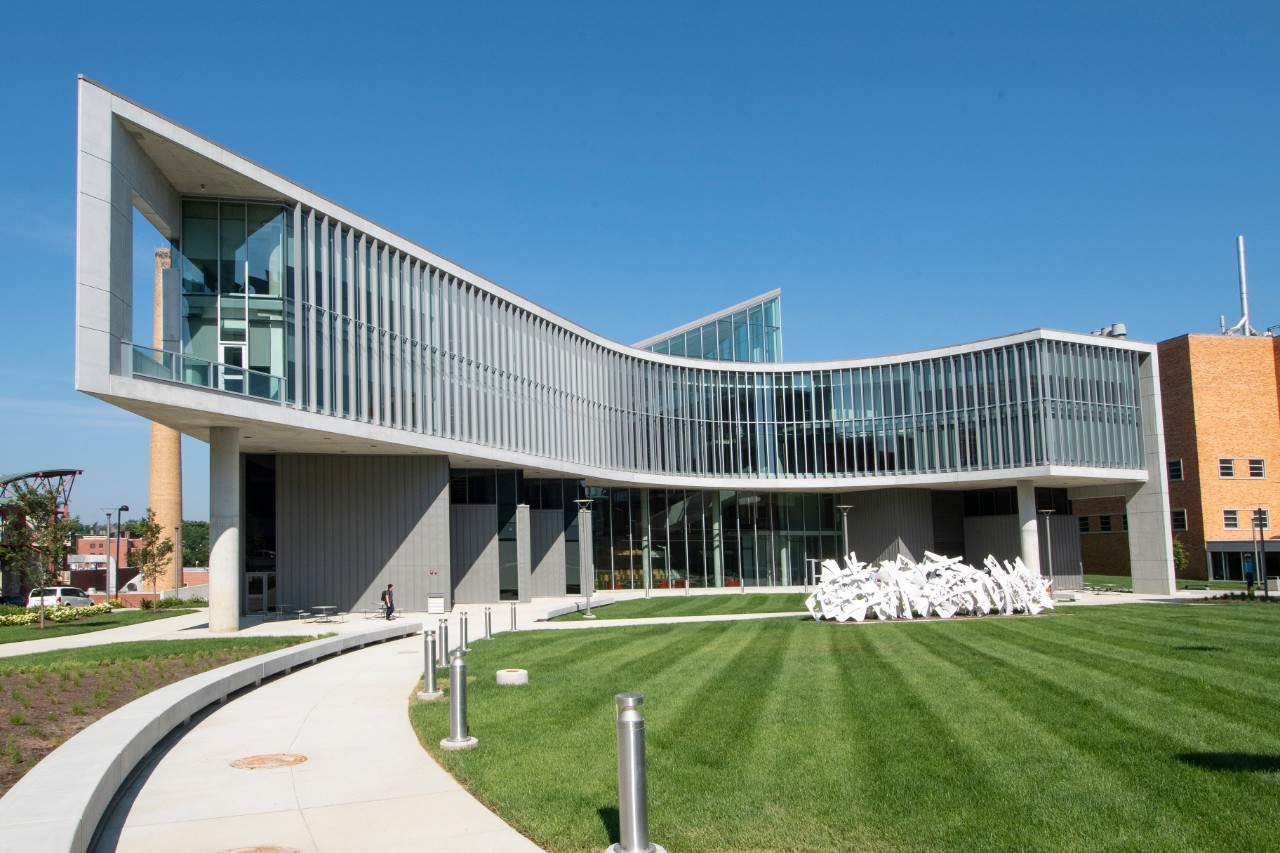
Lead image of the Health Sciences Building/Photo/Colleen Kelley/UC Creative + Brand.
Impact Lives Here
The University of Cincinnati is leading public urban universities into a new era of innovation and impact. Our faculty, staff and students are saving lives, changing outcomes and bending the future in our city's direction. Next Lives Here.
Stay up on all UC's COVID-19 stories, read more #UCtheGood content, or take a UC virtual visit and begin picturing yourself at an institution that inspires incredible stories.
Related Stories
Sugar overload killing hearts
November 10, 2025
Two in five people will be told they have diabetes during their lifetime. And people who have diabetes are twice as likely to develop heart disease. One of the deadliest dangers? Diabetic cardiomyopathy. But groundbreaking University of Cincinnati research hopes to stop and even reverse the damage before it’s too late.
App turns smartwatch into detector of structural heart disease
November 10, 2025

An app that uses an AI model to read a single-lead ECG from a smartwatch can detect structural heart disease, researchers reported at the 2025 Scientific Sessions of the American Heart Association. Although the technology requires further validation, researchers said it could help improve the identification of patients with heart failure, valvular conditions and left ventricular hypertrophy before they become symptomatic, which could improve the prognosis for people with these conditions.
Combination immunotherapy helps overcome melanoma treatment resistance
November 10, 2025

MSN highlighted research led by the University of Cincinnati Cancer Center's Trisha Wise-Draper showing a combination of immunotherapy medications can activate a robust immune response and help overcome treatment resistance in patients with refractory melanoma.