Science Daily: UC research sheds light on animal aggression
Biologist Elizabeth Hobson is studying how social networks inform animal behavior

Science Daily highlighted work by a University of Cincinnati biologist into how social networks inform animal aggression.
Elizabeth Hobson, an assistant professor of biology in UC's College of Arts and Sciences, is studying the behavior of monk parakeets, a colonial nesting bird from South America that has established itself across the United States.
Monk parakeets, like many other animals, live in dominance hierarchies where animals fight for status. But the parakeets have a sophisticated understanding not only of their social network but their place within it, Hobson said.
This helps the parakeets know which potential rivals upon which to unleash their aggression to maintain or improve their status, she said in a new paper published in the journal Current Opinion in Psychology.
"This paper is setting up a perspective I want to push in my research program," Hobson said.
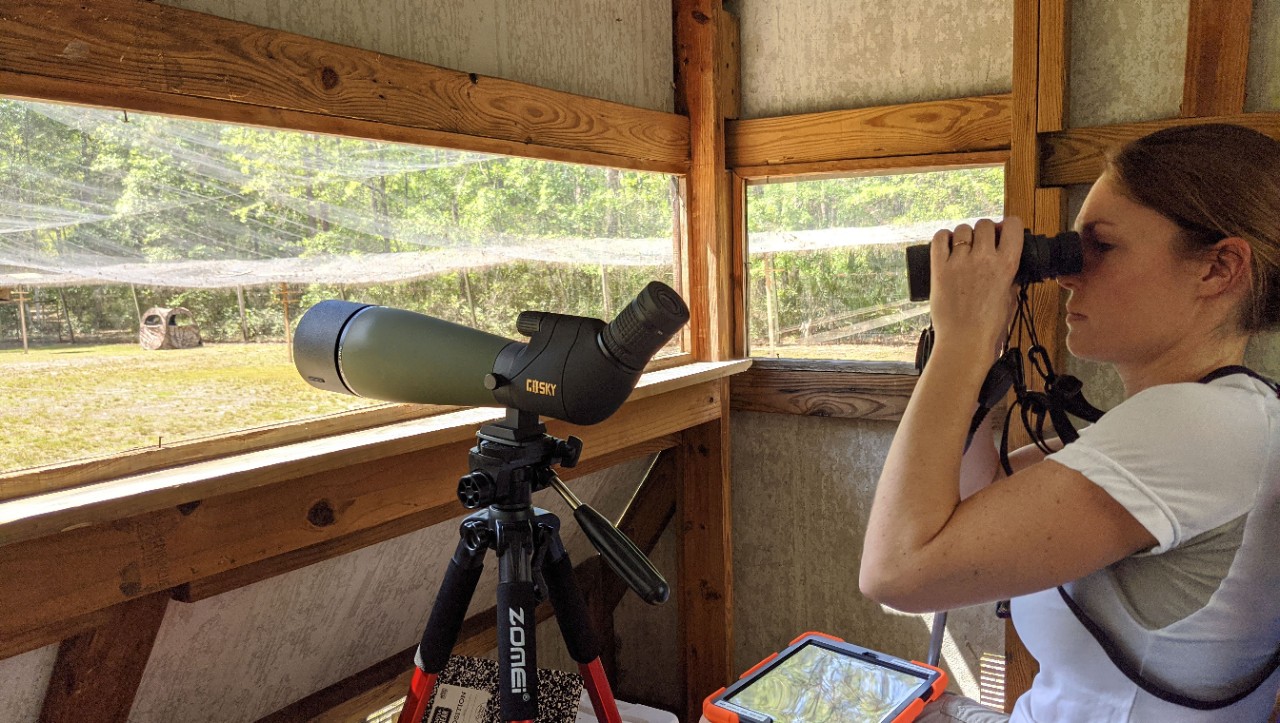
Featured image at top: UC postdoctoral researcher Annemarie van der Marel watches monk parakeets through binoculars from a bird blind. Photo/Provided
More UC research in the news

F/A-18E Super Hornets. Photo/Shannon Renfroe/U.S. Navy
Related Stories
Sugar overload killing hearts
November 10, 2025
Two in five people will be told they have diabetes during their lifetime. And people who have diabetes are twice as likely to develop heart disease. One of the deadliest dangers? Diabetic cardiomyopathy. But groundbreaking University of Cincinnati research hopes to stop and even reverse the damage before it’s too late.
Is going nuclear the solution to Ohio’s energy costs?
November 10, 2025

The Ohio Capital Journal recently reported that as energy prices continue to climb, economists are weighing the benefits of going nuclear to curb costs. The publication dove into a Scioto Analysis survey of 18 economists to weigh the pros and cons of nuclear energy. One economist featured was Iryna Topolyan, PhD, professor of economics at the Carl H. Lindner College of Business.
App turns smartwatch into detector of structural heart disease
November 10, 2025

An app that uses an AI model to read a single-lead ECG from a smartwatch can detect structural heart disease, researchers reported at the 2025 Scientific Sessions of the American Heart Association. Although the technology requires further validation, researchers said it could help improve the identification of patients with heart failure, valvular conditions and left ventricular hypertrophy before they become symptomatic, which could improve the prognosis for people with these conditions.