College of Medicine awards two faculty members with Daniel Drake Medals
Jobe, Wexler devote careers to research, medical education and scholarship

Alan Jobe, MD, PhD, professor in the Department of Pediatrics, and Laura Wexler, MD, professor in the Department of Internal Medicine, Division of Cardiovascular Health and Disease, have been named 2020 recipients of UC College of Medicine Daniel Drake Medals.
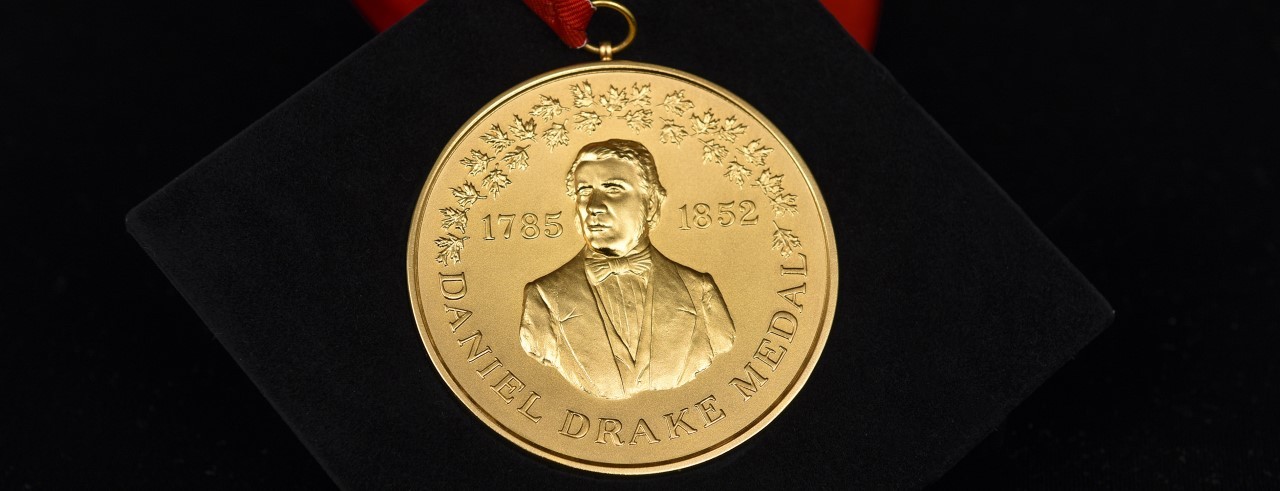
The Daniel Drake Medal is given annually to living faculty or alumni for their outstanding and unique contributions to medical education, scholarship and research. The award was established in 1985 to honor the 200th birthday of Daniel Drake, MD, the founder of the Medical College of Ohio, the forerunner of the College of Medicine. Drake was one of the most influential physicians, educators and scientists of 19th century America.

Alan Jobe, MD, PhD. Photo/Cincinnati Children's.
Jobe has been a thought leader in neonatology survival and quality of life for preterm infants worldwide through his research on pulmonary maturation, the physiology and biochemistry of surfactant, and the hormones and infectious diseases that influence pulmonary maturation in preterm infants. He was among the first to define the biochemical, molecular and physiologic mechanisms of surfactant in the developing lung which led to the application of surfactant as a therapy for preterm infants.
Jobe also developed the novel concepts underlying the pathogenesis of bronchopulmonary dysplasia, a chronic lung disease of prematurity and his pulmonary research led to the safe use of antenatal glucocorticoids for the prevention of respiratory distress syndrome. He received his medical and doctorate degrees in 1973 from the University of California, San Diego. He served on the faculty of the University of California, Los Angeles David Geffen School of Medicine from 1977 until 1997. He has been a member of the UC College of Medicine faculty since in 1997. Jobe also consults for the Bill & Melinda Gates Foundation for maternal-fetal mortality.

Laura Wexler, MD. Photo/University of Cincinnati.
Wexler served from 2001 until 2011 as senior associate dean of student affairs and admissions at the UC College of Medicine making numerous significant changes to student services and the admissions process. She instituted a new and innovative program for student mental health services and academic assistance for students. In 2008, she led UC to becoming the first U.S. medical school to adopt the Multiple Mini Interview system, a more holistic approach for medical student selection that emphasizes humanistic skills and qualities.
Wexler also served for 11 years as Cardiology Section chief at the Cincinnati Veterans Affairs Medical Center instituting many changes to improve access to specialty care and enhancing the cardiology fellowship and residency training programs. She received her medical degree in 1971 from Washington University School of Medicine in St. Louis. She completed residency training with Harvard Medical School at Boston City Hospital and a cardiology fellowship at the Massachusetts General Hospital. After serving on the faculty at Boston University School of Medicine, Wexler joined the UC College of Medicine faculty in 1987.
Drake Medalists are typically celebrated at the annual Daniel Drake Medal Dinner the evening of Honors Day. This year’s event has been postponed due to the coronavirus (COVID-19) pandemic.
Lead photo: Image of the Daniel Drake Medal. Photo/Colleen Kelley/UC Creative + Brand.
Next Lives Here
The University of Cincinnati is classified as a Research 1 institution by the Carnegie Commission and is ranked in the National Science Foundation's Top-35 public research universities. UC's graduate students and faculty investigate problems and innovate solutions with real-world impact. Next Lives Here.
Related Stories
Sugar overload killing hearts
November 10, 2025
Two in five people will be told they have diabetes during their lifetime. And people who have diabetes are twice as likely to develop heart disease. One of the deadliest dangers? Diabetic cardiomyopathy. But groundbreaking University of Cincinnati research hopes to stop and even reverse the damage before it’s too late.
App turns smartwatch into detector of structural heart disease
November 10, 2025

An app that uses an AI model to read a single-lead ECG from a smartwatch can detect structural heart disease, researchers reported at the 2025 Scientific Sessions of the American Heart Association. Although the technology requires further validation, researchers said it could help improve the identification of patients with heart failure, valvular conditions and left ventricular hypertrophy before they become symptomatic, which could improve the prognosis for people with these conditions.
Combination immunotherapy helps overcome melanoma treatment resistance
November 10, 2025

MSN highlighted research led by the University of Cincinnati Cancer Center's Trisha Wise-Draper showing a combination of immunotherapy medications can activate a robust immune response and help overcome treatment resistance in patients with refractory melanoma.