USA Today: How and why coronavirus makes you sick
UC expert explains the mechanics of how people develop COVID-19

USA Today turned to Dr. Carl Fichtenbaum of the UC Division of Infectious Diseases as the lone medical source for a story explaining how the coronavirus spreads from person to person and physically impacts people who develop COVID-19.

Illustration from USA Today showing how the coronavirus infects people. Photo credit/Kevin Necessary/Cincinnati Enquirer
Dr. Fichtenbaum told USA Today the virus is spread when an infected person expels tiny droplets from the mouth, throat or lungs, usually during a cough or sneeze.
“Viruses need something else’s machinery to help generate them,” Fichtenbaum says. “They’re what we call a parasite.”
Fichtenbaum said the reason some people with COVID-19 lose their sense of smell is because the virus somehow interferes with the olfactory nerve, which transmits sensory data to the brain and is responsible for the sense of smell.
Read the article here.
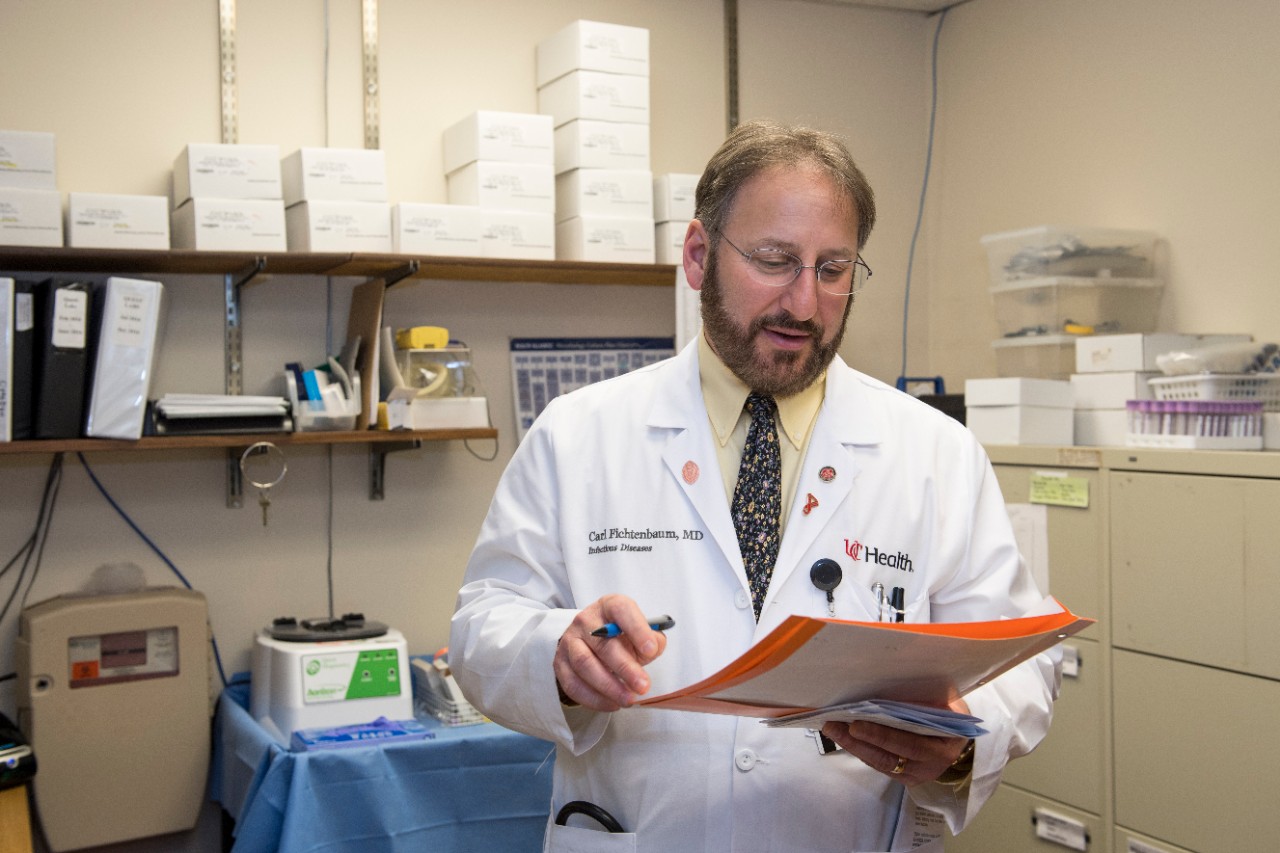
Featured image at top Dr. Carl Fichtenbaum/Photo credit/Colleen Kelley/UC Creative Services + Brand
Find the latest details related to coronavirus disease 2019 (covid-19) on the Centers for Disease Control and Prevention (CDC) website, and follow UC's latest information with regard to the virus.
Related Stories
Sugar overload killing hearts
November 10, 2025
Two in five people will be told they have diabetes during their lifetime. And people who have diabetes are twice as likely to develop heart disease. One of the deadliest dangers? Diabetic cardiomyopathy. But groundbreaking University of Cincinnati research hopes to stop and even reverse the damage before it’s too late.
App turns smartwatch into detector of structural heart disease
November 10, 2025

An app that uses an AI model to read a single-lead ECG from a smartwatch can detect structural heart disease, researchers reported at the 2025 Scientific Sessions of the American Heart Association. Although the technology requires further validation, researchers said it could help improve the identification of patients with heart failure, valvular conditions and left ventricular hypertrophy before they become symptomatic, which could improve the prognosis for people with these conditions.
Combination immunotherapy helps overcome melanoma treatment resistance
November 10, 2025

MSN highlighted research led by the University of Cincinnati Cancer Center's Trisha Wise-Draper showing a combination of immunotherapy medications can activate a robust immune response and help overcome treatment resistance in patients with refractory melanoma.