Your nose may know more when it comes to COVID-19
UC expert says loss of smell could be an early indicator of infection

A University of Cincinnati ear, nose and throat specialist says your nose may hold a clue in identifying COVID-19. The loss of smell may be a key indicator.
Physicians are increasingly recognizing the importance of the nasal cavity in determining the physiology of COVID-19, explains Ahmad Sedaghat, an associate professor in the UC College of Medicine’s Department of Otolaryngology-Head and Neck Surgery and an UC Health physician specializing in diseases of the nose and sinuses.
“COVID-19 is not associated with the symptoms that are typically associated with a viral cold such as nasal blockage or mucus production,” says Sedaghat. “This distinction is also why it is fairly easy to distinguish COVID-19 from seasonal allergies."
“COVID-19 is associated with a fairly unique combination of nasal symptoms: a sudden loss of one’s sense of smell, also known as ‘anosmia,’ without nasal obstruction,” said Sedaghat. “The occurrence of sudden onset anosmia without nasal obstruction is highly predictive of COVID-19 and should trigger the individual to immediately self-quarantine with presumptive COVID-19.”
Most individuals experiencing COVID-19 report symptoms two to 14 days after exposure such as fever, cough and shortness of breath. Medical assistance is needed if individuals have trouble breathing, persistent pressure or pain in the chest or confusion or inability to rouse, according to the Centers for Disease Control and Prevention. For most, recovery comes without assistance.
Sedaghat’s conclusions are available online in the scholarly journal Laryngoscope Investigative Otolaryngology, where he explains that anosmia without nasal obstruction is “a highly specific indicator of COVID-19.”

Dr. Ahmad Sedaghat shown in the UC Gardner Neuroscience Institute.
His findings are based on his review of 19 studies which describe the sinus and nasal disorders reported in relation to the current coronavirus plaguing the nation. Sedaghat’s published paper also references a recent study led by Paris physicians Dominique Salmon and Alain Corré, which shows that out of a group of 55 patients presenting with anosmia without nasal obstruction 94% were found to test positive for COVID-19 by nasal swabbing and polymerase chain reaction tests.
Sedaghat said COVID-19 can be spread when the virus, if present in the body, is produced in the lining of the nose and then released into mucus. “When someone sneezes, this mucus — which contains the virus — is aerosolized outwards. Similarly, if someone wipes their nose and then touches surfaces without washing their hands first, that could lead to spread of COVID-19,” explains Sedaghat.
Loss of smell can occur during anytime an individual is infected with COVID-19, but when this occurs as an initial symptom it is particularly instructive, says Sedaghat.
“A sudden loss of one’s sense of smell wouldn’t trigger most people to think they have COVID-19,” explains Sedaghat. “These individuals could continue business as usual and spread the disease as a carrier. The guidelines for when to formally test for COVID-19 remain fluid in the setting of limited tests. But if someone experiences anosmia without nasal obstruction, aside from quarantining, it would not be unreasonable to reach out to one’s primary care physician about getting tested.”
Sedaghat says the nasal cavity is likely the major site of entry and infection by COVID-19 since at least 90% of inhaled air enters the body through the nose. “Nasal virus production is at very high levels and tends to occur early in the disease process while patients are still asymptomatic or having very mild symptoms,” he says.
Other co-authors in the study include Dr. Isabelle Gengler and Dr. James Wang, both residents in the UC Department of Otolaryngology-Head and Neck Surgery, along with Dr. Marlene Speth from Kantonsspital Aarau in Aarau, Switzerland. None of the study authors have conflicts of interest or financial investments to disclose.
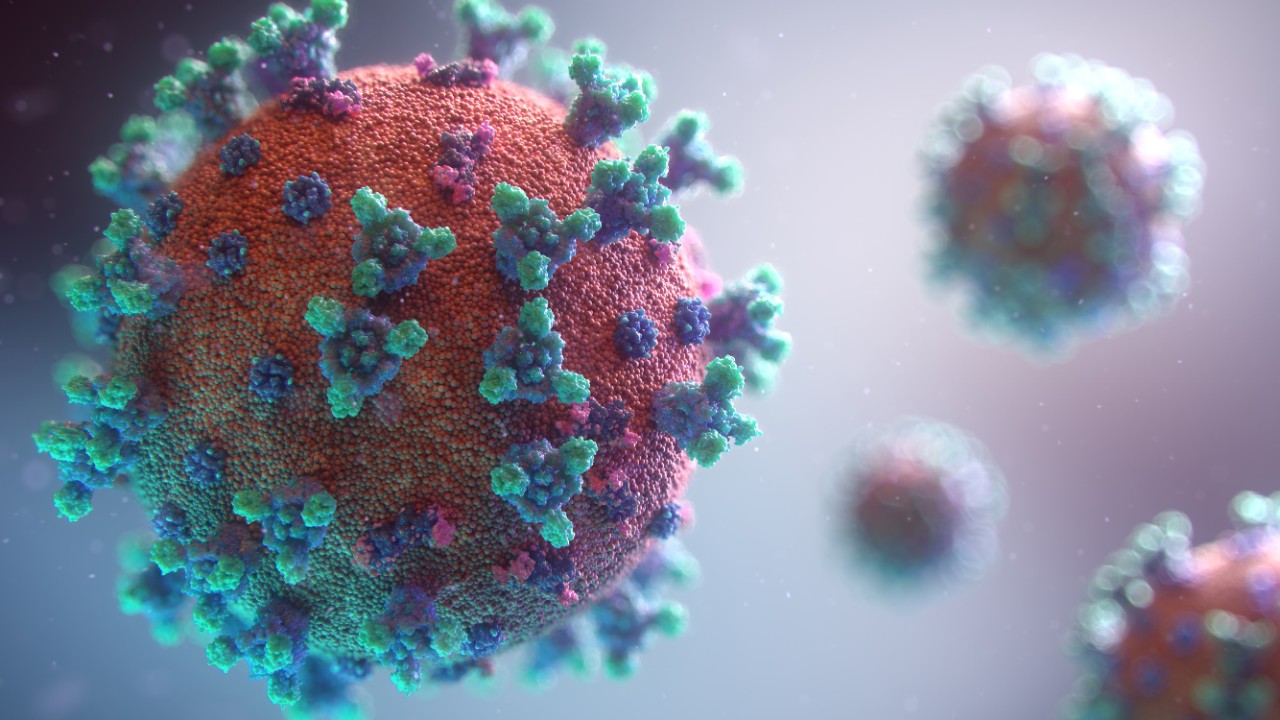
Featured image at top of coronavirus/Unsplash.
Next Lives Here
The University of Cincinnati is classified as a Research 1 institution by the Carnegie Commission and is ranked in the National Science Foundation's Top-35 public research universities. UC's graduate students and faculty investigate problems and innovate solutions with real-world impact. Next Lives Here.
Related Stories
Sugar overload killing hearts
November 10, 2025
Two in five people will be told they have diabetes during their lifetime. And people who have diabetes are twice as likely to develop heart disease. One of the deadliest dangers? Diabetic cardiomyopathy. But groundbreaking University of Cincinnati research hopes to stop and even reverse the damage before it’s too late.
App turns smartwatch into detector of structural heart disease
November 10, 2025

An app that uses an AI model to read a single-lead ECG from a smartwatch can detect structural heart disease, researchers reported at the 2025 Scientific Sessions of the American Heart Association. Although the technology requires further validation, researchers said it could help improve the identification of patients with heart failure, valvular conditions and left ventricular hypertrophy before they become symptomatic, which could improve the prognosis for people with these conditions.
Combination immunotherapy helps overcome melanoma treatment resistance
November 10, 2025

MSN highlighted research led by the University of Cincinnati Cancer Center's Trisha Wise-Draper showing a combination of immunotherapy medications can activate a robust immune response and help overcome treatment resistance in patients with refractory melanoma.