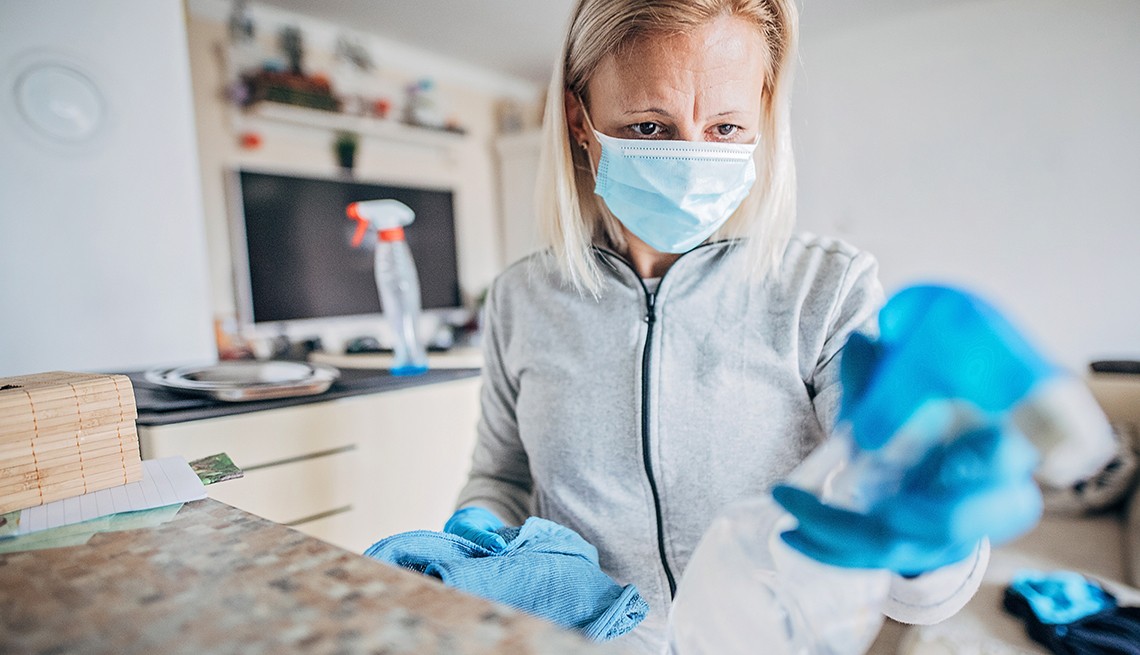
AARP: Keeping your home healthy before, during and after caregiver visits
UC expert offers tips on staying sanitary when a caregiver visits

AARP interviewed Dr. Carl Fichtenbaum of UC's Division of Infectious Diseases for a story on how to maintain a sanitary environment in your home before, during and after a visit from a caregiver.

Dr. Carl Fichtenbaum in a lab in the Division of Infectious Diseases at the UC College of Medicine. Photo credit/Joe Fuqua II/UC Creative + Brand
Dr. Fichtenbaum says older adults should first check with caretakers and aides through their home care company if they have a policy of screening staff for COVID-19 symptoms or exposure each day prior to a visit.
"If you hire someone directly, call them the day before and ask about symptoms like fever, cough, sneezing or runny nose," says Dr. Fichtenbaum. "Ask if they have been exposed to someone with COVID-19 in the past two weeks. If yes to either, it's probably best to avoid the visit."
Read the entire article here.
Find the latest details related to coronavirus disease 2019 (covid-19) on the Centers for Disease Control and Prevention (CDC) website, and follow UC's latest information with regard to the virus.
Related Stories
App turns smartwatch into detector of structural heart disease
November 10, 2025

An app that uses an AI model to read a single-lead ECG from a smartwatch can detect structural heart disease, researchers reported at the 2025 Scientific Sessions of the American Heart Association. Although the technology requires further validation, researchers said it could help improve the identification of patients with heart failure, valvular conditions and left ventricular hypertrophy before they become symptomatic, which could improve the prognosis for people with these conditions.
2025 Daniel Drake Medals awarded to four distinguished leaders
November 10, 2025
The University of Cincinnati College of Medicine is honoring four distinguished leaders with the 2025 Daniel Drake Medals for excellence in medical research, education and patient care.
Nephrologists miss opportunities to discuss contraceptive use with women with chronic kidney disease
November 7, 2025

Discussions about contraceptive use for women with chronic kidney disease are often avoided by nephrologists, according to University of Cincinnati data presented this week at the American Society of Nephrology's Kidney Week global. meeting in Houston. Nephrologists reported that they see the importance of reproductive health but feel ill-equipped to discuss it with patients. Discomfort, limited training and confusing guidance were among the key barriers to discussions.