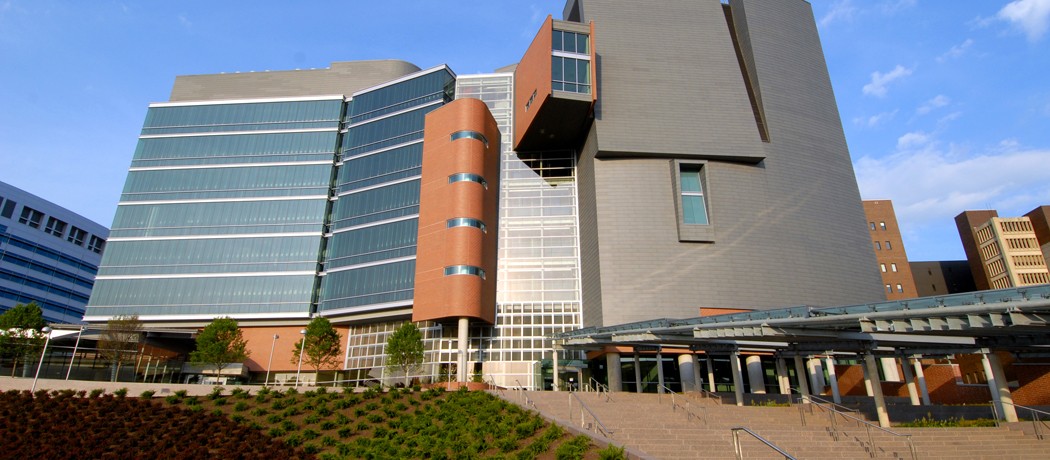
Incoming medicine students celebrate Match Day 2020 amidst COVID-19


The coronavirus (COVID-19) pandemic caused the cancellation of the College of Medicine’s traditional high-energy Match Day celebration, but it could not dampen student excitement of matching to residency programs around the country. Instead of hearing their names called individually and stepping onto the Kresge Auditorium stage to blaring music and wild cheers, students this year learned their match results by visiting MedOneStop at noon, Friday, March 20. Instead of one large celebration, this year most students celebrated individually with their family and friends and through social media.
Jacqyln Riemersma (pictured), a fourth-year med student, matched into obstetrics and gynecology at UC Medical Center. She was at home with her fiance, parents and sister when she learned she got her first pick for residency.
“I was so happy and my mom has this crazy video on Facebook of me screaming my head off,” said Riemersma, who also posted a picture on Instagram.
She said she decided her passion was helping patients in OB/GYN during her third year of medical school. Riemersma was doing a clinical rotation at UC Medical Center. “I fell in love with the program and the patients at UC Medical Center. This has been a really memorable Match Day.”
This year 156 College of Medicine students matched. There were 40,084 U.S. and international applicants in the 2020 match, a record number. Of the matched UC students, 36 will do at least part of their residency at hospitals in Greater Cincinnati. Of those, 17 will stay at UC Medical Center, eight at Cincinnati Children’s, three each at Christ Hospital and Kettering Health, two each at Good Samaritan, Jewish and St. Elizabeth hospitals and one at Wright State University Boonschoft School of Medicine. The most popular residencies were internal medicine with 38 students; pediatrics/Med-Peds with 20 students; family medicine with 14 students; and emergency medicine and surgery, both with 12 students.
Among the prestigious programs UC students matched to were Baylor College of Medicine; Case Western Reserve University; Cleveland Clinic; Dartmouth Hitchcock Medical Center; Emory University; Johns Hopkins University; New York Presbyterian Hospital; Stanford University; University of California, San Diego; University of Chicago; University of Iowa; University of Michigan; University of Pennsylvania; University of Pittsburgh; University of Southern California; Vanderbilt University; and Yale-New Haven Hospital.
Students matched with programs in 28 states and the District of Columbia. Fifty-three matched with programs in Ohio. Other most-matched states were Michigan with 11; Kentucky and Texas, both with nine; Illinois with eight; and California and Pennsylvania, both with seven.
Related Stories
Sugar overload killing hearts
November 10, 2025
Two in five people will be told they have diabetes during their lifetime. And people who have diabetes are twice as likely to develop heart disease. One of the deadliest dangers? Diabetic cardiomyopathy. But groundbreaking University of Cincinnati research hopes to stop and even reverse the damage before it’s too late.
App turns smartwatch into detector of structural heart disease
November 10, 2025

An app that uses an AI model to read a single-lead ECG from a smartwatch can detect structural heart disease, researchers reported at the 2025 Scientific Sessions of the American Heart Association. Although the technology requires further validation, researchers said it could help improve the identification of patients with heart failure, valvular conditions and left ventricular hypertrophy before they become symptomatic, which could improve the prognosis for people with these conditions.
Combination immunotherapy helps overcome melanoma treatment resistance
November 10, 2025

MSN highlighted research led by the University of Cincinnati Cancer Center's Trisha Wise-Draper showing a combination of immunotherapy medications can activate a robust immune response and help overcome treatment resistance in patients with refractory melanoma.