WCPO: How local call centers are coping with a rising number of COVID-19 cases
UC epidemiologist explains how to minimize risks

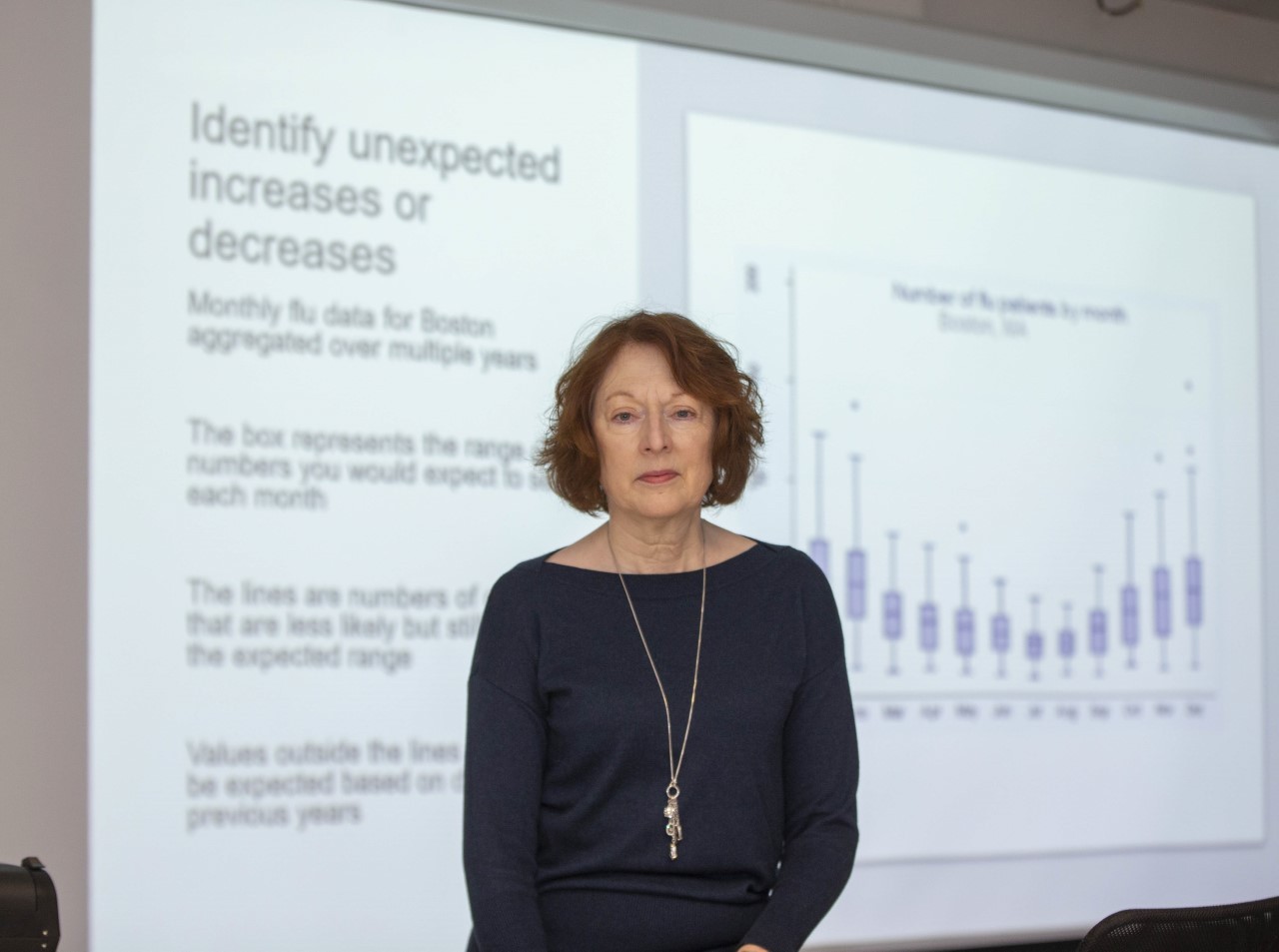
Florence Fulk, adjunct associate professor environmental health and public sciences, spoke to WCPO reporter Dan Monk about ways to minimize risk in the workspace. A number of call centers in the Greater Cincinnati area have reported employees that have tested positive for COVID-19.
“We are going to see more and more cases over time regardless where you are,” Fulk told WCPO. “There is never a place where you can get to zero risk when you have a pandemic going on. But what you can do is try to minimize your risk.”
By now, you’ve likely heard many of the guidelines for personal defense against COVID-19: Washing hands frequently for at least 20 seconds, keeping your hands away from your face and mouth, maintaining a safe social distance of six feet. Here’s one you may not know: If you’re using a hand sanitizer, make sure it has an alcohol content of at least 60%.
.
Fulk provided three links with the best information for companies and employees to follow. The first is a CDC site for business guidance. The second is a CDC site for individuals. The third is a list of disinfectants from the U.S. Environmental Protection Agency.
Related Stories
Sugar overload killing hearts
November 10, 2025
Two in five people will be told they have diabetes during their lifetime. And people who have diabetes are twice as likely to develop heart disease. One of the deadliest dangers? Diabetic cardiomyopathy. But groundbreaking University of Cincinnati research hopes to stop and even reverse the damage before it’s too late.
App turns smartwatch into detector of structural heart disease
November 10, 2025

An app that uses an AI model to read a single-lead ECG from a smartwatch can detect structural heart disease, researchers reported at the 2025 Scientific Sessions of the American Heart Association. Although the technology requires further validation, researchers said it could help improve the identification of patients with heart failure, valvular conditions and left ventricular hypertrophy before they become symptomatic, which could improve the prognosis for people with these conditions.
Combination immunotherapy helps overcome melanoma treatment resistance
November 10, 2025

MSN highlighted research led by the University of Cincinnati Cancer Center's Trisha Wise-Draper showing a combination of immunotherapy medications can activate a robust immune response and help overcome treatment resistance in patients with refractory melanoma.