Drug Target Review: Pinpointing function in cancer T cells could be new immunotherapy
UC research has found that increasing a certain function in cancer T cells could mean a new therapy

A previously unknown T cell mechanism that could explain the reason behind decreased immune function in cancer patients has been discovered. According to University of Cincinnati researchers, their finding may present a new immunotherapeutic target for patients with head and neck cancers.
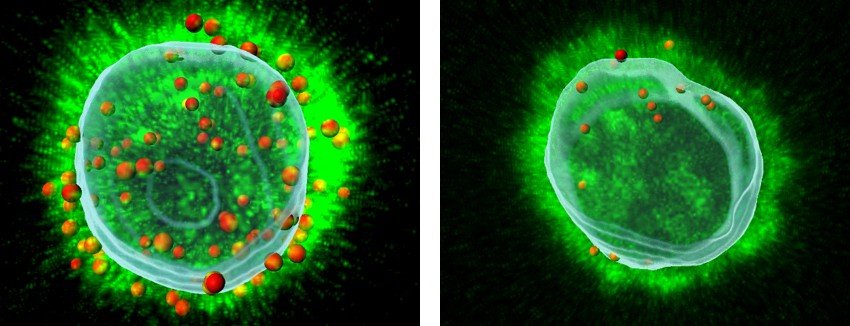
The study, led by Laura Conforti and Ameet Chimote, in the Division of Nephrology and Hypertension, UC Department of Internal Medicine, revealed that a reduced interaction between a molecule called calmodulin and the ion channel KCa3.1 in the immune cells of cancer patients plays an important role in the limited function of these cells. The team performed experiments on cytotoxic T cells taken from the blood of patients with head and neck cancer.
Featured photo courtesy of Laura Conforti and Ameet Chimote.
Related Stories
Sugar overload killing hearts
November 10, 2025
Two in five people will be told they have diabetes during their lifetime. And people who have diabetes are twice as likely to develop heart disease. One of the deadliest dangers? Diabetic cardiomyopathy. But groundbreaking University of Cincinnati research hopes to stop and even reverse the damage before it’s too late.
App turns smartwatch into detector of structural heart disease
November 10, 2025

An app that uses an AI model to read a single-lead ECG from a smartwatch can detect structural heart disease, researchers reported at the 2025 Scientific Sessions of the American Heart Association. Although the technology requires further validation, researchers said it could help improve the identification of patients with heart failure, valvular conditions and left ventricular hypertrophy before they become symptomatic, which could improve the prognosis for people with these conditions.
Combination immunotherapy helps overcome melanoma treatment resistance
November 10, 2025

MSN highlighted research led by the University of Cincinnati Cancer Center's Trisha Wise-Draper showing a combination of immunotherapy medications can activate a robust immune response and help overcome treatment resistance in patients with refractory melanoma.