Forbes: This startup is using design to help everyone learn to read
Founded by UC design professor Renee Seward, See Word Design is a Venture Lab success story

A startup founded by a University of Cincinnati faculty member continues to attract national attention.
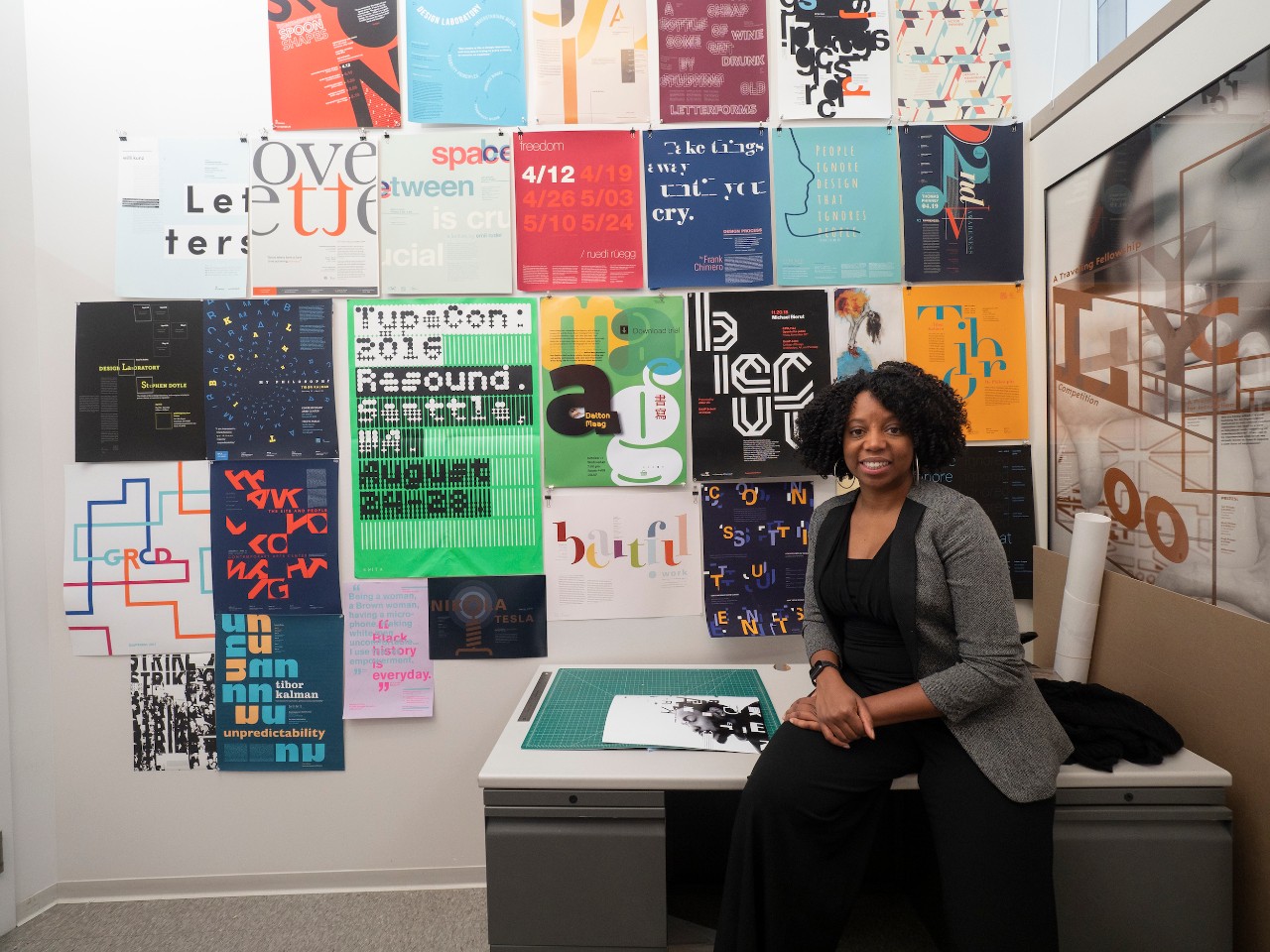
See Word Design is the brainchild of Renee Seward, an associate professor with the UC College of Design, Architecture, Art, and Planning. Seward's company started as a simple idea: use graphics to assist young readers by providing visual context clues.
“While it wasn’t the page layout, I did realize that the same strategies that we use to build brands could possibly help teach early reading skills,” Seward told Forbes contributor Liz Engel. “I started visiting private schools, cold calling reading and technology specialists, and asking the question, how can design impact education? Since then, this research has constantly been evolving.”
The Forbes piece delves into the story behind Seward's 13-year journey from inspiration to startup founder and focuses in part on her experience going through the Venture Lab startup pre-accelerator at UC's 1819 Innovation Hub. Venture Lab entrepreneur-in-residence Nancy Koors, which whom Seward co-founded See Word Design, now serves as the company's CEO.
UC's Innovation Agenda and the 1819 Innovation Hub are key components of Next Lives Here, the university's strategic direction. The Venture Lab pre-accelerator program at the 1819 Innovation Hub helps UC faculty, staff, students and alumni commercialize their ideas.

Renee Seward, left, and Nancy Koors. Photo/Andrew Higley/UC Creative Services
Next Lives Here
Next Lives Here, the University of Cincinnati’s strategic direction, defines our moment and our momentum. More nimble and more robust than a plan, Next Lives Here announces our vision to the world—to lead urban public universities into a new era of innovation, impact, and inclusion.
Related Stories
Sugar overload killing hearts
November 10, 2025
Two in five people will be told they have diabetes during their lifetime. And people who have diabetes are twice as likely to develop heart disease. One of the deadliest dangers? Diabetic cardiomyopathy. But groundbreaking University of Cincinnati research hopes to stop and even reverse the damage before it’s too late.
Is going nuclear the solution to Ohio’s energy costs?
November 10, 2025

The Ohio Capital Journal recently reported that as energy prices continue to climb, economists are weighing the benefits of going nuclear to curb costs. The publication dove into a Scioto Analysis survey of 18 economists to weigh the pros and cons of nuclear energy. One economist featured was Iryna Topolyan, PhD, professor of economics at the Carl H. Lindner College of Business.
App turns smartwatch into detector of structural heart disease
November 10, 2025

An app that uses an AI model to read a single-lead ECG from a smartwatch can detect structural heart disease, researchers reported at the 2025 Scientific Sessions of the American Heart Association. Although the technology requires further validation, researchers said it could help improve the identification of patients with heart failure, valvular conditions and left ventricular hypertrophy before they become symptomatic, which could improve the prognosis for people with these conditions.