Bloomberg Law: Chief Justice asks if ‘OK, Boomer’ enough to show age bias

If a prospective employer said “OK, boomer” to a job applicant, is that sufficient to show age discrimination? That’s the hypothetical question posted by Chief Justice John Roberts in one of two cases this term focused on how courts should analyze discrimination lawsuits in the private and government sectors. Sandra Sperino, Judge Joseph P. Kinneary Professor of Law at the University of Cincinnati’s College of Law, weighs in in a Bloomberg Law news story examining the central question facing the justices as they consider oral arguments in a case where the ultimate ruling will apply to roughly 2.1 million federal workers and either make it easier or harder for them to prove age bias under the Age Discrimination in Employment Act of 1967.
“The key issue is how to translate causal language in statutes into legal language,” said Sperino, who teaches torts and employment law at Cincinnati Law. “There are many different paths to do that, and so the Supreme Court is struggling which path to choose.”
Read the story here.
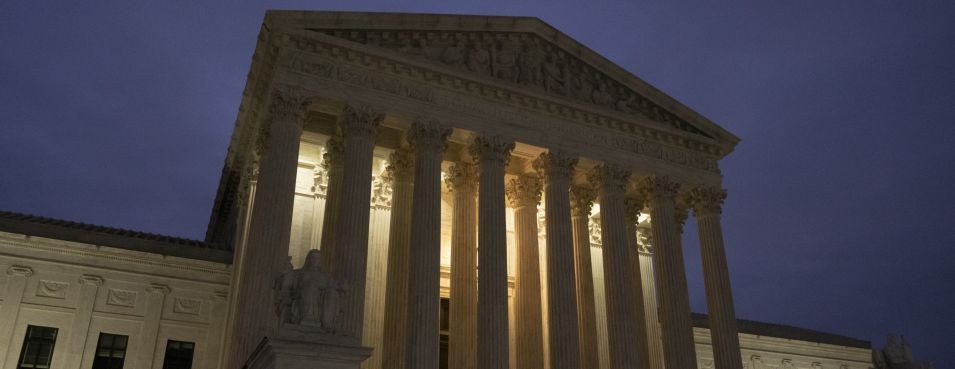
Featured image at top: The U.S. Supreme Court building in November 2019. Photographer: Stefani Reynolds/Bloomberg
Related Stories
Sugar overload killing hearts
November 10, 2025
Two in five people will be told they have diabetes during their lifetime. And people who have diabetes are twice as likely to develop heart disease. One of the deadliest dangers? Diabetic cardiomyopathy. But groundbreaking University of Cincinnati research hopes to stop and even reverse the damage before it’s too late.
Is going nuclear the solution to Ohio’s energy costs?
November 10, 2025

The Ohio Capital Journal recently reported that as energy prices continue to climb, economists are weighing the benefits of going nuclear to curb costs. The publication dove into a Scioto Analysis survey of 18 economists to weigh the pros and cons of nuclear energy. One economist featured was Iryna Topolyan, PhD, professor of economics at the Carl H. Lindner College of Business.
App turns smartwatch into detector of structural heart disease
November 10, 2025

An app that uses an AI model to read a single-lead ECG from a smartwatch can detect structural heart disease, researchers reported at the 2025 Scientific Sessions of the American Heart Association. Although the technology requires further validation, researchers said it could help improve the identification of patients with heart failure, valvular conditions and left ventricular hypertrophy before they become symptomatic, which could improve the prognosis for people with these conditions.