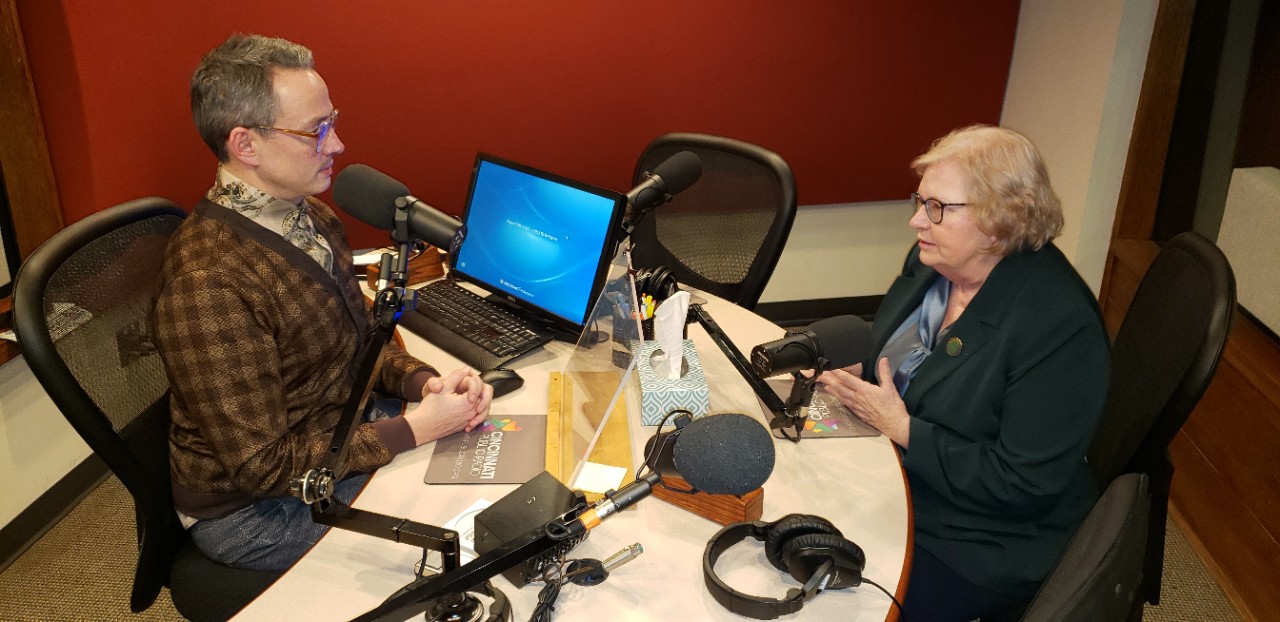
WVXU: Concern over PFAS in our water may not be over
UC scientist discusses impact of drinking water pollutants in region and nation

The recent movie “Dark Waters” continues to drive conversations about pollutants in the nation’s drinking water. The environmental thriller is based off of the real story of Cincinnati attorney Robert Bilott and an environmental lawsuit he brought against one of the world’s largest chemical companies, DuPont. It was filmed in our region and its subject matter has raised concerns about PFOA, also known as perfluorooctanoic acid, and PFAS, also known as polyfluoroalkyl substances.
Susan Pinney, a professor in the UC Department of Environmental Health and director of the UC Center for Environmental Genetics, has studied the impact of PFOA and PFAS for much of her professional career. She joined Cincinnati Edition to discuss health concerns associated with these pollutants along with officials from the Sierra Club Gender, Equity and Environment Program and the Ohio Environmental Protection Agency.
UC’s Pinney authored a 2017 study that found that residents of the Mid-Ohio River Valley (from Cincinnati north to Huntington, West Virginia) had higher than normal levels of PFOA based on blood samples collected over a 22-year span. The exposure source was likely from drinking water contaminated by the industrial discharges upriver described in “Dark Waters.”
Related Stories
Sugar overload killing hearts
November 10, 2025
Two in five people will be told they have diabetes during their lifetime. And people who have diabetes are twice as likely to develop heart disease. One of the deadliest dangers? Diabetic cardiomyopathy. But groundbreaking University of Cincinnati research hopes to stop and even reverse the damage before it’s too late.
App turns smartwatch into detector of structural heart disease
November 10, 2025

An app that uses an AI model to read a single-lead ECG from a smartwatch can detect structural heart disease, researchers reported at the 2025 Scientific Sessions of the American Heart Association. Although the technology requires further validation, researchers said it could help improve the identification of patients with heart failure, valvular conditions and left ventricular hypertrophy before they become symptomatic, which could improve the prognosis for people with these conditions.
Combination immunotherapy helps overcome melanoma treatment resistance
November 10, 2025

MSN highlighted research led by the University of Cincinnati Cancer Center's Trisha Wise-Draper showing a combination of immunotherapy medications can activate a robust immune response and help overcome treatment resistance in patients with refractory melanoma.