UC professor receives A&S’s innovative instruction award
Jennifer Vojtko Rubí’s approach to flipped-classroom model trains students to ‘think like scholars’

By Tawney Beans
Award-winning educator Jennifer Vojtko Rubí has been bringing her passion for teaching Spanish to middle school, high school and college classrooms for nearly 20 years — the last two of which in UC's College of Arts and Sciences. The college recognized Vojtko Rubí’s efforts in its Department of Romance and Arabic Languages and Literatures (RALL) and presented her with the Dean’s Award for Innovative Instruction.
This award annually recognizes a team or individual that utilizes fresh and effective educational strategies within their courses that promote higher order thinking and create opportunities for students to solve real-world problems.
Vojtko Rubí received this award because of her stylistic application of the flipped-classroom model, where students learn from their textbook at home and later apply that knowledge to complete task-based activities in class.

Assistant professor-educator Jennifer Vojtko Rubí
“Language learning happens through interaction, so I set up and guide my students through an activity and then let my students interact and collaborate with each other,” she said. “The in-class activities are kind of like hiding zucchini in chocolate brownies — they are using Spanish without often realizing it.”
Ensuring students’ long-term success was Vojtko Rubí’s primary motivation for instilling the flipped-classroom technique into her Spanish classes. She wanted to make Spanish a meaningful part of her undergraduate students’ education — rather than just a requirement to be filled — and make sure that her teaching assistants were familiar with contemporary language instruction when entering the job market.
The in-class activities are kind of like hiding zucchini in chocolate brownies — they are using Spanish without often realizing it.
Jennifer Vojtko Rubí
According to Vojtko Rubí, the flipped-classroom model enables students to become agents of their own learning instead of the objects of her teaching. “In our classes, we show them how to study vocabulary and grammar on their own and help them develop strategies and metacognitive skills during class time,” she added. “These skills are transferable to other courses and beyond, when the stakes are higher than a grade on a transcript.”
Through A&S awards, Vojtko Rubí attended workshops that taught her a variety of teaching practices such as tailoring student learning objectives to enhance language retention and progression. These experiences and the college’s financial support helped her set up her flipped classroom and redesign the online and in-person intensive language program.
According to Vojtko Rubí, the instructors and teaching assistants within RALL’s basic intensive language classes have had the greatest impact on her. “It is an exciting time for the teaching and learning of languages and this award is shared with the instructors and teaching assistants who have embraced the flipped model,” she said. “Their excitement for and dedication to teaching Spanish language and culture using this model inspires me every day.”
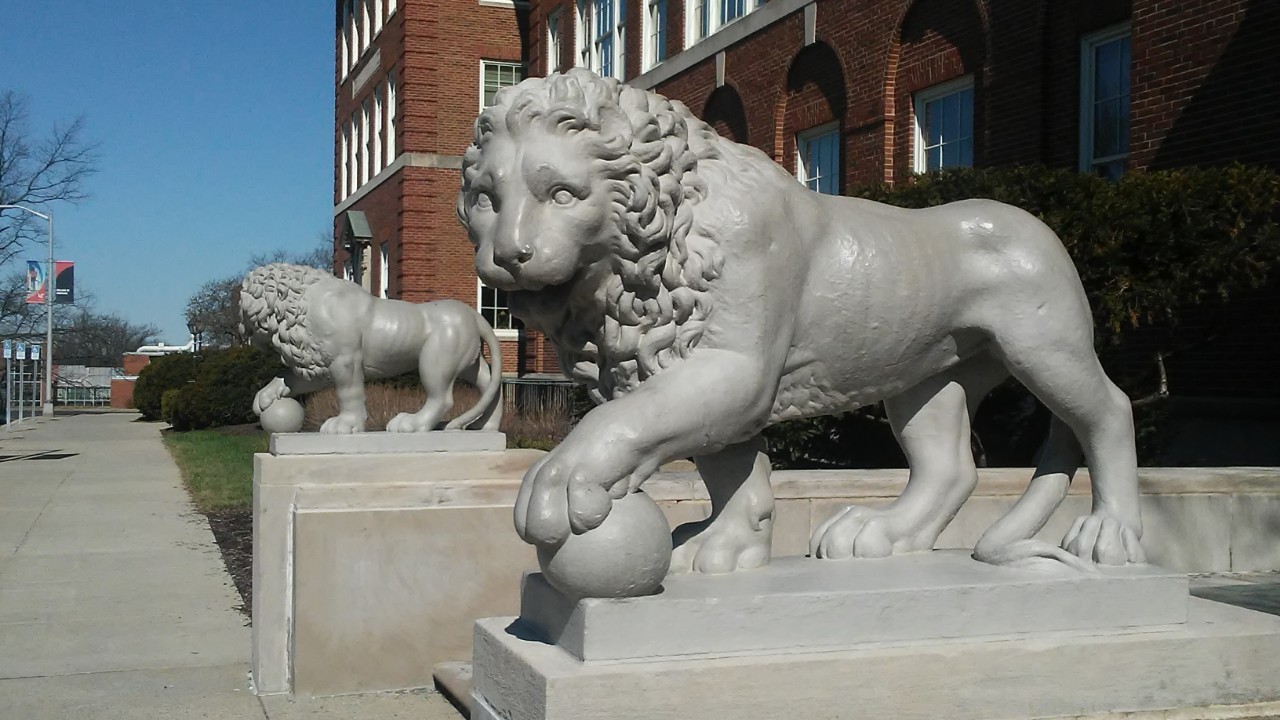
Featured image at top: Mick and Mack, the iconic mascots for UC's College of Arts and Sciences. Photo/Anne Bowling
Related Stories
Sugar overload killing hearts
November 10, 2025
Two in five people will be told they have diabetes during their lifetime. And people who have diabetes are twice as likely to develop heart disease. One of the deadliest dangers? Diabetic cardiomyopathy. But groundbreaking University of Cincinnati research hopes to stop and even reverse the damage before it’s too late.
Is going nuclear the solution to Ohio’s energy costs?
November 10, 2025

The Ohio Capital Journal recently reported that as energy prices continue to climb, economists are weighing the benefits of going nuclear to curb costs. The publication dove into a Scioto Analysis survey of 18 economists to weigh the pros and cons of nuclear energy. One economist featured was Iryna Topolyan, PhD, professor of economics at the Carl H. Lindner College of Business.
App turns smartwatch into detector of structural heart disease
November 10, 2025

An app that uses an AI model to read a single-lead ECG from a smartwatch can detect structural heart disease, researchers reported at the 2025 Scientific Sessions of the American Heart Association. Although the technology requires further validation, researchers said it could help improve the identification of patients with heart failure, valvular conditions and left ventricular hypertrophy before they become symptomatic, which could improve the prognosis for people with these conditions.