Cincinnati Business Courier: UC makes dean for College of Medicine official
Andrew Filak, MD, leads medical school as bicentennial approaches

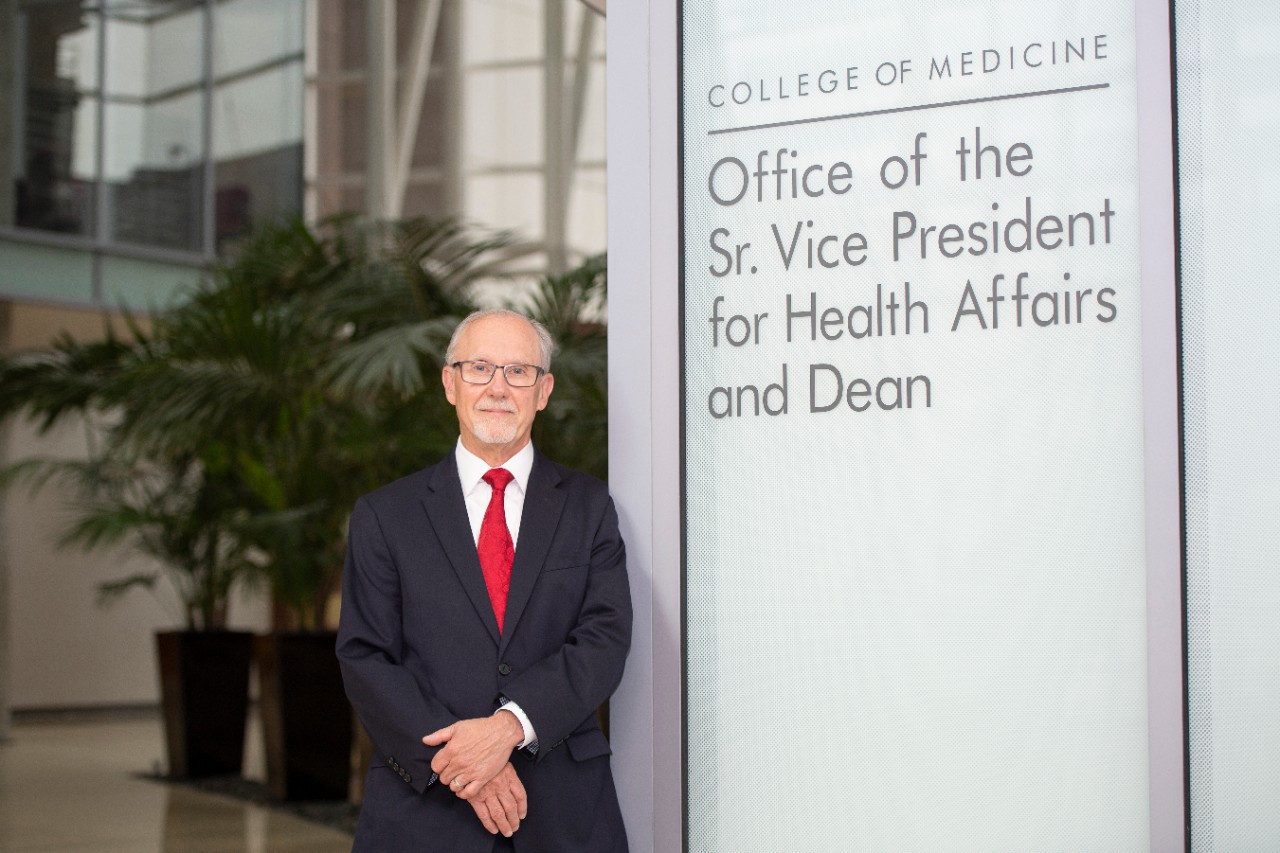
Cincinnati Business Courier reports the University of Cincinnati has named Dr. Andrew Filak, Jr., dean of the College of Medicine and senior vice president for health affairs. Filak, who has been serving in the role on an interim basis since August 2018, will officially assume the position January 1, 2020, pending approval by the UC Board of Trustees. Filak will oversee a medical college consisting off 25 departments with about 2,500 employees and almost 1,700 students. A 2016 UC Economics Center study concluded the College of Medicine has an economic impact of about $ 1billion in the region.
Filak has more than four decades of experience at the UC College of Medicine, UC Medical Center, and the UC Academic Heath Center. Prior to his position as interim dean, Dr. Filak served as senior associate dean for academic affairs, founding chair of the Department of Medical Education and professor of medical education and family and community medicine at the UC College of Medicine. He also served as vice president for education for UC Health.
Related Stories
Sugar overload killing hearts
November 10, 2025
Two in five people will be told they have diabetes during their lifetime. And people who have diabetes are twice as likely to develop heart disease. One of the deadliest dangers? Diabetic cardiomyopathy. But groundbreaking University of Cincinnati research hopes to stop and even reverse the damage before it’s too late.
App turns smartwatch into detector of structural heart disease
November 10, 2025

An app that uses an AI model to read a single-lead ECG from a smartwatch can detect structural heart disease, researchers reported at the 2025 Scientific Sessions of the American Heart Association. Although the technology requires further validation, researchers said it could help improve the identification of patients with heart failure, valvular conditions and left ventricular hypertrophy before they become symptomatic, which could improve the prognosis for people with these conditions.
Combination immunotherapy helps overcome melanoma treatment resistance
November 10, 2025

MSN highlighted research led by the University of Cincinnati Cancer Center's Trisha Wise-Draper showing a combination of immunotherapy medications can activate a robust immune response and help overcome treatment resistance in patients with refractory melanoma.