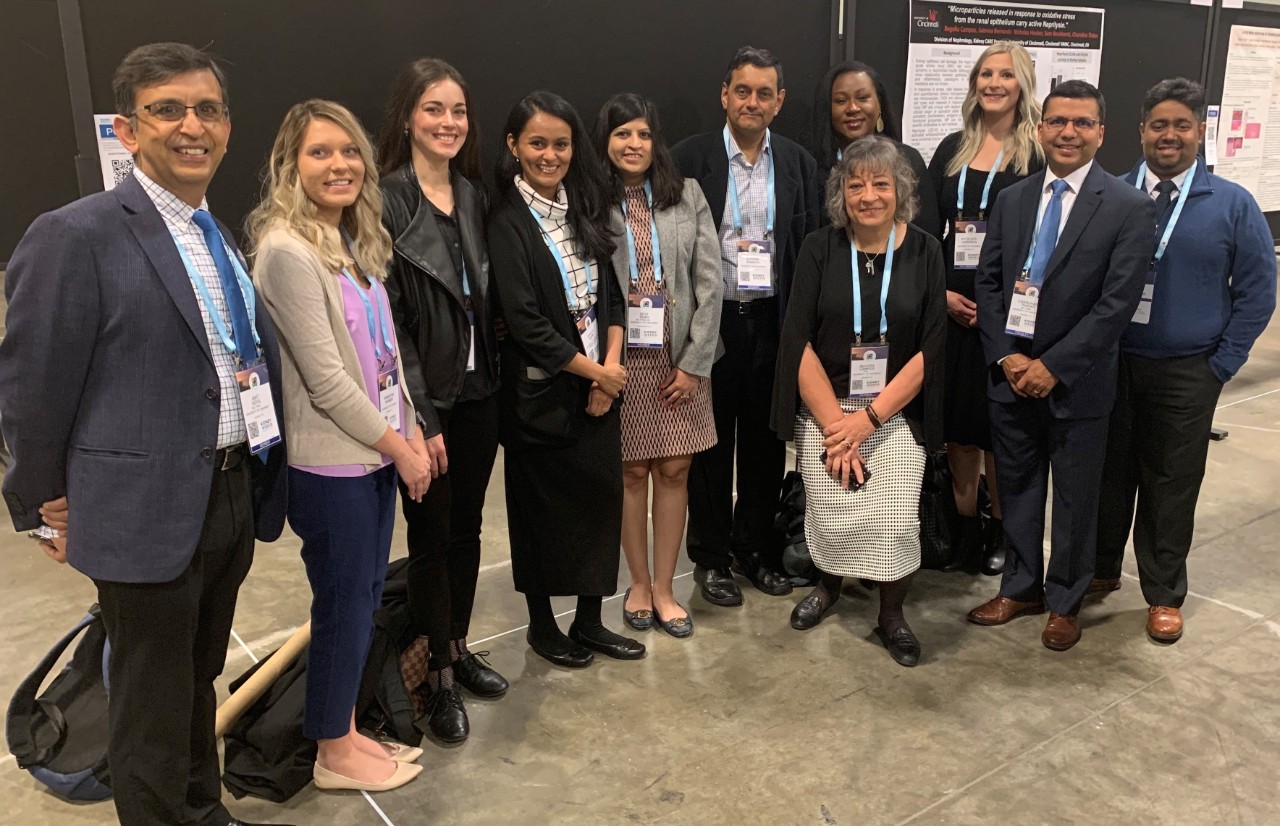
UC faculty, staff and students presenting at nephrology meeting

The University of Cincinnati Division of Nephrology, Kidney/CARE Program will be well-represented at the American Society of Nephrology (ASN) annual meetings being held Nov. 7-10 in Washington, D.C.
This year, members of the division, including faculty and trainees, will be presenting 12 abstract/oral presentations along with several additional invited lectures. The research themes include basic and translational research, observational/clinical outcomes research, quality improvement and health services research. The content areas include kidney disease and health disparities, women’s health and kidney disease, acute kidney injury (AKI) and critical care, chronic kidney disease and end stage renal disease, renal physiology and fluid and electrolyte disorders.
The ASN annual meeting is the largest academic conference in nephrology, with more than 20,000 members representing 130 countries and over 10,000 attendees. This conference provides an opportunity to showcase cutting-edge research and innovations and discovery to improve outcomes in patients with kidney disease. The presentations as posters or as free communications are selected by a peer-review process, while the invited presentations are selected by the post-graduate education/program committees of the society.
“The diverse thematic and content areas of research reflect our core strengths, and is a representation of the success of our research mission within the division and the department,” says Charuhas Thakar, MD, professor and director of the division at the UC College of Medicine. “In addition to faculty, several presentations will be led by trainees, renal fellows and post-doctoral scientists. This effort highlights the trainees and their mentors within the division, and provides a platform to further advance our research and collaborations.”
Silvi Shah, MD, assistant professor in the division, will lead two oral presentations: ”Clinical Outcomes and Disparities with ESKD due to AKI in the United States” and “Pregnancy related AKI and Diabetes: Hospitalizations and Clinical Outcomes.” The latter presentation was selected by ASN as one of the highlights at the meeting.
Two of the attendees and presenters representing the division include second-year medical student Evan Singleton, from the Medical Student Scholar’s Program, and Nick Heuker from the undergraduate program in Biomedical Sciences. Both students were awarded the ASN Kidney STARS (Students and Residents) grants, which allow them to have a mentored experience at the ASN meeting. Other division members presenting at the meeting include Begona Campos, PhD, research scientist; Thakar; Amy Sears, an advanced practice nurse; and Prakash Gudsoorkar, MD, R. Geoffrey Motz, MD, and Bidyut Sarker, MD, all renal fellows.
Related Stories
Sugar overload killing hearts
November 10, 2025
Two in five people will be told they have diabetes during their lifetime. And people who have diabetes are twice as likely to develop heart disease. One of the deadliest dangers? Diabetic cardiomyopathy. But groundbreaking University of Cincinnati research hopes to stop and even reverse the damage before it’s too late.
App turns smartwatch into detector of structural heart disease
November 10, 2025

An app that uses an AI model to read a single-lead ECG from a smartwatch can detect structural heart disease, researchers reported at the 2025 Scientific Sessions of the American Heart Association. Although the technology requires further validation, researchers said it could help improve the identification of patients with heart failure, valvular conditions and left ventricular hypertrophy before they become symptomatic, which could improve the prognosis for people with these conditions.
Combination immunotherapy helps overcome melanoma treatment resistance
November 10, 2025

MSN highlighted research led by the University of Cincinnati Cancer Center's Trisha Wise-Draper showing a combination of immunotherapy medications can activate a robust immune response and help overcome treatment resistance in patients with refractory melanoma.