WVXU: UC students open free health clinic
Clinic gets support from faculty-physicians, medical and pharmacy students

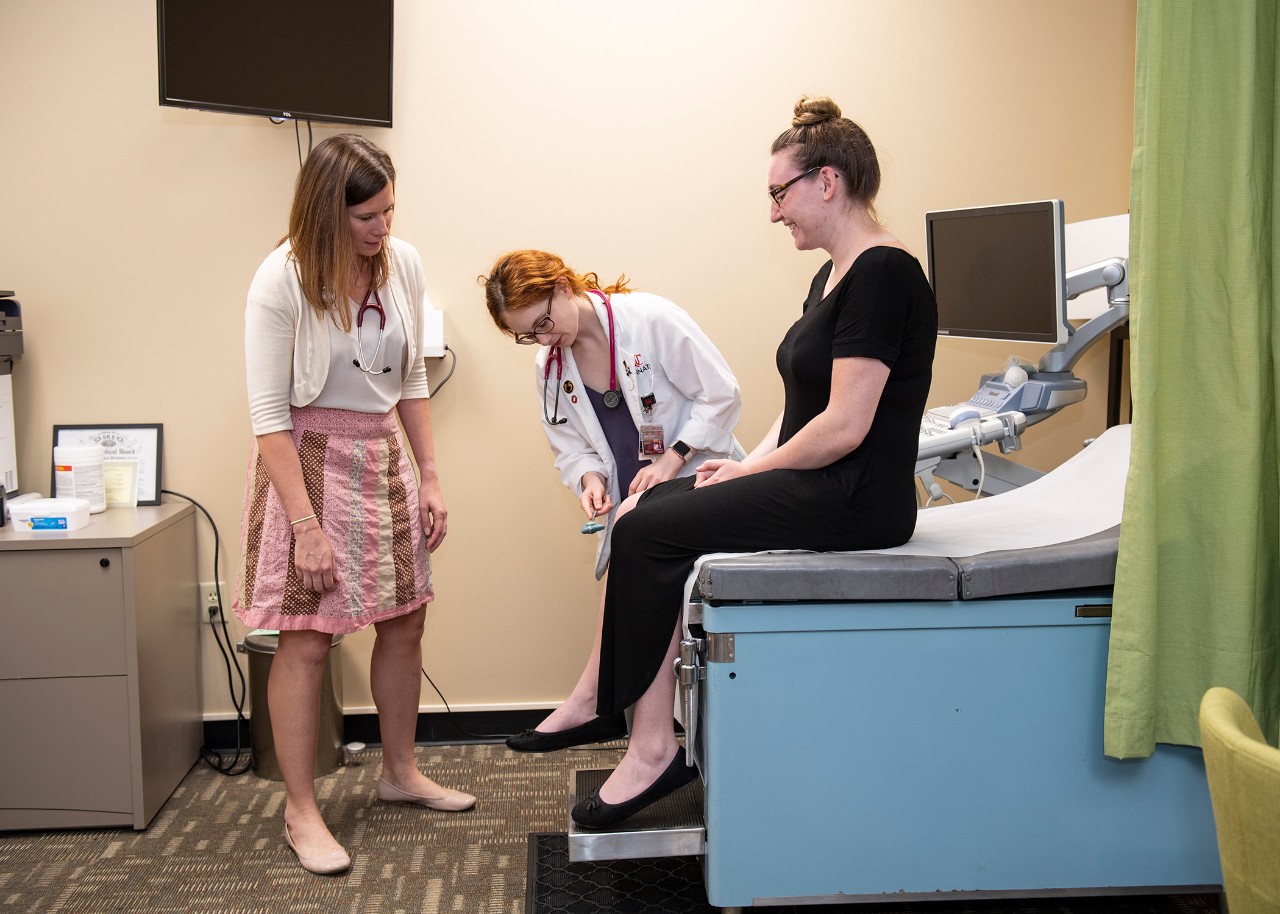
WVXU-91.7 FM's Cincinnati Edition interviewed medical and pharmacy students at the University of Cincinnati to discuss the opening of the UC Student Run Free Clinic in the Healing Center in Springdale. Caroline Hensley, a fourth-year medical student, spearheaded the effort which has been underway for the past four to five years. Hensley was a graduate student in public health when she encountered large numbers of Spanish-speaking residents who traveled long distances for health care and had no insurance.
The idea to offer healthcare to the uninsured took hold as Hensley entered medical school and reached out to fellow medical and later pharmacy students. The UC students reached out to UC faculty-physicians who volunteer their time and provide oversight to the clinic which opens Saturdays from 9 a.m. to noon. Megan Rich, MD, associate professor in the Department of Family and Community Medicine, and Keely Morris, a pharmacy student, joined Hensley for the WVXU broadcast.
LIsten to the Cincinnati Edition Interview
WLWT-Channel 5 also interviewed UC students and faculty discussing the clinic
More about the UC Student Run Free Clinic is available online.
Related Stories
Sugar overload killing hearts
November 10, 2025
Two in five people will be told they have diabetes during their lifetime. And people who have diabetes are twice as likely to develop heart disease. One of the deadliest dangers? Diabetic cardiomyopathy. But groundbreaking University of Cincinnati research hopes to stop and even reverse the damage before it’s too late.
App turns smartwatch into detector of structural heart disease
November 10, 2025

An app that uses an AI model to read a single-lead ECG from a smartwatch can detect structural heart disease, researchers reported at the 2025 Scientific Sessions of the American Heart Association. Although the technology requires further validation, researchers said it could help improve the identification of patients with heart failure, valvular conditions and left ventricular hypertrophy before they become symptomatic, which could improve the prognosis for people with these conditions.
Combination immunotherapy helps overcome melanoma treatment resistance
November 10, 2025

MSN highlighted research led by the University of Cincinnati Cancer Center's Trisha Wise-Draper showing a combination of immunotherapy medications can activate a robust immune response and help overcome treatment resistance in patients with refractory melanoma.