Make self-care a priority in the new year
From relaxation yoga to personal training, Campus Recreation can help you reach your goals


The cold weather and shorter days of winter can make it a difficult to stay active and take care of yourself. The beginning of a new year offers a chance to start again and build new habits and routines.
Self-care isn't just about getting exercise and eating well, it means taking care of yourself mentally as well as physically.
Keeping stress levels in check and staying healthy is more important than ever. Campus Recreation has some tips to help you take care of yourself:
- Take time to do something small for yourself each day.
- Set small goals to stay motivated. Celebrate your successes.
- Build more movement into your day. Take the stairs instead of the elevator; replace your afternoon coffee break with a quick walk.
- Try something new. Sometimes the first step is the hardest to take.
- Begin where you are. Give yourself a break-- don't expect perfection.
- Make sure you get enough sleep.
- Exercise. It improves mood, boosts energy, promotes better sleep. It's hard to remember how good it feels to move-- until you get out and move.
- Get support- find a friend, hire a professional, trainer or coach.
Not sure where to start? Campus Rec has a number of programs set up to help you get started.
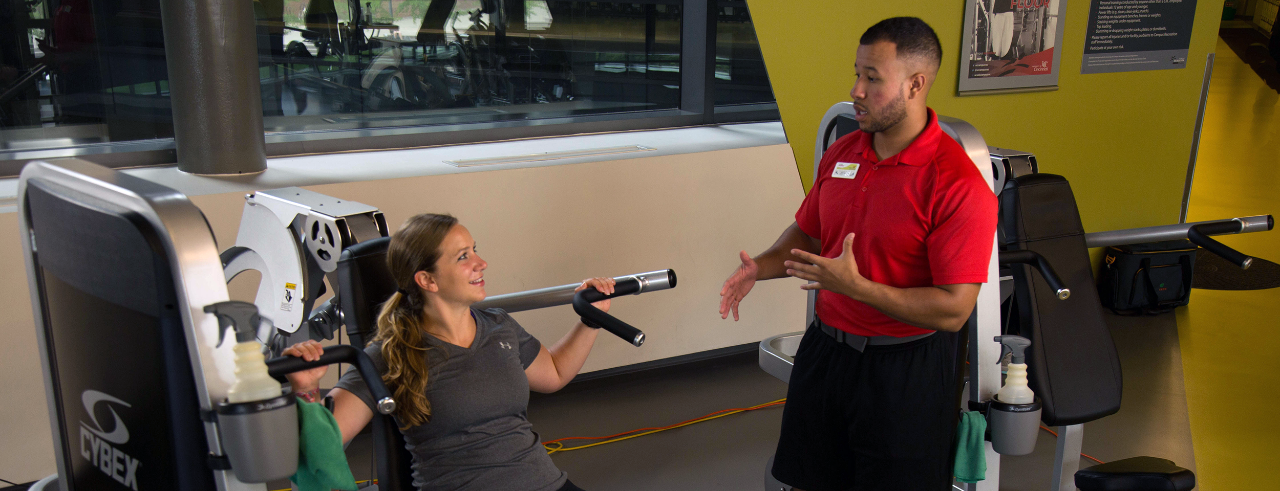
Personal Training Sessions: Certified personal trainers are available to provide careful instruction, accountability, and motivation around your personal health and fitness goals. With a trainer, results are maximized in just 45-minutes. Additionally, access to exclusive, private training spaces are available at both Campus Recreation’s convenient locations.
During the month of January, get one free personal training session for every five sessions purchased. Up to four free sessions are available with purchased sessions.
All Campus Recreation Personal Trainers hold a Nationally-Accredited Certification or are senior-level students in a health & exercise focused program at UC who have completed advanced coursework in Exercise Physiology. Training sessions can be purchased at the member services desk at both the CARE/Crawley Fitness Center and the Campus Rec Center.
Fitness Floor Orientation: Whether you'd like an overview of the fitness floor, an orientation on a specific type of equipment, or simply need help navigating our digital signage, you can take advantage of your free, personal 30-minute Fitness Floor Orientation.
Campus Rec 201 has a series of equipment and exercise videos on the CRC website that offer tips and advice.
For more information about all the Campus Rec’s personal trainers, please visit the Personal Training Web page or call: 513-556-0604.
Related Stories
Sugar overload killing hearts
November 10, 2025
Two in five people will be told they have diabetes during their lifetime. And people who have diabetes are twice as likely to develop heart disease. One of the deadliest dangers? Diabetic cardiomyopathy. But groundbreaking University of Cincinnati research hopes to stop and even reverse the damage before it’s too late.
Is going nuclear the solution to Ohio’s energy costs?
November 10, 2025

The Ohio Capital Journal recently reported that as energy prices continue to climb, economists are weighing the benefits of going nuclear to curb costs. The publication dove into a Scioto Analysis survey of 18 economists to weigh the pros and cons of nuclear energy. One economist featured was Iryna Topolyan, PhD, professor of economics at the Carl H. Lindner College of Business.
App turns smartwatch into detector of structural heart disease
November 10, 2025

An app that uses an AI model to read a single-lead ECG from a smartwatch can detect structural heart disease, researchers reported at the 2025 Scientific Sessions of the American Heart Association. Although the technology requires further validation, researchers said it could help improve the identification of patients with heart failure, valvular conditions and left ventricular hypertrophy before they become symptomatic, which could improve the prognosis for people with these conditions.