Cincinnati Enquirer: The Long Hard Road, Part 3
UC medical students eye underserved communities

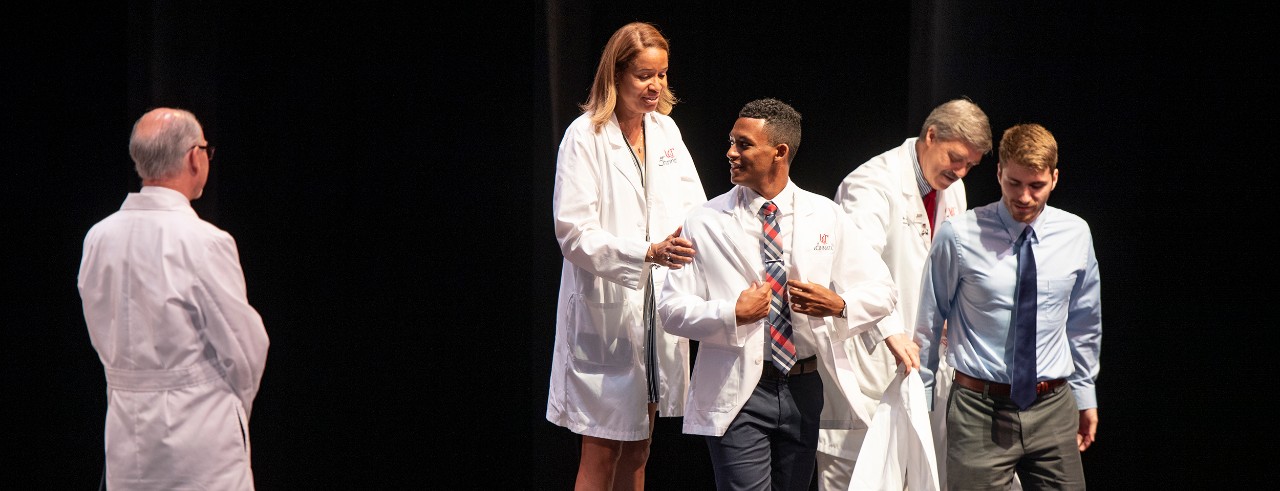
The Cincinnati Enquirer devoted a special section to examining poverty in the Tristate and the inability of residents to achieve upward economic mobility. Part of the section looked at medicine and how while gender equality has improved in medical education, economic diversity lags. Students of color still face an upheld battle in attending medical school. Their presence is crucial in helping to fuel the pipeline for physicians of color serving communities. Three medical students at the University of Cincinnati (UC) College of Medicine—Fernando Blank, Adam Butler and Halimat Olaniyan—shared their thoughts about serving underserved communities. Students of color represented 23 percent of the 185 new medical students at UC College of Medicine, the largest share ever in the school’s history.
Read the special section online.
Learn more about this year diverse class of medical students.
Related Stories
Sugar overload killing hearts
November 10, 2025
Two in five people will be told they have diabetes during their lifetime. And people who have diabetes are twice as likely to develop heart disease. One of the deadliest dangers? Diabetic cardiomyopathy. But groundbreaking University of Cincinnati research hopes to stop and even reverse the damage before it’s too late.
App turns smartwatch into detector of structural heart disease
November 10, 2025

An app that uses an AI model to read a single-lead ECG from a smartwatch can detect structural heart disease, researchers reported at the 2025 Scientific Sessions of the American Heart Association. Although the technology requires further validation, researchers said it could help improve the identification of patients with heart failure, valvular conditions and left ventricular hypertrophy before they become symptomatic, which could improve the prognosis for people with these conditions.
Combination immunotherapy helps overcome melanoma treatment resistance
November 10, 2025

MSN highlighted research led by the University of Cincinnati Cancer Center's Trisha Wise-Draper showing a combination of immunotherapy medications can activate a robust immune response and help overcome treatment resistance in patients with refractory melanoma.