UC researcher part of webinar on sickle cell disease
Webinar is part of the commemoration of National Sickle Cell Awareness Month by the National Heart, Lung and Blood Institute

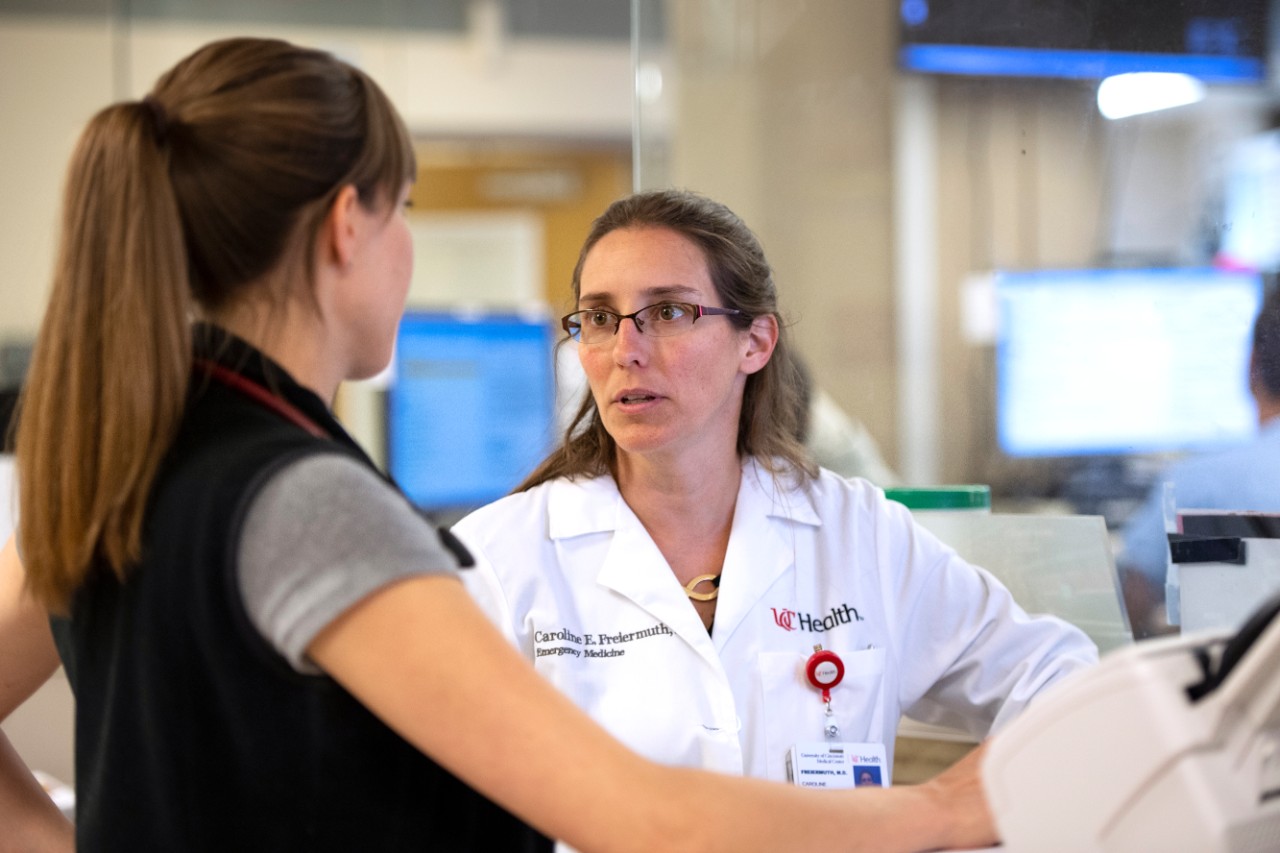
Caroline Freiermuth, associate professor at the UC College of Medicine, will be one of three experts presenting Wednesday, Sept. 25, during a webinar sponsored by the National Heart, Lung, and Blood Institute. The webinar, entitled “Sickle Cell Disease Care in the Emergency Department: Improvement Initiatives and Ongoing Research,” is to commemorate National Sickle Cell Awareness month in September.
Sickle cell disease (SCD) is a multisystem, progressive disorder that affects approximately 100,000 Americans, primarily of African and Hispanic descent. While considered a rare disease by the National Institutes of Health, SCD is the most common genetic blood disorder in the United States and continues to be associated with a significantly shortened lifespan: 42 years and 48 years for females and males, respectively for those with the most severe form.
Patients with SCD often require care in emergency departments for a variety of potentially life-threatening conditions, but most commonly seek treatment for pain due to vaso-occlusive episodes, which occur when the circulation is obstructed by sickled red blood cells, causing injury and pain to organs that are not receiving blood. This webinar session will highlight current evidence-based best practices and ongoing research designed to improve the care of patients with SCD in emergency rooms.
Freiermuth’s presentation will focus on research surrounding pain management. The panel will be discussing results of recent trials as well as some ongoing initiatives to improve emergency department care in general, but primarily around pain management.
“When a vaso-occlusive episode gets bad enough, it causes pain all over your body because then you start to experience infarcting of the bone marrow in your bones and people have this unbearable pain. A lot of them come to the emergency department because there’s no other way to treat their pain,” says Freiermuth. “When someone presents to the emergency department with pain related to a vaso-occlusive episode, the only current treatment is with opioids. The hospital admission rate for this patient population is more than twice the general population. We need to figure out ways to improve pain management and treat the underlying disease for SCD patients.”
Click here to register for the webinar.
Related Stories
Sugar overload killing hearts
November 10, 2025
Two in five people will be told they have diabetes during their lifetime. And people who have diabetes are twice as likely to develop heart disease. One of the deadliest dangers? Diabetic cardiomyopathy. But groundbreaking University of Cincinnati research hopes to stop and even reverse the damage before it’s too late.
App turns smartwatch into detector of structural heart disease
November 10, 2025

An app that uses an AI model to read a single-lead ECG from a smartwatch can detect structural heart disease, researchers reported at the 2025 Scientific Sessions of the American Heart Association. Although the technology requires further validation, researchers said it could help improve the identification of patients with heart failure, valvular conditions and left ventricular hypertrophy before they become symptomatic, which could improve the prognosis for people with these conditions.
Combination immunotherapy helps overcome melanoma treatment resistance
November 10, 2025

MSN highlighted research led by the University of Cincinnati Cancer Center's Trisha Wise-Draper showing a combination of immunotherapy medications can activate a robust immune response and help overcome treatment resistance in patients with refractory melanoma.