Cincinnati Enquirer highlights UC Latino faculty group
Members of UC's Latino Faculty Association discuss reducing isolation, speaking up and fighting for human rights

After organizing internally for two years, the 85-member Latino Faculty Association at the University of Cincinnati is beginning to reach into the broader community.
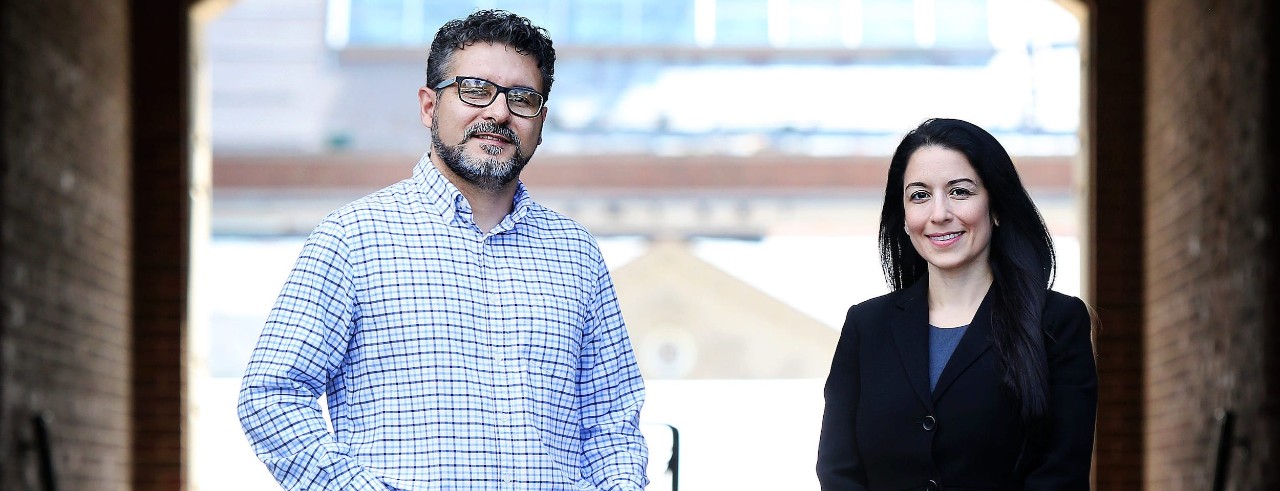
Cincinnati Enquirer reporter Mark Curnutte spoke to founding members J. Mauricio Espinoza, assistant professor of Spanish and Latin American literature/culture, and Maria Espinola, assistant professor of clinical psychiatry, about their work with the growing group.
Goals include greater representation of UC Latino faculty, publicizing UC Latino faculty success, changing narrative about Latino immigrants and recruiting more Latino students to the university.
Members are working with Cincinnati Public Schools to establish a mentoring program in which a Latino UC student is paired with a Latino student at Dater High School in Lower Price Hill. The program then would likely expand to Princeton High School, which also has a large and growing Latino student population.
"Latino professors can play a fundamental role in changing the biases that exist against Latinos by serving as role models for students, educating the public on issues that impact marginalized communities and promoting human rights for all," said Espinola.
Featued image at top: J. Mauricio Espinoza and Maria Espinola are two of the co-founders of the Latino Faculty Association at the University of Cincinnati. Photo/The Enquirer/Amanda Rossmann
Related Stories
Sugar overload killing hearts
November 10, 2025
Two in five people will be told they have diabetes during their lifetime. And people who have diabetes are twice as likely to develop heart disease. One of the deadliest dangers? Diabetic cardiomyopathy. But groundbreaking University of Cincinnati research hopes to stop and even reverse the damage before it’s too late.
App turns smartwatch into detector of structural heart disease
November 10, 2025

An app that uses an AI model to read a single-lead ECG from a smartwatch can detect structural heart disease, researchers reported at the 2025 Scientific Sessions of the American Heart Association. Although the technology requires further validation, researchers said it could help improve the identification of patients with heart failure, valvular conditions and left ventricular hypertrophy before they become symptomatic, which could improve the prognosis for people with these conditions.
Combination immunotherapy helps overcome melanoma treatment resistance
November 10, 2025

MSN highlighted research led by the University of Cincinnati Cancer Center's Trisha Wise-Draper showing a combination of immunotherapy medications can activate a robust immune response and help overcome treatment resistance in patients with refractory melanoma.