St. Louis Post-Dispatch: Jeffrey Layne Blevins: Social media lessons from #Ferguson
UC journalism professor researches social media as platforms where social justice advocates can frame national narratives


By telling their own stories, on their own terms, social justice advocates use social media platforms and mobile-streaming applications as a vehicle to amplify more voices and disrupt, confront or counteract traditional narratives through their own storytelling, writes Jeffrey Blevins, associate professor of journalism and head of the Department of Journalism at the University of Cincinnati.
Blevins, writing in the St. Louis Post-Dispatch, remembers the unrest unleashed in Ferguson, Mo., in the wake of the 2014 shooting death of an unarmed black teenager, Michael Brown, by a white police officer. The first-hand social media stories that emerged led to Blevins' current line of research with colleagues at UC's Digital Scholarship Center, where they produced our first study that graphically illustrates how social justice groups and the public used social media to give personal meaning to the events that took place in Ferguson.
Read Blevins' op-ed here.
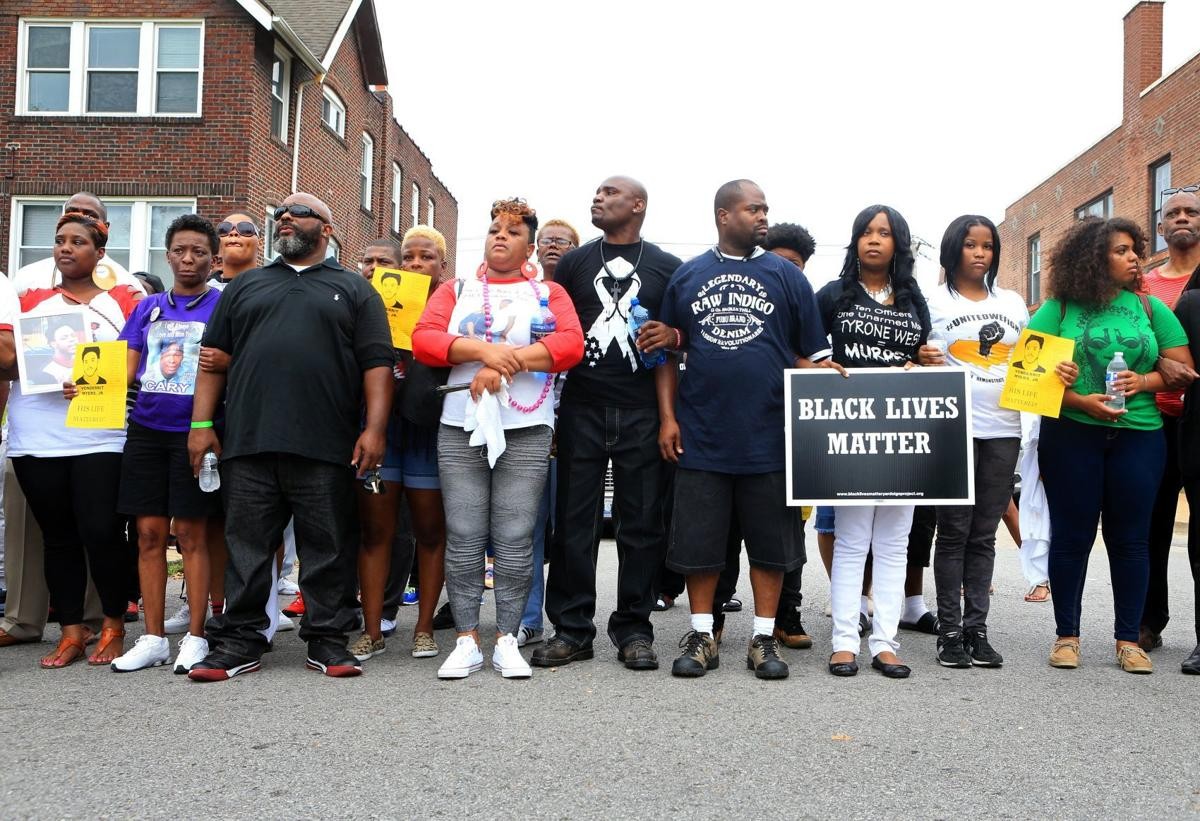
Featured image: Family members of Vonderrit Myers, Jr. prepare on Aug. 8, 2015, for a march and rally in Michael Brown’s honor in Ferguson. Christian Gooden/Post-Dispatch
Related Stories
Sugar overload killing hearts
November 10, 2025
Two in five people will be told they have diabetes during their lifetime. And people who have diabetes are twice as likely to develop heart disease. One of the deadliest dangers? Diabetic cardiomyopathy. But groundbreaking University of Cincinnati research hopes to stop and even reverse the damage before it’s too late.
Is going nuclear the solution to Ohio’s energy costs?
November 10, 2025

The Ohio Capital Journal recently reported that as energy prices continue to climb, economists are weighing the benefits of going nuclear to curb costs. The publication dove into a Scioto Analysis survey of 18 economists to weigh the pros and cons of nuclear energy. One economist featured was Iryna Topolyan, PhD, professor of economics at the Carl H. Lindner College of Business.
App turns smartwatch into detector of structural heart disease
November 10, 2025

An app that uses an AI model to read a single-lead ECG from a smartwatch can detect structural heart disease, researchers reported at the 2025 Scientific Sessions of the American Heart Association. Although the technology requires further validation, researchers said it could help improve the identification of patients with heart failure, valvular conditions and left ventricular hypertrophy before they become symptomatic, which could improve the prognosis for people with these conditions.