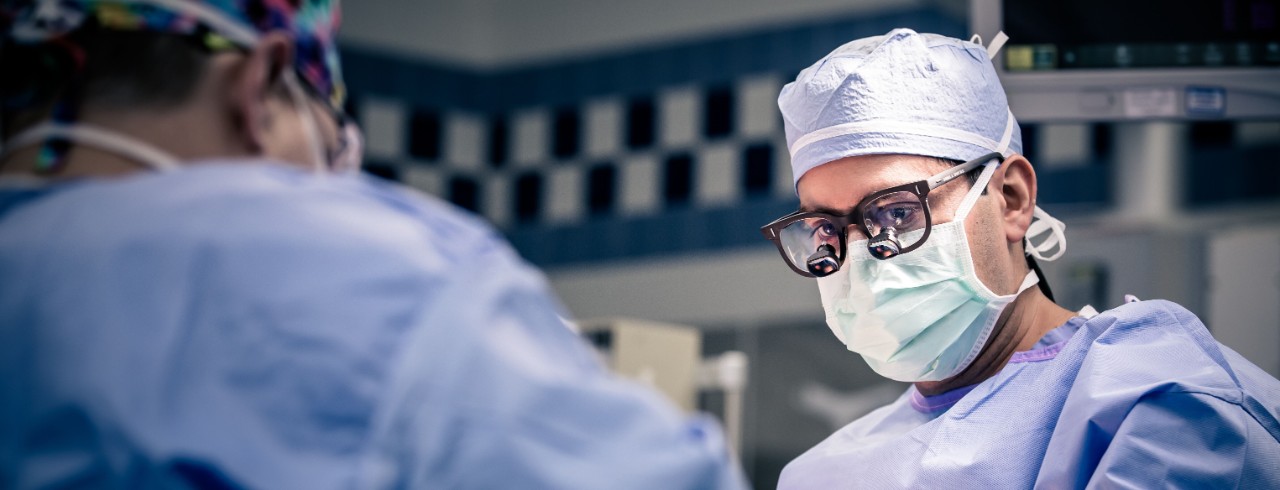
UC Health performs first liver transplant in US using mobile cold perfusion pump
Clinical trial seeks to improve outcomes for transplant recipients

*Release written by Amanda Nageleisen, Director of Media Relations for UC Health amanda.nageleisen@UCHealth.com; 513-585-8885
Transplant surgeons at UC Health’s University of Cincinnati (UC) Medical Center have performed the first-ever liver transplant in the United States with an organ preserved using portable hypothermic machine perfusion. The technology, which had been under development for several years, is designed to circulate a specially formulated, cold-temperature medical solution throughout a donor liver during its journey from the point of donation to surgical transplantation into a recipient.
This “active” preservation device was invented to improve upon traditional “static” cold preservation, which stores the liver in a cool box filled with ice. Static cold storage has been the standard of care for liver preservation since the first successful liver transplant was performed in the United States in 1967.
The procedure at UC Health was done as part of the first multicenter clinical trial comparing portable hypothermic machine preservation of donated livers with livers placed in static cold storage prior to transplant. The trial will evaluate several aspects of the organ preservation process, including potential benefits for improving transplant patient health.
“We hope to determine through this study which is the best way to transport donated livers and to provide the best outcomes for our transplant patients,” said Shimul Shah, MD, UC Health surgeon and the James and Catherine Orr Endowed Chair in Liver Transplantation, director of the Division of Transplantation and professor of surgery at the UC College of Medicine. “We are always striving for new and better ways to help save lives and improve patient outcomes.”
Shah and his team performed the first surgery on April 7 and performed a second one on April 15. Both recipients are recovering well.
UC Medical Center is the first of eight participating transplant centers in the U.S. to enroll patients in this clinical trial. Surgeons hope to determine whether this novel approach to organ preservation is better for the donor organ and transplant recipient than the traditional method of static cold storage. Traditionally, donor livers are placed in a cool box filled with ice when transported from one hospital to another.
On average, an adult donor liver weighs about three pounds and is the largest solid organ in the body. It performs numerous functions, including making proteins, breaking down nutrients from food to make energy, making bile and storing certain nutrients. There is a significant supply and demand imbalance for donor livers. Any potential improvements to the quality and availability of donor livers can make an important difference in saving lives of patients on transplant waiting lists who are suffering from end-stage liver disease.
In this trial, surgeons preserve donated livers using a new proprietary transplant technology system called the LifePort® Liver Transporter with Vasosol®. Vasosol is a cold-temperature medical solution specially designed for use with LifePort. The LifePort Liver Transporter is a portable machine perfusion technology that employs a microprocessor-controlled pumping system, delivering a continuous pressure wave that gently circulates oxygenated Vasosol through the vasculature of the entire donor liver.
The LifePort Liver Transporter with Vasosol was developed and produced by Organ Recovery Systems of Chicago, the clinical trial sponsor. The system is based upon a technology platform also developed by Organ Recovery Systems that is widely used in kidney transplant programs throughout the U.S. and worldwide.
The trial is registered with the USFDA under the title “Preservation to Improve Liver Outcomes in Transplantation (PILOT)” and was organized by independent surgeon-investigators led by principal investigator James V. Guarrera, MD, professor of surgery at Rutgers New Jersey Medical School. PILOT is a prospective, randomized, multi-center study designed to compare the LifePort Liver Transporter system with Vasosol to static cold storage. Nationally, 140 patients are expected to be enrolled in the trial over the coming nine months. Approximately 70 patients are intended to receive a machine-preserved liver using the LifePort Liver Transporter system, and the other half will receive a liver preserved with traditional static cold storage.
Shah, who is the lead investigator for the trial at UC Medical Center, has no conflicts to report.
UC Medical Center is among the busiest liver transplant centers in the U.S., with 115 liver transplants performed in 2018.
Related Stories
Sugar overload killing hearts
November 10, 2025
Two in five people will be told they have diabetes during their lifetime. And people who have diabetes are twice as likely to develop heart disease. One of the deadliest dangers? Diabetic cardiomyopathy. But groundbreaking University of Cincinnati research hopes to stop and even reverse the damage before it’s too late.
App turns smartwatch into detector of structural heart disease
November 10, 2025

An app that uses an AI model to read a single-lead ECG from a smartwatch can detect structural heart disease, researchers reported at the 2025 Scientific Sessions of the American Heart Association. Although the technology requires further validation, researchers said it could help improve the identification of patients with heart failure, valvular conditions and left ventricular hypertrophy before they become symptomatic, which could improve the prognosis for people with these conditions.
Combination immunotherapy helps overcome melanoma treatment resistance
November 10, 2025

MSN highlighted research led by the University of Cincinnati Cancer Center's Trisha Wise-Draper showing a combination of immunotherapy medications can activate a robust immune response and help overcome treatment resistance in patients with refractory melanoma.