Targeting tumor stem cells
Clinical trial at the University of Cincinnati involves targeting stem cells for personalized treatment of brain cancer

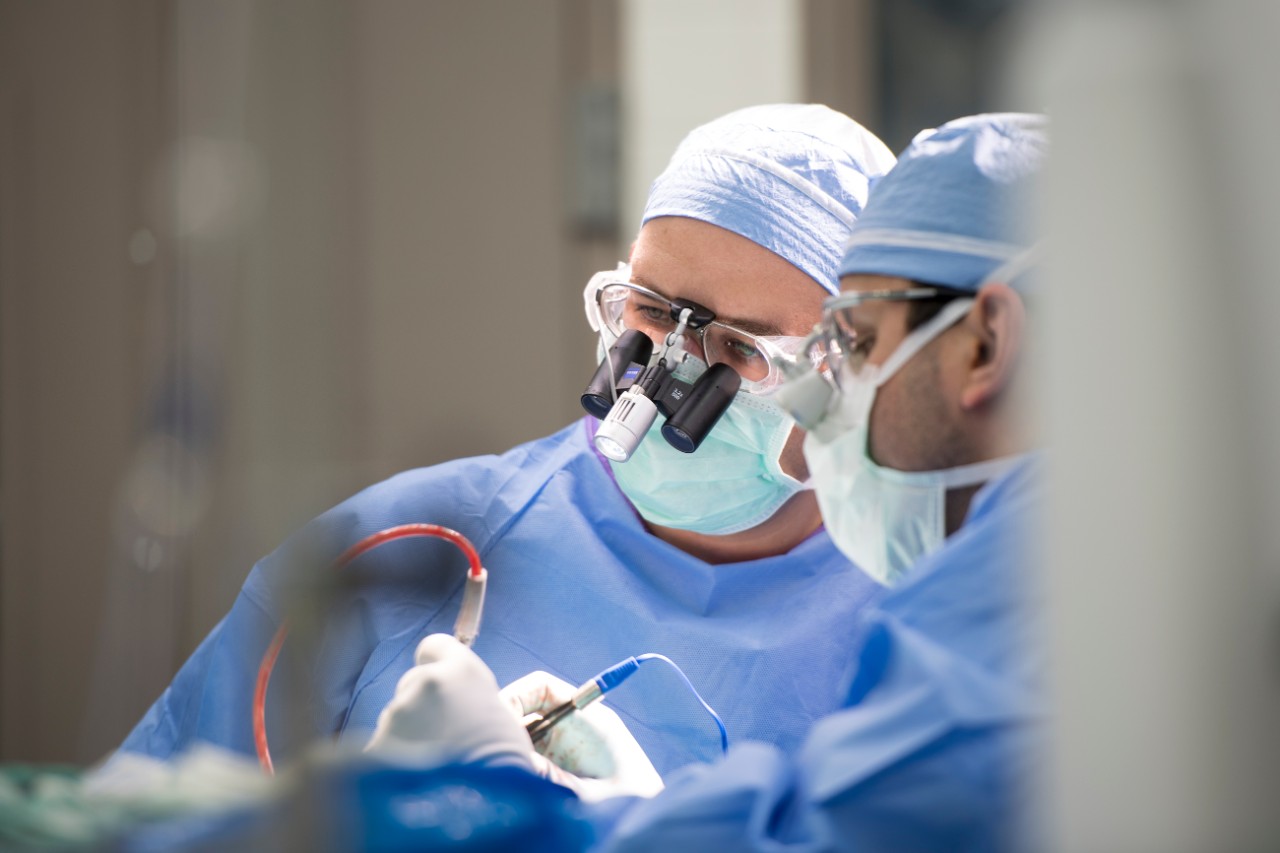
Researchers at the University of Cincinnati are leading the local arm of a study looking at ways to test for chemosensitivity in brain tumor stem cells to determine treatment response and outcomes for patients.
The primary site for the clinical trial is Marshall University in West Virginia, but Nicholas Marko, MD, director of the UC Brain Tumor Center, is leading the study locally.
“We are collecting tumor tissue from our patients and sending it to our collaborators at Marshall,” says Marko, who is also an associate professor of neurosurgery at the UC College of Medicine and a member of both the Gardner Neuroscience and Cancer Institutes. “These researchers grow stem cells from the tumor and then try to kill those cells with a number of chemotherapy drugs. The therapy that works best, based on these outcomes, is the patient’s designated study drug.”
Marko says when glioblastoma, an extremely malignant form of brain tumor, recurs in patients, the treatment options are often minimal, as surgery and radiation are not usually a possibility.
“In this study, patients with recurrent glioblastoma will receive standard therapy, including surgery if the tumor can be removed, and for the chemotherapy portion of their treatment, participants will be randomized between treatments chosen by the physician—standard cancer treatments—or the personally-selected, chemosensitivity drug. The goal is to see if this personalized therapy is more effective than standard of care.
“The idea is similar to when we test for bacterial sensitivity against antibiotics, in case of a bacterial infection. The test, in this case, uses sample specimens obtained following surgery for the treatment of brain cancer.”
Marko says that participants will be assessed by either brain MRI with contrast or CT scans at two to three month intervals after therapies are administered.
“The hope is that this study will lead to more personalized, targeted treatment for patients with a very serious cancer,” he says.
This study is being funded by ChemoID. Marko cites no conflict of interest.
*Photo credit: Colleen Kelley / University of Cincinnati, Communication Services
To find out more about enrolling in the study, call 513-418-2282.
Related Stories
Sugar overload killing hearts
November 10, 2025
Two in five people will be told they have diabetes during their lifetime. And people who have diabetes are twice as likely to develop heart disease. One of the deadliest dangers? Diabetic cardiomyopathy. But groundbreaking University of Cincinnati research hopes to stop and even reverse the damage before it’s too late.
App turns smartwatch into detector of structural heart disease
November 10, 2025

An app that uses an AI model to read a single-lead ECG from a smartwatch can detect structural heart disease, researchers reported at the 2025 Scientific Sessions of the American Heart Association. Although the technology requires further validation, researchers said it could help improve the identification of patients with heart failure, valvular conditions and left ventricular hypertrophy before they become symptomatic, which could improve the prognosis for people with these conditions.
Combination immunotherapy helps overcome melanoma treatment resistance
November 10, 2025

MSN highlighted research led by the University of Cincinnati Cancer Center's Trisha Wise-Draper showing a combination of immunotherapy medications can activate a robust immune response and help overcome treatment resistance in patients with refractory melanoma.