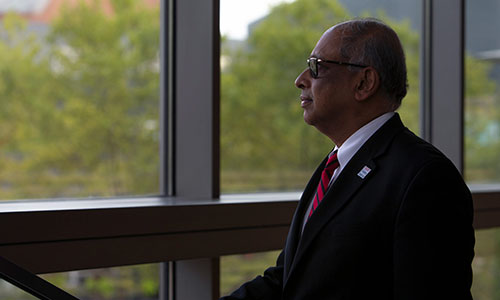
President Pinto looks out a window across campus

UC President Neville G. Pinto looks over campus. Photo/Andrew Higley/UC Creative + Brand


From the President's desk


COVID lessons of 2020: The power of invention, interdisciplinarity

Among its many lessons, the pandemic has taught us that we can’t take anything for granted. The power of nature — in the form of a tiny virus 10,000 times smaller than a grain of salt — disrupted nearly every aspect of life. Yet it also revealed the soaring potential of the human spirit, leadership, discovery and creativity.  

Among the greatest living examples of this are our 7,700 alumni-physicians and 16,000 alumni-nurses working around the world facing COVID-19’s dangers and uncertainties. Added to these are thousands of our faculty and staff, delivering selfless clinical care at our Academic Health Center. I want to thank all health care heroes, no matter where they are, for all they have done and continue to do at this challenging time.

A crisis like this reminds us of things in everyday life we have previously under-appreciated. Last spring, universities — UC among them — sent students home to learn remotely, reawakening a recognition of our role as a community of learners and as a nurturer of future talent. UC develops leaders for tomorrow, not just in health professions, but in a wide range of fields: teachers, business leaders, attorneys, performing artists, writers, social  workers, inventors, scientists, elected officials and more.

The challenges of 2020 have also sharpened an awareness of our mission as a Carnegie Research 1 university. We must never halt in our quest to expand knowledge and the frontiers of understanding. While the path to eliminating the threat of COVID-19 is firmly grounded in scientific discovery, we have seen firsthand that science does not operate in a vacuum. It’s clear from this year’s cascading catastrophe — what started as a health pandemic soon led to economic and humanitarian challenges around the world.


“At this defining time, UC is eager to drive to solutions, drawing from a profound strength: our diversity of people, disciplines and thought.”


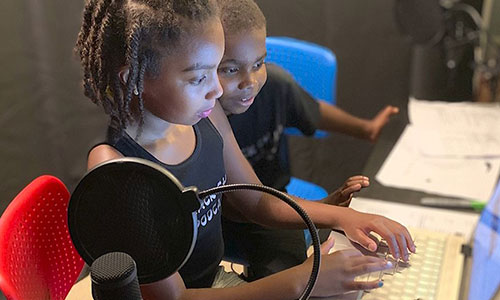
In a time when the likes of the flu of 1918, the Great Depression and the civil rights movements of the 1950s and ’60s have compressed into one short time span, Bearcats from a range of disciplines are responding with characteristic inspiration and ingenuity. Among them is infectious diseases expert Carl Fichtenbaum, who works to conquer coronavirus through patient care and clinical trials of a potential vaccine. On top of this, his love of music prompted him to create “Quarantunes: A Concert Series” for UC and UC Health. At UC Blue Ash, Wendy Calaway researches racial disparities in bail and how lockdown orders have been enforced. Another example is the podcast launched by UC staff member Nicole Ausmer with her daughter and son. They could not find a Black history podcast aimed at children, so they created “Hey, Black Child,” featured on “Good Morning America” in July.

At this defining time, UC is eager to drive to solutions, drawing from a profound strength: our diversity of people, disciplines and thought. This asset buttresses all that UC does, chiefly manifesting in our remarkable students — this year 46,798 strong, a record number for the eighth consecutive year. Of our students, 23% are minorities — a historic high.

Two other indicators are our 1819 Innovation Hub and in-construction Digital Futures research commons. Both draw on interdisciplinarity and connect talent, knowledge and innovation to the pressing opportunities and challenges in our society. Earlier this year, largely because of the investments in these facilities and our reputation for graduating students ready for the work world, we received great news that the university will anchor and lead the newly established Cincinnati Innovation District. Launched with a $100 million JobsOhio investment announced by Gov. Mike DeWine and Lt. Gov. Jon Husted, this becomes one more giant step in shaping the post-COVID future and in our unceasing drive toward new knowledge and impact.

We know there is plenty of work yet to do. More than ever, we need a wide range of disciplines working together, pursuing a better understanding of our natural world, social dynamics, economic processes, politics and, above all, human behavior, emotion, desire and spirit. We are up for the challenge, because Next Lives Here!


NEVILLE G. PINTO, PhD
President, University of Cincinnati


FEATURE STORIES

1

Lindner graduate students shine in international simulation competition

November 10, 2025

Five master’s of information systems (MS IS) students took home fifth place out of 23 universities at the International ERPsim Competition hosted by HEC Montreal during the recent spring semester. The competition tests students’ knowledge of enterprise resource planning (ERP) software and their ability to adapt to challenging business problems.

2

Sugar overload killing hearts

November 10, 2025

Two in five people will be told they have diabetes during their lifetime. And people who have diabetes are twice as likely to develop heart disease. One of the deadliest dangers? Diabetic cardiomyopathy. But groundbreaking University of Cincinnati research hopes to stop and even reverse the damage before it’s too late.

3

Is going nuclear the solution to Ohio’s energy costs?

November 10, 2025

The Ohio Capital Journal recently reported that as energy prices continue to climb, economists are weighing the benefits of going nuclear to curb costs. The publication dove into a Scioto Analysis survey of 18 economists to weigh the pros and cons of nuclear energy. One economist featured was Iryna Topolyan, PhD, professor of economics at the Carl H. Lindner College of Business.

4

App turns smartwatch into detector of structural heart disease

November 10, 2025

An app that uses an AI model to read a single-lead ECG from a smartwatch can detect structural heart disease, researchers reported at the 2025 Scientific Sessions of the American Heart Association. Although the technology requires further validation, researchers said it could help improve the identification of patients with heart failure, valvular conditions and left ventricular hypertrophy before they become symptomatic, which could improve the prognosis for people with these conditions.

DEPARTMENTS