Researchers testing CAR T-Cell therapy to treat multiple sclerosis
UC expert featured in Precision Medicine Online article

The University of Cincinnati's Aram Zabeti was featured in a Precision Medicine Online article discussing a new trial testing CAR T-cell therapy to treat multiple sclerosis.
UC is a trial site for the Phase 1 Breakfree-2 trial, sponsored by Bristol Myers Squibb. MS occurs when the immune system mistakenly attacks the myelin that protects and covers nerve fibers, disrupting the communication between the brain and the rest of the body and leading to a wide range of symptoms.
In CAR T-cell therapy, patient's immune cells are collected and genetically modified to recognize and eliminate the malfunctioning immune cells that drive MS. Once modified, they are infused back into the patient.
"We want to make sure they're safe," and that the new cells do not cause additional harm or damage, said Zabeti, associate professor of neurology at UC’s College of Medicine and director of the Waddell Center for MS. "We're hoping [patients] might not need any re-treatment," he added, but that's an area in need of further study.
Read the Precision Medicine Online article.
Read more about the trial at UC.
For more information on trial eligibility and enrollment for this and other MS trials open at UC, please contact trial coordinator Sara Esmaeli at esmaeisr@ucmail.uc.edu.
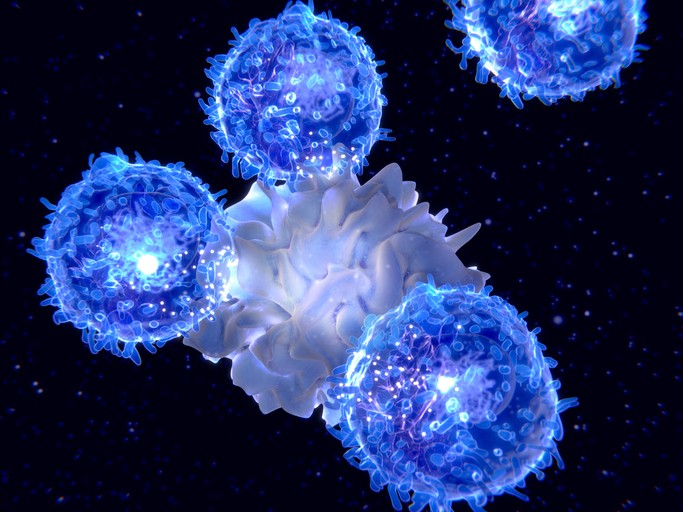
Featured photo at top illustrating CAR-T cells attacking a malfunctioning immune cell. Photo/selvanegra/iStock Photo.
Related Stories
Sugar overload killing hearts
November 10, 2025
Two in five people will be told they have diabetes during their lifetime. And people who have diabetes are twice as likely to develop heart disease. One of the deadliest dangers? Diabetic cardiomyopathy. But groundbreaking University of Cincinnati research hopes to stop and even reverse the damage before it’s too late.
Is going nuclear the solution to Ohio’s energy costs?
November 10, 2025

The Ohio Capital Journal recently reported that as energy prices continue to climb, economists are weighing the benefits of going nuclear to curb costs. The publication dove into a Scioto Analysis survey of 18 economists to weigh the pros and cons of nuclear energy. One economist featured was Iryna Topolyan, PhD, professor of economics at the Carl H. Lindner College of Business.
App turns smartwatch into detector of structural heart disease
November 10, 2025

An app that uses an AI model to read a single-lead ECG from a smartwatch can detect structural heart disease, researchers reported at the 2025 Scientific Sessions of the American Heart Association. Although the technology requires further validation, researchers said it could help improve the identification of patients with heart failure, valvular conditions and left ventricular hypertrophy before they become symptomatic, which could improve the prognosis for people with these conditions.