
DAAP students turn coursework into published book
DAAP students turn coursework into published book
Professor David Edelman teaches students how to address real-world environmental challenges

David Edelman
David Edelman has served as a professor at the University of Cincinnati College of Design, Architecture, Art, and Planning (DAAP) for over 27 years. Along with being a professor at the School of Planning, he was also the Director of the Master of Community Planning (MCP) Program for 13 years.
One of the courses he teaches is an urban environmental management class for both undergraduate and graduate students, concentrating on tackling environmental problems in developing countries by creating solutions. This year’s focus is on San Juan, Puerto Rico.
In pairs, students will engage in research and examine specific issues to address the urban environmental concerns of San Juan, using a real-world database and a limited budget. Having a tight budget encourages students to problem solve and make rational decisions based on research and reason. “I wanted to design a course that would not only teach students how to conduct research but also broaden their understanding of the world,” says Edelman.
Edleman has immense experience working, living, and teaching internationally. He has resided in places such as Switzerland, Thailand, the Netherlands, and many other countries. He seeks to inspire students to explore beyond their surroundings and immerse themselves in other cultures. Through this course, he will guide students on how to research their topics and effectively plan solutions to solve real-world issues in developing countries.
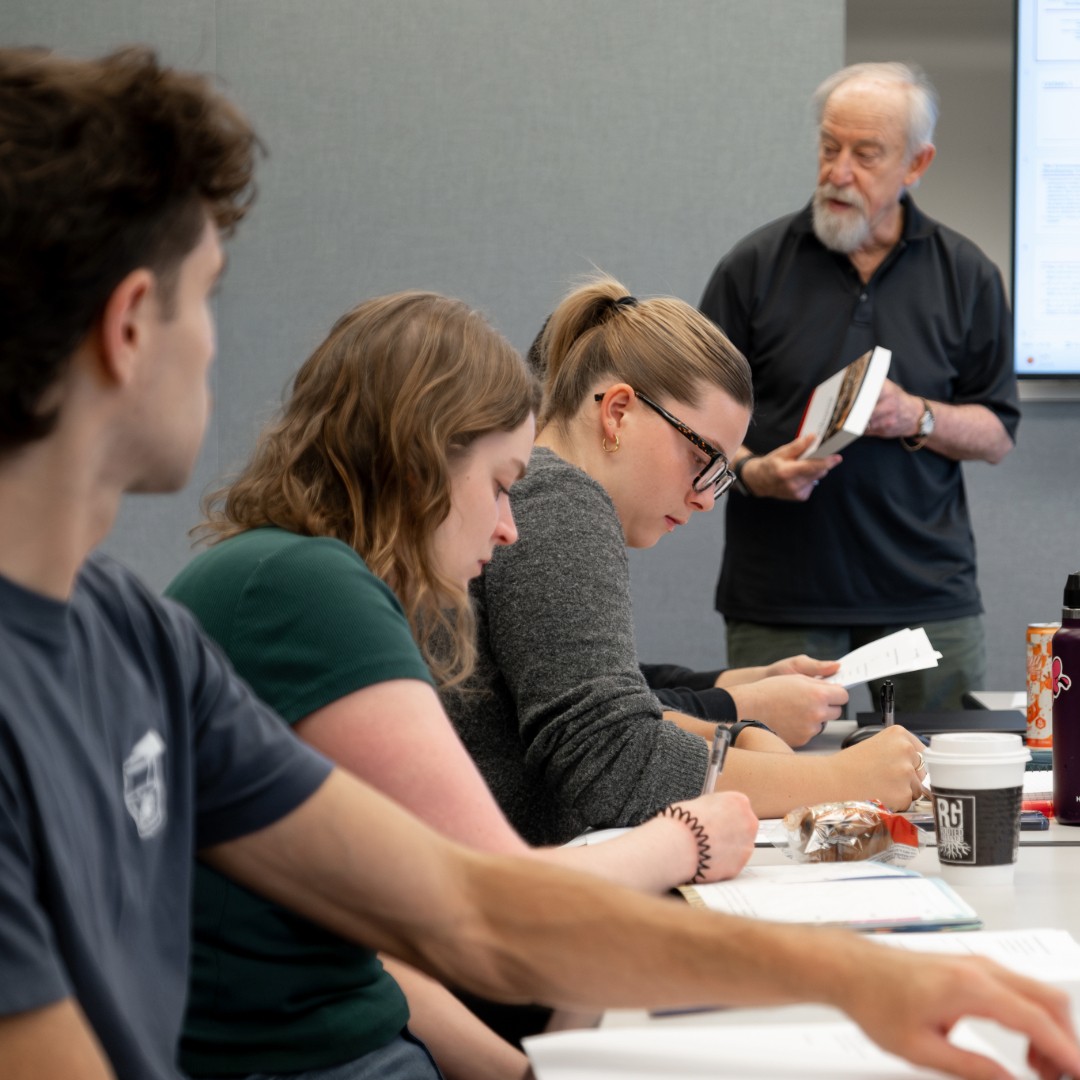
Professor Edelman teaching his Urban Environment Management students. Photo by Grace Diederich.
The Urban Management course is designed to encourage students to think both critically and realistically. “Students have to factor in the budget, as it is usually the most significant obstacle they encounter when developing their plans,” says Edelman.
Each pair is tasked with a specific topic, like finance or housing, to investigate how they can solve or improve this problem and how they can plan a solution that fits within the budget and legal constraints of that country. Edelman assists students through the process and has them present their projects periodically to ensure they are progressing in the right direction.
His previous classes examined cities in the Philippines, Thailand, Peru, and the Dominican Republic. At the end of each semester, students' work is published into a book. He also publishes the book in the native language of the country they explored. Each student's name will also be featured in the chapter they contributed to. “For almost all students, this is their first time being featured in a publication,” says Edelman. He has had more than 150 students take this course, with all having their work published.
Every year, he selects a city to focus on for that semester, based on whether he has previously visited, so he can answer any questions or concerns students may have during their research and planning process. He also makes an effort to cover a variety of locations by selecting cities from different countries and continents.
Edelman chose San Juan for students to research this semester because nearly 45% of the population is below the poverty line. Also, he selected a city in Puerto Rico since many of the students may not know Puerto Rico is a U.S. territory. He wants students to recognize how accessible it is to travel to Puerto Rico and discover ways to address the poverty and environmental issues in a country that follows U.S. laws.
“I hope this course awakens students' curiosity about the world and helps them understand that there is a vast amount to discover,” says Edelman. He urges students in this course to broaden their horizons and learn from the world around them.

Written by Maya Little
Third-year journalism major, DAAP student associate
Impact Lives Here
The University of Cincinnati is leading public urban universities into a new era of innovation and impact. Our faculty, staff and students are saving lives, changing outcomes and bending the future in our city's direction. Next lives here.
Related Stories
UC launches Bearcats Affordability Grant
January 7, 2026
The University of Cincinnati is making college more attainable for students across Ohio with the creation of the Bearcats Affordability Grant. The new grant will provide a pathway to tuition-free college for students of families who make less than $75,000 per year. Beginning in fall 2026, the Bearcats Affordability Grant will cover the remaining cost of tuition for Ohio residents who are Pell eligible.
BearcatGPT AI platform now available to all UC faculty and staff
December 9, 2025
University of Cincinnati Digital Technology Solutions is excited to announce that BearcatGPT, the university’s private, secure AI platform, is now available to all UC faculty and staff.
Sugar overload killing hearts
November 10, 2025
Two in five people will be told they have diabetes during their lifetime. And people who have diabetes are twice as likely to develop heart disease. One of the deadliest dangers? Diabetic cardiomyopathy. But groundbreaking University of Cincinnati research hopes to stop and even reverse the damage before it’s too late.