Seeking tales and sipping whiskey in a shack floating down the bayou
Rolling down the river: DAAP faculty featured in NYT article

Wes Modes — a newly installed University of Cincinnati assistant professor and multidisciplinary artist in DAAP's School of Art — started the fall 2025 semester with an impressive “What I did last summer” essay to share.
Modes is featured in The New York Times for gathering the hidden histories of America’s rivers and the people who live along them through an ongoing project, "A Secret History of American River People."
Aboard a handmade shantyboat built with friends, the article details how Modes has traveled waterways across the U.S., from the Ohio and Mississippi to Louisiana’s bayous; interviewing more than 175 people about art, music, food, work, and family traditions — and about the shifting realities of life on the water.
The stories are often poignant and forelorn. Ninety-year-old Hugh Paul Fanguy described watching Louisiana’s land disappear: “It still shows up on the GPS,” he said of vanished islands. Former tugboat captain Andrus Hebert, once skeptical, declared: “This is like Huckleberry Finn. You’re living it out.”
But Modes also notes whose voices are missing: descendants of enslaved people and the Native communities who first lived along these waterways. “We’re experiencing how the river is now,” the article states — while displacement, gentrification, and environmental change have left some unable to tell their stories.
This summer’s journey ended with an interview with R.J. Molinere, a Houma native, alligator hunter, and former star of "Swamp People," who summed up his ties to the water: “This right here is us. That’s what we love. This is where we’re from.”
The article explains that the shantyboat travels are about more than just oral history. These travels, the author writes, reveal how rivers serve as a “porthole into the soul of a place” — its history, industry, values, and struggles with climate change.
Read the entire story (The NYT is a subscription publication. Contact angela.koenig@uc.edu for a pdf of the article).
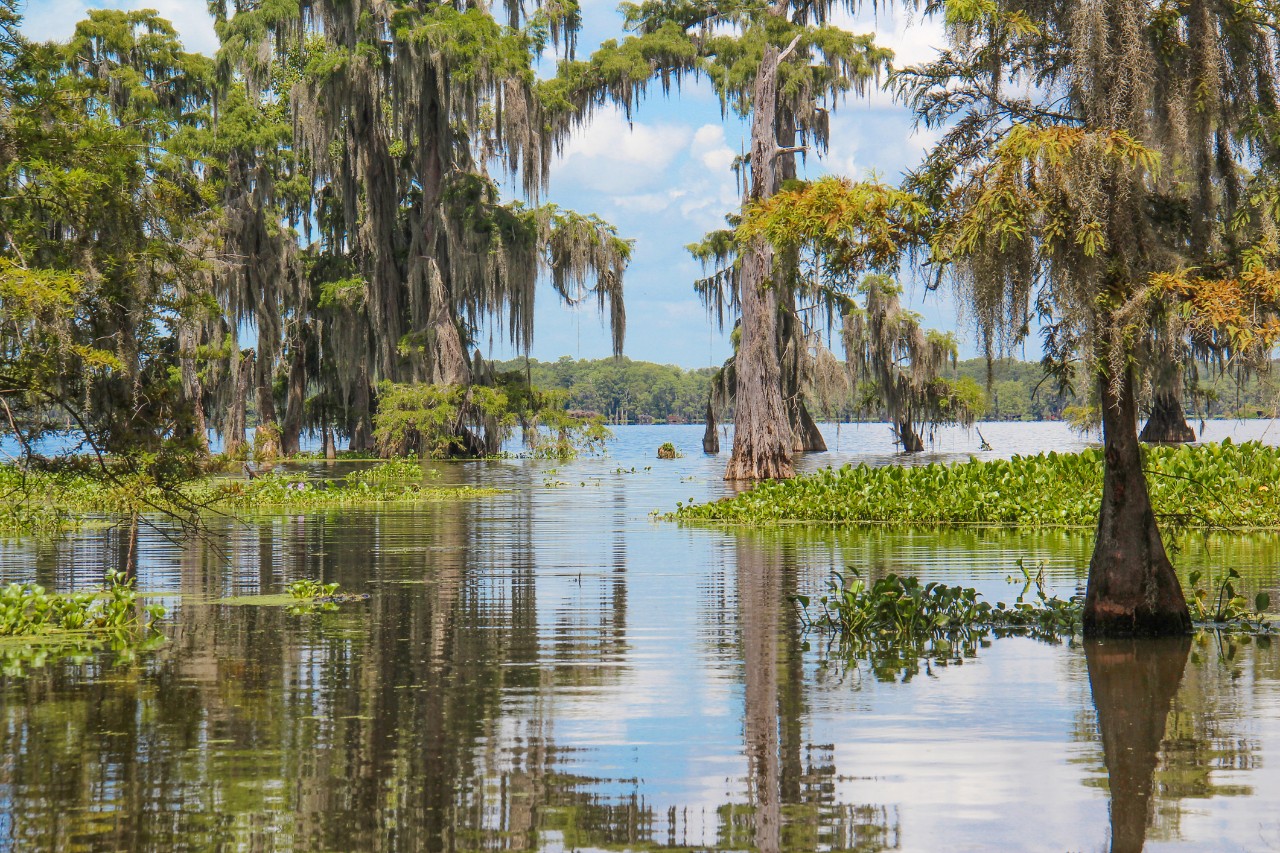
Featured image of swamp water: iStock Photo/John Twynam.
Impact Lives Here
The University of Cincinnati is leading public urban universities into a new era of innovation and impact. Our faculty, staff and students are saving lives, changing outcomes and bending the future in our city's direction. Next lives here.
Related Stories
Sugar overload killing hearts
November 10, 2025
Two in five people will be told they have diabetes during their lifetime. And people who have diabetes are twice as likely to develop heart disease. One of the deadliest dangers? Diabetic cardiomyopathy. But groundbreaking University of Cincinnati research hopes to stop and even reverse the damage before it’s too late.
Is going nuclear the solution to Ohio’s energy costs?
November 10, 2025

The Ohio Capital Journal recently reported that as energy prices continue to climb, economists are weighing the benefits of going nuclear to curb costs. The publication dove into a Scioto Analysis survey of 18 economists to weigh the pros and cons of nuclear energy. One economist featured was Iryna Topolyan, PhD, professor of economics at the Carl H. Lindner College of Business.
App turns smartwatch into detector of structural heart disease
November 10, 2025

An app that uses an AI model to read a single-lead ECG from a smartwatch can detect structural heart disease, researchers reported at the 2025 Scientific Sessions of the American Heart Association. Although the technology requires further validation, researchers said it could help improve the identification of patients with heart failure, valvular conditions and left ventricular hypertrophy before they become symptomatic, which could improve the prognosis for people with these conditions.