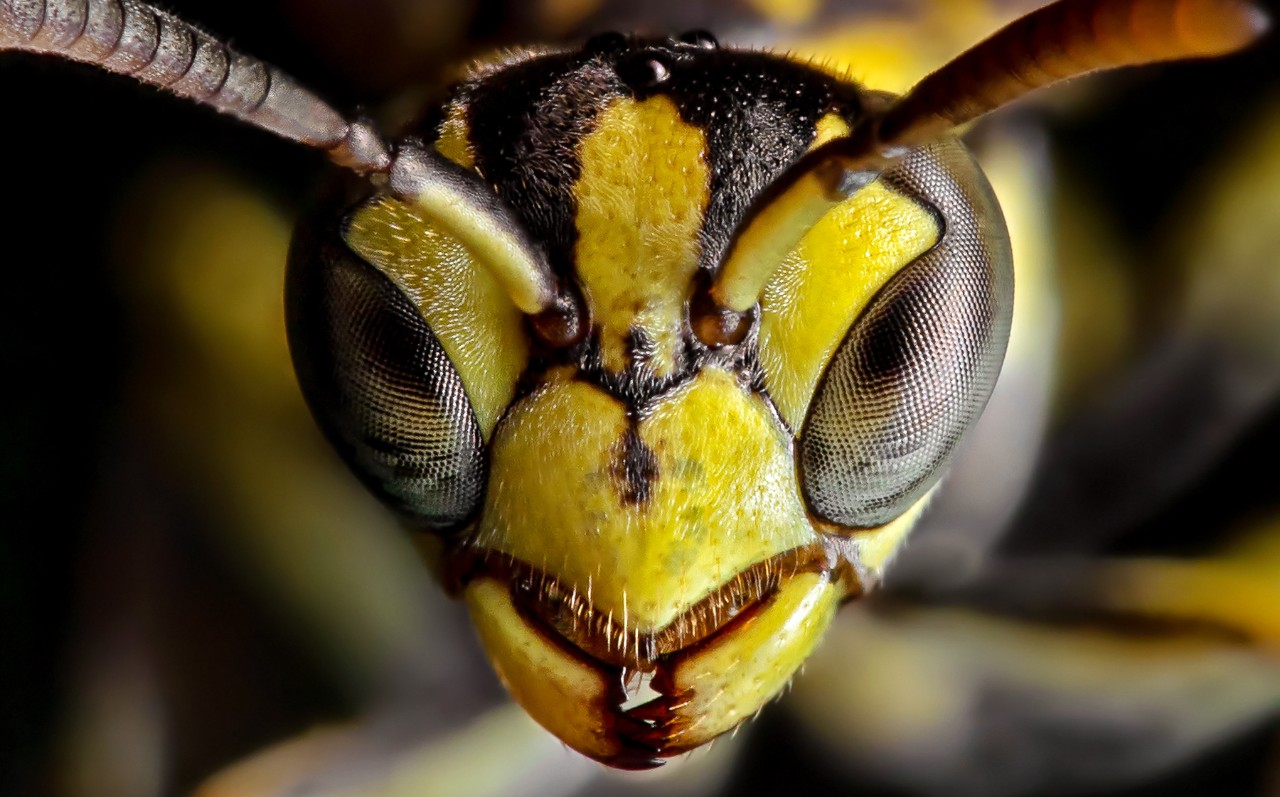
Why jumping spiders mimic wasps
In nature's game of survival, appearances can deceive

Earth.com highlighted a study by biologists at the University of Cincinnati that found spiders that look like wasps can fool not only other spiders but also artificial intelligence.
Scientists for years have been struck by how some male jumping spiders resemble wasps when they raise their abdomen's during their courtship rituals. Australian researchers who discovered one new species named it after the Latin name for wasp.

The backs of jumping spiders resemble predatory insects like wasps and praying mantises that can fool even AI. Graphic/Olivia Harris with photos by Jurgen Otto
Biologists in UC's College of Arts and Sciences discovered that the ruse tricks even artificial intelligence that could not always correctly identify the jumping spiders among images of wasps, flies and praying mantises.
Mimicry is a common strategy in nature. But why would a spider want to mimic a wasp, which hunts and feeds on spiders?
UC Associate Professor Nathan Morehouse, a study co-author, said the male spiders might use the ruse to capture the attention of females. And once they have their potential mate's attention, they can make introductions through their elaborate courtship rituals.
The study was published in the journal Behavioral Ecology.
Featured image at top: Researchers always thought the backs of some jumping spiders resembled a hornet's face. It even fools AI. Photo/Backiris/iStockPhoto

UC Associate Professor Nathan Morehouse studies jumping spiders in his biology lab. Photo/Jay Yocis/UC
Related Stories
Sugar overload killing hearts
November 10, 2025
Two in five people will be told they have diabetes during their lifetime. And people who have diabetes are twice as likely to develop heart disease. One of the deadliest dangers? Diabetic cardiomyopathy. But groundbreaking University of Cincinnati research hopes to stop and even reverse the damage before it’s too late.
Is going nuclear the solution to Ohio’s energy costs?
November 10, 2025

The Ohio Capital Journal recently reported that as energy prices continue to climb, economists are weighing the benefits of going nuclear to curb costs. The publication dove into a Scioto Analysis survey of 18 economists to weigh the pros and cons of nuclear energy. One economist featured was Iryna Topolyan, PhD, professor of economics at the Carl H. Lindner College of Business.
App turns smartwatch into detector of structural heart disease
November 10, 2025

An app that uses an AI model to read a single-lead ECG from a smartwatch can detect structural heart disease, researchers reported at the 2025 Scientific Sessions of the American Heart Association. Although the technology requires further validation, researchers said it could help improve the identification of patients with heart failure, valvular conditions and left ventricular hypertrophy before they become symptomatic, which could improve the prognosis for people with these conditions.