Four hearing aid breakthroughs to know about
UC expert says technology has evolved substantially

In recent years, hearing loss technology has evolved substantially, improving on everything from efficacy to look and feel. Today, even AirPods have a built-in hearing aid feature.
Ear health is not on everyone's radar, but maybe it should be.
“About one in seven Americans experience some form of hearing loss,” Daniel Sun, MD, a University of Cincinnati associate professor in the Department of Otolaryngology - Head and Neck Surgery in the College of Medicine, recently told Flow Space.
Sun, who also serves as director of the Division of Neurotology, said it’s typically age-related, though it can come on earlier than a person might think. At midlife, hearing loss is often linked to dementia, a cognitive condition that’s on the rise worldwide.
Hearing loss is a risk factor for dementia, not necessarily the cause of it. However, experts told Flow Space it’s a much higher risk than previously thought. One recent study found that up to 32 percent of dementia cases can be attributed to measurable hearing loss — in other words, early screening and intervention may delay the onset of dementia for a large swath of older adults.
Experts said women have a much higher risk of hearing loss-related cognitive impairment, so it's especially relevant for them.
Otosclerosis is another condition that can lead to hearing loss at midlife. It stiffens bones in the ear, compromising sound’s ability to travel.
“For reasons we don’t yet fully understand, it tends to occur more commonly in women, especially after one or more pregnancies,” said Sun.
For those who may be worried about their hearing, Sun recommended consulting with an ear, nose and throat (ENT) doctor for a hearing test. It’s the only way to get properly assessed and treated. Regular screenings are recommended for those 50 and older.
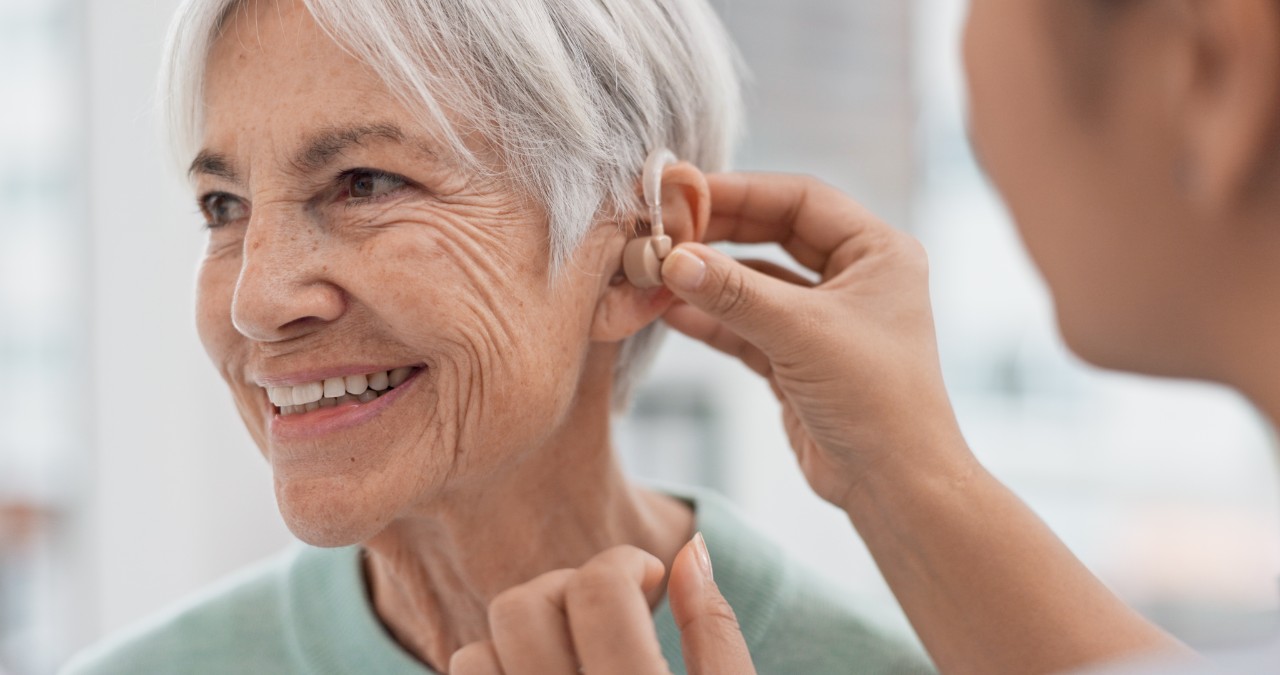
Featured image at top: A health care provider places a hearing aid on a woman's ear. Photo/iStock/Jacob Wackerhausen.
Related Stories
Sugar overload killing hearts
November 10, 2025
Two in five people will be told they have diabetes during their lifetime. And people who have diabetes are twice as likely to develop heart disease. One of the deadliest dangers? Diabetic cardiomyopathy. But groundbreaking University of Cincinnati research hopes to stop and even reverse the damage before it’s too late.
Is going nuclear the solution to Ohio’s energy costs?
November 10, 2025

The Ohio Capital Journal recently reported that as energy prices continue to climb, economists are weighing the benefits of going nuclear to curb costs. The publication dove into a Scioto Analysis survey of 18 economists to weigh the pros and cons of nuclear energy. One economist featured was Iryna Topolyan, PhD, professor of economics at the Carl H. Lindner College of Business.
App turns smartwatch into detector of structural heart disease
November 10, 2025

An app that uses an AI model to read a single-lead ECG from a smartwatch can detect structural heart disease, researchers reported at the 2025 Scientific Sessions of the American Heart Association. Although the technology requires further validation, researchers said it could help improve the identification of patients with heart failure, valvular conditions and left ventricular hypertrophy before they become symptomatic, which could improve the prognosis for people with these conditions.