UC researcher's study finds link between childhood trauma, homelessness

Experiencing hardships including domestic violence, discrimination, high levels of violent crime in a community or chronic poverty as a child could make a person more likely to become homeless. The more adverse childhood experiences that a person has, the higher the risk could be. That's according to research from Edson Chipalo, PhD, an assistant professor in the University of Cincinnati's College of Allied Health Sciences.
The study was published recently in the journal Child Indicators Research. 91.7 WVXU News recently featured Chipalo's work.
Chipalo looked at data from roughly 1,000 people who have experienced homelessness and were tracked by the National Survey of Children's Health. Many of those individuals had experienced several adverse childhood experiences, often called ACEs.
"The more ACEs a child experienced, the more likely they are to be homeless," said Chipalo.
The study controlled for nine factors, including socioeconomic status, geography and parental employment. It considered the biological, social and psychological impacts of nine categories of trauma on people younger than 18.
Chipalo said his findings add to a growing body of evidence that could help guide both government policy and therapeutic approaches to addressing trauma. He said prevention of the kinds of trauma he studied and early intervention after trauma has been experienced are key.
"We want the practitioners who are working with those children who have experienced adverse experiences as well as homelessness to understand these issues," he said. "How can we improve their practice?"
Chipalo will present his research at several conferences this summer.
Read what Chipalo told 91.7 WVXU News about his new project to collect data from refugees and immigrants who came to Greater Cincinnati from African nations — and how he plans to apply his research to those communities.
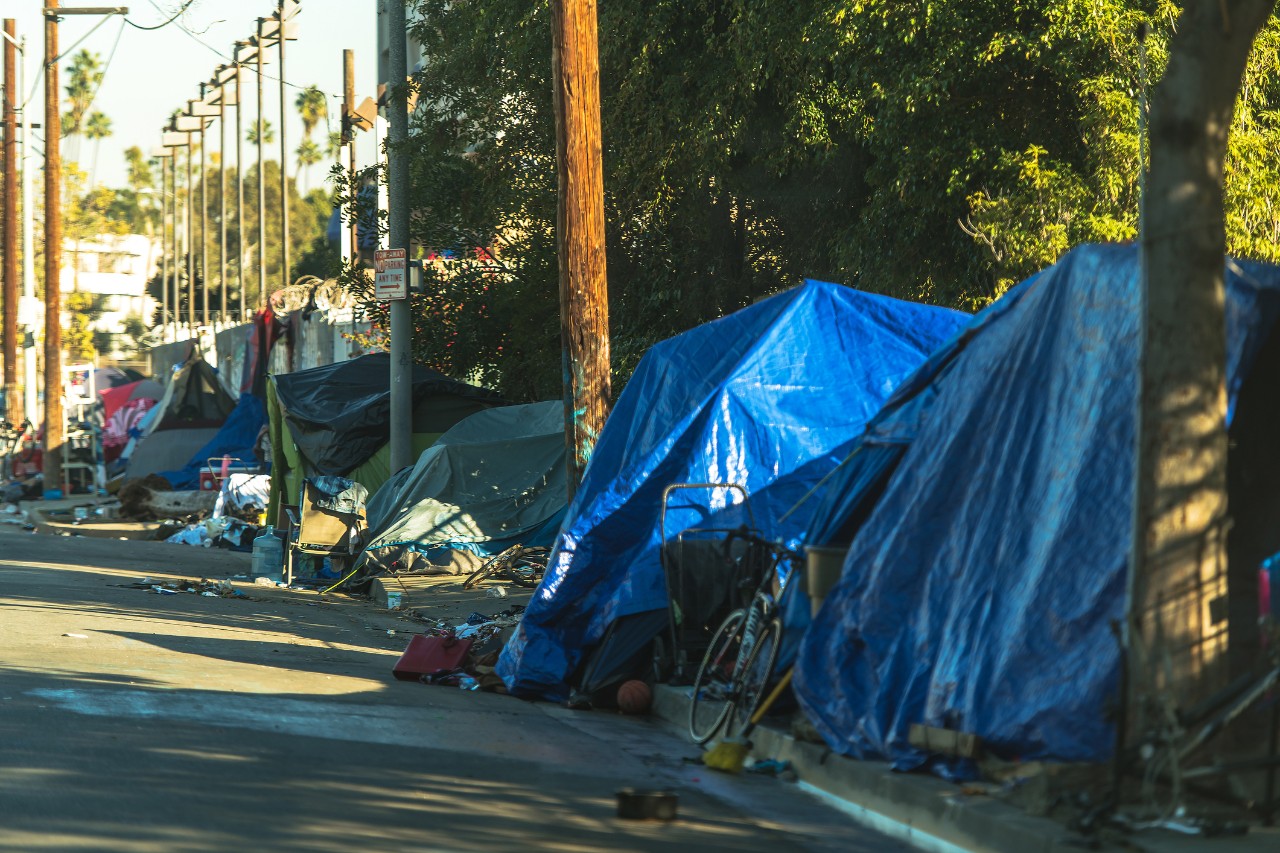
Featured image at top: A homeless tent camp in West Hollywood, California. Photo/iStock/welcomia.
Related Stories
Sugar overload killing hearts
November 10, 2025
Two in five people will be told they have diabetes during their lifetime. And people who have diabetes are twice as likely to develop heart disease. One of the deadliest dangers? Diabetic cardiomyopathy. But groundbreaking University of Cincinnati research hopes to stop and even reverse the damage before it’s too late.
Is going nuclear the solution to Ohio’s energy costs?
November 10, 2025

The Ohio Capital Journal recently reported that as energy prices continue to climb, economists are weighing the benefits of going nuclear to curb costs. The publication dove into a Scioto Analysis survey of 18 economists to weigh the pros and cons of nuclear energy. One economist featured was Iryna Topolyan, PhD, professor of economics at the Carl H. Lindner College of Business.
App turns smartwatch into detector of structural heart disease
November 10, 2025

An app that uses an AI model to read a single-lead ECG from a smartwatch can detect structural heart disease, researchers reported at the 2025 Scientific Sessions of the American Heart Association. Although the technology requires further validation, researchers said it could help improve the identification of patients with heart failure, valvular conditions and left ventricular hypertrophy before they become symptomatic, which could improve the prognosis for people with these conditions.