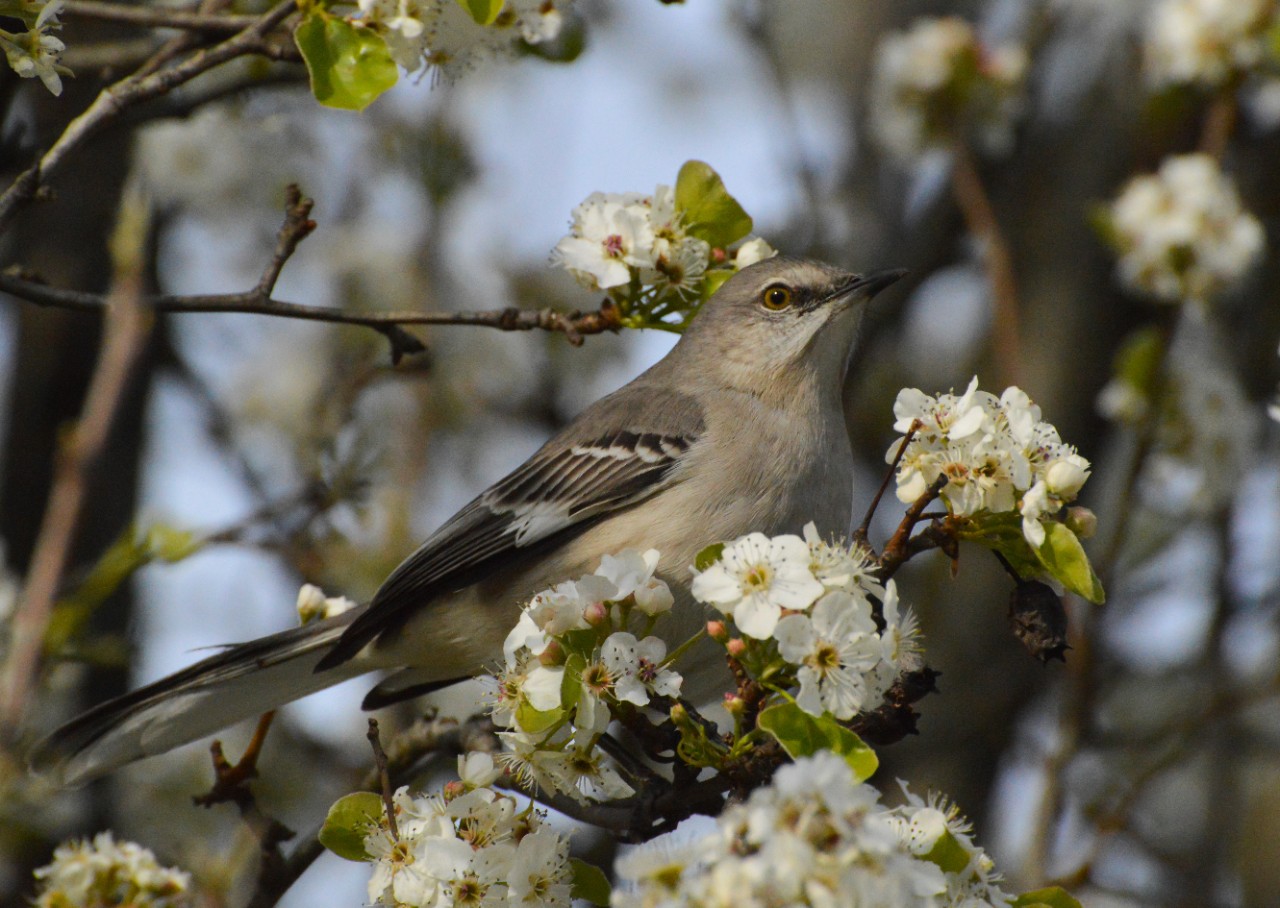
Bradford pear trees look pretty, smell awful. Why are they illegal?
UC biologist tells WLWT that many people are opting for native trees instead

Spring is the best time of year to observe how one nonnative, invasive species is taking over parts of the United States.
Callery pear trees produce pretty white flowers in the spring, making the trees easy to spot along highways and in forest clearings where they are growing wild after escaping cultivation decades ago.
Yahoo! News highlighted efforts by a biologist at the University of Cincinnati to spread awareness about the ecological impact these trees are having in Eastern forests.
UC College of Arts and Sciences Professor Theresa Culley said once Callery pear trees become established, they are hard to remove.
Ohio's Legislature in 2023 outlawed the sale, growing or and planting of Bradford or Callery pear trees. These fast-growing trees were a favorite of the horticulture industry. But birds eat the tree's berries and spread its seeds to road edges and clearings in forests where they often crowd out native trees and shrubs.
Culley told WLWT that homeowners have lots of good alternatives when choosing a tree to plant this spring.
Culley serves on the Ohio Invasive Plants Council and has advised the state on regulations to protect Ohio's agriculture industry and natural resources.
“I've had people tell me they removed their trees and replaced them with a non-invasive alternative,“ Culley told WLWT. “But a lot of people really love their pear tree. It is beautiful. In the spring there is a chemical treatment they can spray on the tree when it's blooming to prevent it from producing fruit.“
Featured image at top: Callery pear trees are common in suburbia, but Ohio is taking steps to prevent them from spreading into wild areas. Photo/Michael Miller
Related Stories
Sugar overload killing hearts
November 10, 2025
Two in five people will be told they have diabetes during their lifetime. And people who have diabetes are twice as likely to develop heart disease. One of the deadliest dangers? Diabetic cardiomyopathy. But groundbreaking University of Cincinnati research hopes to stop and even reverse the damage before it’s too late.
Is going nuclear the solution to Ohio’s energy costs?
November 10, 2025

The Ohio Capital Journal recently reported that as energy prices continue to climb, economists are weighing the benefits of going nuclear to curb costs. The publication dove into a Scioto Analysis survey of 18 economists to weigh the pros and cons of nuclear energy. One economist featured was Iryna Topolyan, PhD, professor of economics at the Carl H. Lindner College of Business.
App turns smartwatch into detector of structural heart disease
November 10, 2025

An app that uses an AI model to read a single-lead ECG from a smartwatch can detect structural heart disease, researchers reported at the 2025 Scientific Sessions of the American Heart Association. Although the technology requires further validation, researchers said it could help improve the identification of patients with heart failure, valvular conditions and left ventricular hypertrophy before they become symptomatic, which could improve the prognosis for people with these conditions.