Social media criticism of judges prompts security concerns
UC expert discusses social media pressure on judiciary

Bloomberg News turned to a University of Cincinnati professor to explain the significance of a flurry of social media criticisms of judges assigned to several legal cases relating to new federal policies.
UC College of Arts and Sciences Professor Jeffrey Blevins told Bloomberg News that the consequences of the verbal attacks can be severe.
“Look no further than January 6th. We can see the impact that sustained disinformation campaigns can have,” Blevins said, referring to the 2021 riot at the US Capitol.
Blevins is a professor in UC's School of Public and International Affairs. He is co-author of the 2024 book “Social Media and Digital Politics: Networked Reason in an Age of Digital Emotion.”
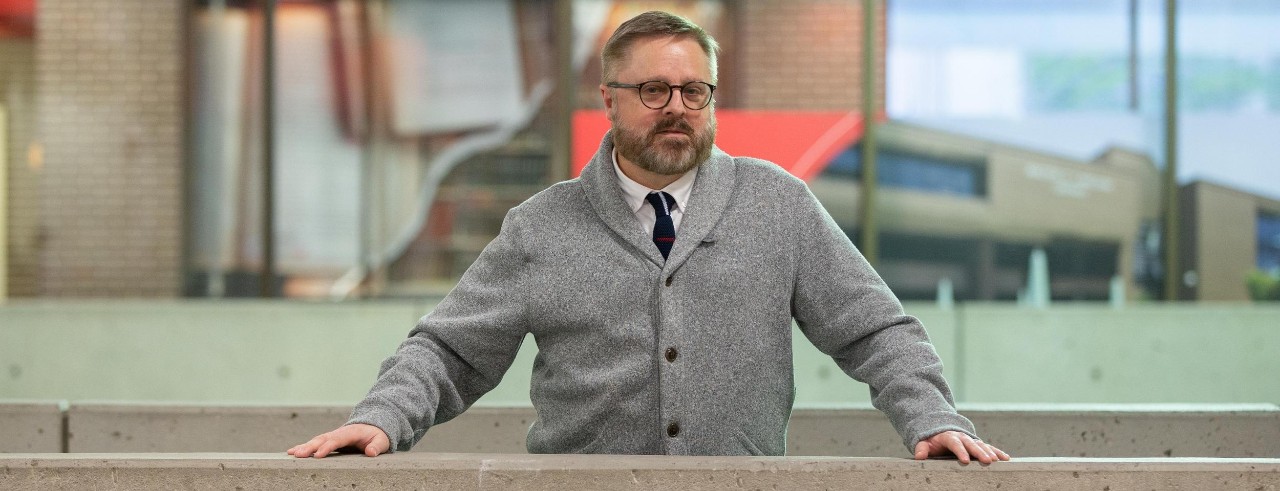
Featured image at top: UC College of Arts and Sciences Professor Jeffrey Blevins has written extensively about the impact of political disinformation. He teaches in UC's School of Public and International Affairs. Photo/Andrew Higley/UC Marketing + Brand
Related Stories
Sugar overload killing hearts
November 10, 2025
Two in five people will be told they have diabetes during their lifetime. And people who have diabetes are twice as likely to develop heart disease. One of the deadliest dangers? Diabetic cardiomyopathy. But groundbreaking University of Cincinnati research hopes to stop and even reverse the damage before it’s too late.
Is going nuclear the solution to Ohio’s energy costs?
November 10, 2025

The Ohio Capital Journal recently reported that as energy prices continue to climb, economists are weighing the benefits of going nuclear to curb costs. The publication dove into a Scioto Analysis survey of 18 economists to weigh the pros and cons of nuclear energy. One economist featured was Iryna Topolyan, PhD, professor of economics at the Carl H. Lindner College of Business.
App turns smartwatch into detector of structural heart disease
November 10, 2025

An app that uses an AI model to read a single-lead ECG from a smartwatch can detect structural heart disease, researchers reported at the 2025 Scientific Sessions of the American Heart Association. Although the technology requires further validation, researchers said it could help improve the identification of patients with heart failure, valvular conditions and left ventricular hypertrophy before they become symptomatic, which could improve the prognosis for people with these conditions.