Metastatic bladder cancer immunotherapy outcomes better with antihistamines
Renal + Urology News highlights UC-led research

Renal + Urology News highlighted research led by the University of Cincinnati's Alberto Martini, MD, that found using antihistamines in patients receiving second-line immunotherapy (IO) for bladder cancer may improve outcomes.
The research, published in the journal Urologic Oncology, focused on metastatic urothelial carcinoma (mUC), cancer that begins in the urothelial cells, which line the urethra, bladder, ureters and some other organs. Martini, University of Cincinnati Cancer Center physician-researcher and assistant professor in the Department of Urology in UC's College of Medicine, served as corresponding author of the study.
Using data from two clinical trials, the researchers identified 896 patients who were treated with second-line IO drug atezolizumab. Out of those patients, 155 patients received concomitant antihistamines and 741 did not.
Antihistamine users had 41% lower risk for all-cause mortality, 42% lower risk for cancer death and 30% lower risk of cancer progression compared to patients that did not receive antihistamines.
“Our results show a positive association between the use of antihistamines and oncologic outcome in patients with mUC treated with IO,” Martini and colleagues concluded.
Read the Renal + Urology News story.
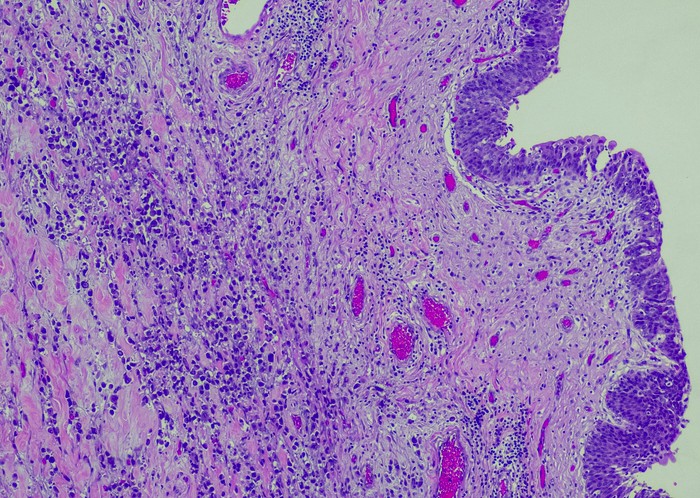
Featured photo at top of urothelial carcinoma cells stained purple. Photo/OGPhoto/iStock.
Related Stories
Sugar overload killing hearts
November 10, 2025
Two in five people will be told they have diabetes during their lifetime. And people who have diabetes are twice as likely to develop heart disease. One of the deadliest dangers? Diabetic cardiomyopathy. But groundbreaking University of Cincinnati research hopes to stop and even reverse the damage before it’s too late.
Is going nuclear the solution to Ohio’s energy costs?
November 10, 2025

The Ohio Capital Journal recently reported that as energy prices continue to climb, economists are weighing the benefits of going nuclear to curb costs. The publication dove into a Scioto Analysis survey of 18 economists to weigh the pros and cons of nuclear energy. One economist featured was Iryna Topolyan, PhD, professor of economics at the Carl H. Lindner College of Business.
App turns smartwatch into detector of structural heart disease
November 10, 2025

An app that uses an AI model to read a single-lead ECG from a smartwatch can detect structural heart disease, researchers reported at the 2025 Scientific Sessions of the American Heart Association. Although the technology requires further validation, researchers said it could help improve the identification of patients with heart failure, valvular conditions and left ventricular hypertrophy before they become symptomatic, which could improve the prognosis for people with these conditions.