Why is Facebook abandoning fact-checking?
UC journalism professor talks to France TV Washington about new policy

France TV Washington, a French-language news service, turned to a University of Cincinnati journalism professor to examine Facebook's announced decision to abandon fact-checking in public posts in favor of community notes similar to those used by the social media site X.
UC College of Arts and Sciences Professor Jeffrey Blevins is co-author of the 2024 book “Social Media and Digital Politics: Networked Reason in an Age of Digital Emotion.”
Blevins said the change is likely a response to last year's election of Donald Trump, who has threatened to jail journalists who will not disclose confidential sources and to strip broadcasting licenses from TV and radio news stations he deems critical of his administration.
“Trump has often said there will be retaliation for his political opponents, including within the judicial system. His message is clear. He does not want to be fact-checked,“ Blevins told France TV.
Blevins said Facebook's policy has changed dramatically from its stance in 2021 when widespread misinformation about the 2020 election on social media was blamed in part on the violent attack on the U.S. Capitol.
“This is a 180-degree change in policy since Jan. 6, 2021, when the nation and the world witnessed the kind of damage that mis- and disinformation can cause,“ Blevins said. “In the aftermath of Jan. 6, social media platforms made a more concerted effort to self-regulate this kind of content. I seriously doubt Meta would have made this decision if Trump had not been elected.“
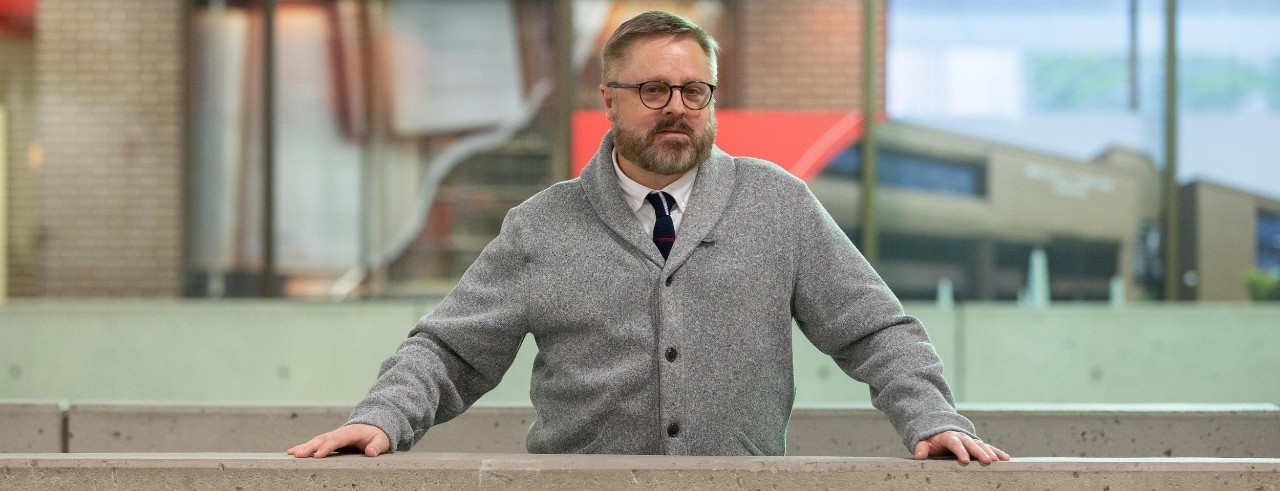
Featured image at top: UC College of Arts and Sciences Professor Jeffrey Blevins teaches in UC's Department of Journalism and the School of Public and International Affairs. Photo/Andrew Higley/UC Marketing + Brand
Related Stories
Sugar overload killing hearts
November 10, 2025
Two in five people will be told they have diabetes during their lifetime. And people who have diabetes are twice as likely to develop heart disease. One of the deadliest dangers? Diabetic cardiomyopathy. But groundbreaking University of Cincinnati research hopes to stop and even reverse the damage before it’s too late.
Is going nuclear the solution to Ohio’s energy costs?
November 10, 2025

The Ohio Capital Journal recently reported that as energy prices continue to climb, economists are weighing the benefits of going nuclear to curb costs. The publication dove into a Scioto Analysis survey of 18 economists to weigh the pros and cons of nuclear energy. One economist featured was Iryna Topolyan, PhD, professor of economics at the Carl H. Lindner College of Business.
App turns smartwatch into detector of structural heart disease
November 10, 2025

An app that uses an AI model to read a single-lead ECG from a smartwatch can detect structural heart disease, researchers reported at the 2025 Scientific Sessions of the American Heart Association. Although the technology requires further validation, researchers said it could help improve the identification of patients with heart failure, valvular conditions and left ventricular hypertrophy before they become symptomatic, which could improve the prognosis for people with these conditions.