Cancer Center research scientist named to OncoDaily’s 100 Influential Women in Oncology list
The University of Cincinnati Cancer Center’s Alique Topalian, PhD, was recently named to OncoDaily’s 100 Influential Women in Oncology list.

Alique Topalian, PhD. Photo/provided.
“...We honor the remarkable women whose dedication is transforming the landscape of cancer care,” OncoDaily said of the women named to the list. “Their work in clinical practice, research, patient advocacy, and policy continues to inspire change and drive innovation, improving the lives of people impacted by cancer around the world.”
Topalian is a research scientist in the Division of Survivorship and Supportive Services in the UC College of Medicine’s Department of Family and Community Medicine. A two-time cancer survivor, she has used her personal journey with leukemia to advocate for childhood cancer and raise awareness about bone marrow and cord blood donation.
After relapsing with acute myeloid leukemia (AML) in 2021, Topalian continued to champion for cancer patients by pursuing a master’s degree in public health and a doctorate in health promotion. As a researcher in mental health and resilience, she is dedicated to improving support for patients at all stages of cancer treatment.
“As an early career researcher and advocate in the field, to be featured alongside some of the top researchers in the world is such an incredible honor,” Topalian said of being named to the list. “Working in the field of oncology as a two-time cancer survivor puts me in a unique position to share the patient voice at the forefront of our research and clinical care.”
Topalian said community engagement, patient experience, quality of life and health care delivery are at the core of her research, advocacy and programmatic endeavors. She hopes highlighting important, but often overlooked, aspects of cancer research can help improve the care patients receive during treatment and throughout their lifespan.
We are stronger when we work together to enhance our efforts, and social media gives us the ability to connect with others working in similar areas to us so that together, we can end cancer as we know it.
Alique Topalian, PhD
“As treatment, prevention, and early screening efforts are expanding, more people are surviving cancer than ever before,” she said. “However, cancer does not end when treatment ends, and we need to ensure patients are able to thrive in their long-term survivorship.”
OncoDaily noted researchers featured on the list are “key opinion leaders to follow on social media,” and Topalian said she began to build her social media and advocacy presence in 2021 during active treatment for AML.
“Through social media, I have connected with stakeholders around the world in all sectors of oncology including patients, nonprofits, pharmaceutical companies, foundations and other academic institutions,” she said. “I think social media has made our world smaller and enhanced our ability to collaborate and build relationships in a way that was not possible before.”
Topalian said some people are shocked at her interest in advocacy work, but she sees her roles as both a researcher and advocate going hand in hand. Her role as a “cultural insider,” including through her social media presence, has made it easier to to build relationships with community members and stakeholders, she said.
“Advocating for research funding, biomarker testing and care delivery all impact the work we do in academia. Highlighting our work on a large international platform can help us grow the field of survivorship and supportive services and expand the work and recognition of our institution,” she said. “We are stronger when we work together to enhance our efforts, and social media gives us the ability to connect with others working in similar areas to us so that together, we can end cancer as we know it.”
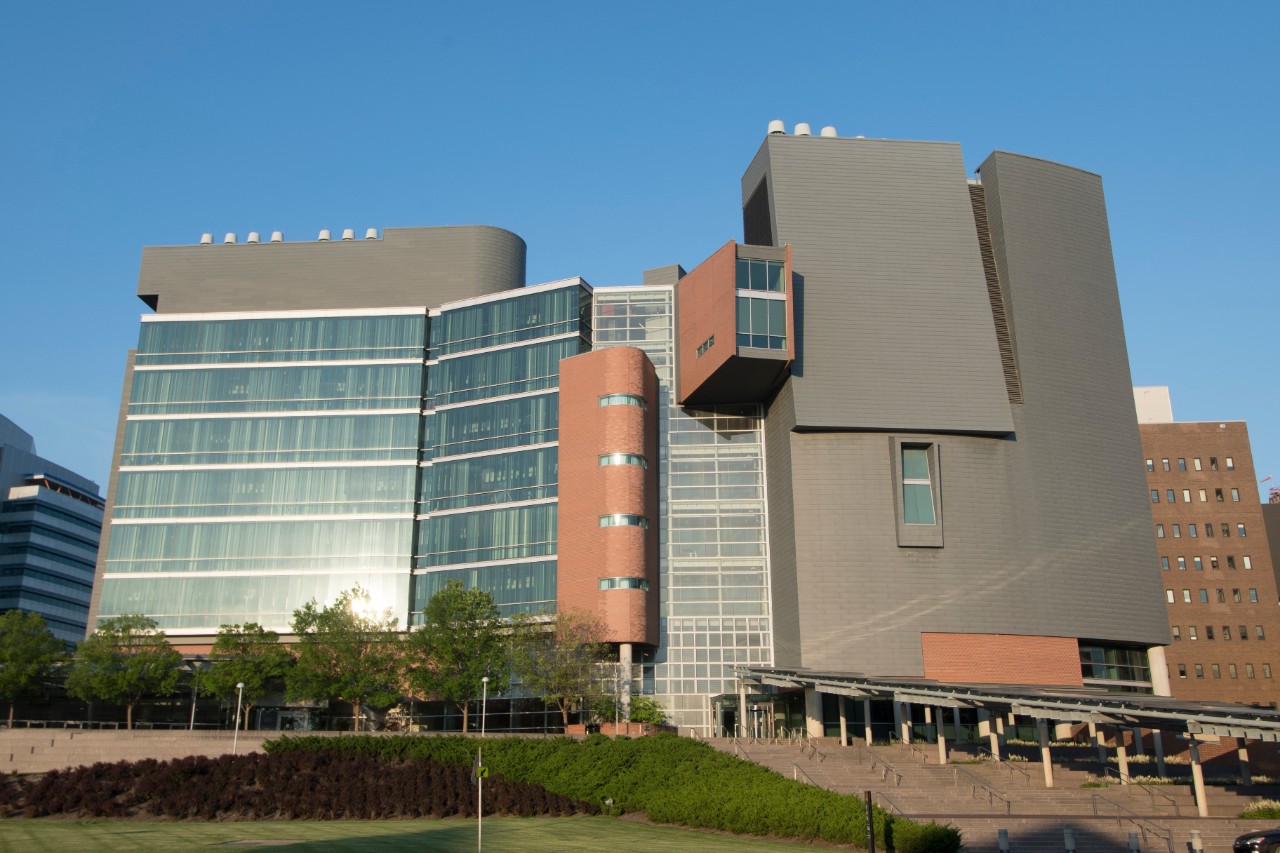
Featured image at top: Exterior of the CARE/Crawley building, home to the office of the dean of the College of Medicine. Photo/Colleen Kelley/University of Cincinnati.

Brad McElhaney
Director of Marketing, Communications & Public Affairs, University of Cincinnati Cancer Center
Related Stories
Sugar overload killing hearts
November 10, 2025
Two in five people will be told they have diabetes during their lifetime. And people who have diabetes are twice as likely to develop heart disease. One of the deadliest dangers? Diabetic cardiomyopathy. But groundbreaking University of Cincinnati research hopes to stop and even reverse the damage before it’s too late.
Is going nuclear the solution to Ohio’s energy costs?
November 10, 2025

The Ohio Capital Journal recently reported that as energy prices continue to climb, economists are weighing the benefits of going nuclear to curb costs. The publication dove into a Scioto Analysis survey of 18 economists to weigh the pros and cons of nuclear energy. One economist featured was Iryna Topolyan, PhD, professor of economics at the Carl H. Lindner College of Business.
App turns smartwatch into detector of structural heart disease
November 10, 2025

An app that uses an AI model to read a single-lead ECG from a smartwatch can detect structural heart disease, researchers reported at the 2025 Scientific Sessions of the American Heart Association. Although the technology requires further validation, researchers said it could help improve the identification of patients with heart failure, valvular conditions and left ventricular hypertrophy before they become symptomatic, which could improve the prognosis for people with these conditions.