The surprising strategies animals use to survive winter
UC biologist talks to National Geographic about how spiders and insects withstand the cold

National Geographic turned to a University of Cincinnati biologist to learn how insects and spiders survive winter's cold, snow and ice.
UC College of Arts and Sciences Professor Emeritus George Uetz told National Geographic that wolf spiders burrow into the soil or take shelter under heavy layers of leaf litter or even deep inside logs to get out of the bracing cold.
“The difference in temperature between a frozen surface of snow or ice and just a few inches below cover is often surprising,” said Uetz, a behavioral ecologist who spent his career learning about the fascinating behavior of spiders.
“Many spiders and insects are active in this ‘subnivean’ environment, which is sometimes a few degrees above freezing.”
Spiders produce no body heat of their own. Their metabolism slows when the temperatures drop.
“Even so, it’s not uncommon to see spiders and insects active on warm (winter) days,” Uetz said.
Uetz was recognized by the Animal Behavior Society for his lab's many insights into animal behavior. In his lab, Uetz pioneered the use of technology to unlock the secrets of spider behavior. For example, he discovered that spiders react to projected two-dimensional images of other spiders, which allowed him and his students to fashion many new experiments to learn more about their intricate courtship rituals.
Read the National Geographic story.
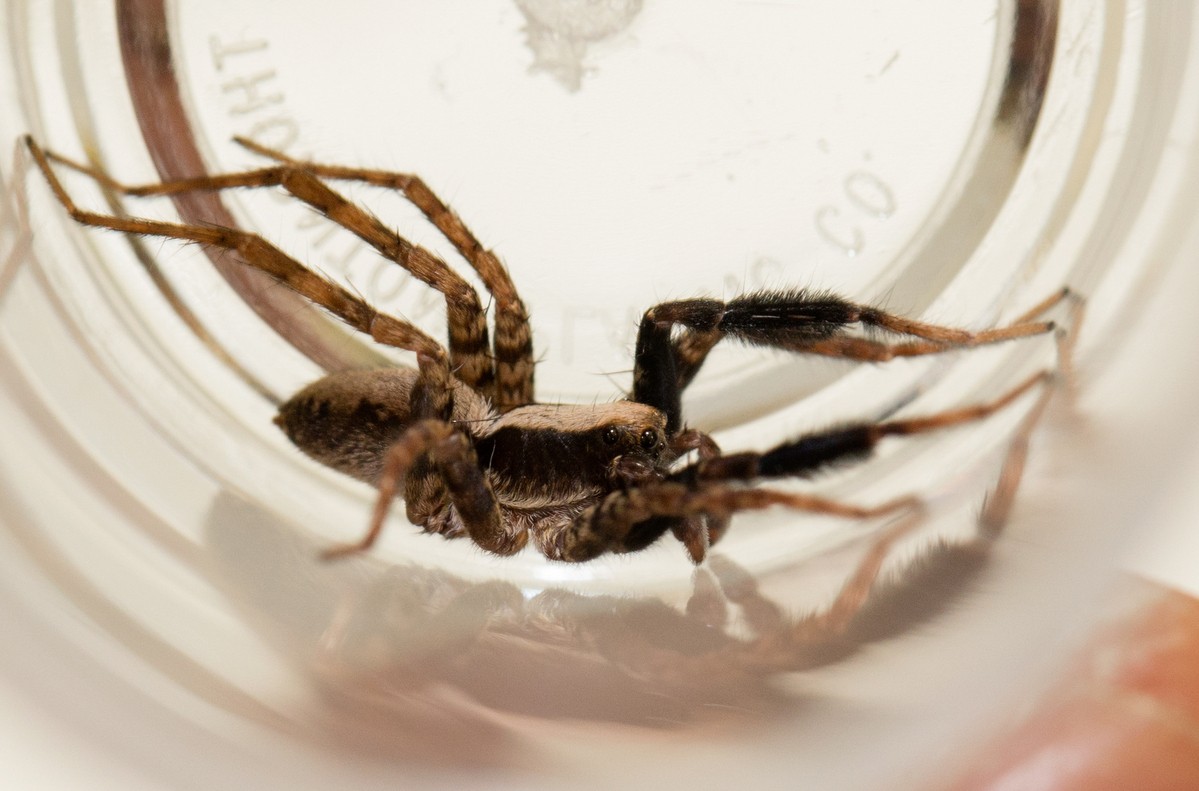
Featured image at top: A wolf spider in a UC biology lab. Photo/Joseph Fuqua II/UC

National Geographic talked to Professor Emeritus about how spiders survive the long winter. Photo/Lisa Ventre/UC
Related Stories
Sugar overload killing hearts
November 10, 2025
Two in five people will be told they have diabetes during their lifetime. And people who have diabetes are twice as likely to develop heart disease. One of the deadliest dangers? Diabetic cardiomyopathy. But groundbreaking University of Cincinnati research hopes to stop and even reverse the damage before it’s too late.
Is going nuclear the solution to Ohio’s energy costs?
November 10, 2025

The Ohio Capital Journal recently reported that as energy prices continue to climb, economists are weighing the benefits of going nuclear to curb costs. The publication dove into a Scioto Analysis survey of 18 economists to weigh the pros and cons of nuclear energy. One economist featured was Iryna Topolyan, PhD, professor of economics at the Carl H. Lindner College of Business.
App turns smartwatch into detector of structural heart disease
November 10, 2025

An app that uses an AI model to read a single-lead ECG from a smartwatch can detect structural heart disease, researchers reported at the 2025 Scientific Sessions of the American Heart Association. Although the technology requires further validation, researchers said it could help improve the identification of patients with heart failure, valvular conditions and left ventricular hypertrophy before they become symptomatic, which could improve the prognosis for people with these conditions.