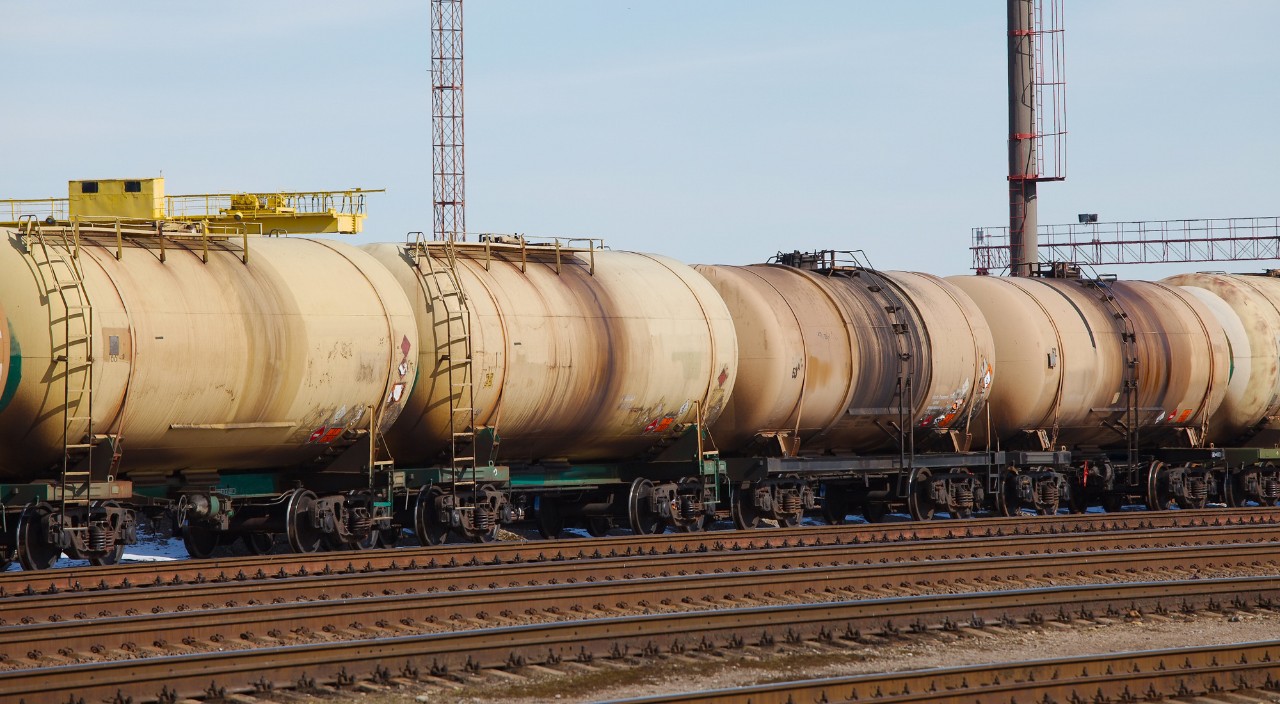
UC expert: More oil production means more leaks
Environmental studies professor talks about railcar leak that prompted evacuations

The Cincinnati Enquirer turned to an environmental studies professor to explain why Ohio has seen several high-profile rail disasters that have led to neighborhood evacuations.
Neighborhoods in southwest Ohio were evacuated as a precaution on Sept. 24 after a rail car was discovered spewing a toxic chemical called styrene commonly used in plastics.
In 2023, a train derailed outside East Palestine, Ohio, prompting evacuations after vinyl chloride spilled into the Ohio River.

UC Professor Amy Townsend-Small teaches environmental studies in UC's College of Arts and Sciences. Photo/Jay Yocis/UC
UC College of Arts and Sciences Professor Amy Townsend-Small told the Enquirer that both chemicals are byproducts of oil. She teaches in UC's School of Environment and Sustainability.
“These train cars that we see throughout Cincinnati, they’re all carrying petrochemicals,” she said.
Styrene is an organic molecule that's used in making Styrofoam and other plastics, she said.
It's considered a likely carcinogen, according to the National Research Council.
Townsend-Small said the likelihood of rail accidents increases with the increase in rail use. Ohio ranks fourth in the nation in miles of active freight rail, according to the Association of American Railroads.
And as the United States turns to greener transportation, gas and oil companies are dedicating more petrochemicals to plastics production, Townsend-Small said.
The Ohio River is home to dozens of oil, gas and petrochemical facilities.
Read the Cincinnati Enquirer story.
Featured image at top: UC Professor Amy Townsend-Small said the booming production of oil and natural gas has led to increased transportation of toxic chemicals across America's rail system. Photo/iStockPhoto
Related Stories
Sugar overload killing hearts
November 10, 2025
Two in five people will be told they have diabetes during their lifetime. And people who have diabetes are twice as likely to develop heart disease. One of the deadliest dangers? Diabetic cardiomyopathy. But groundbreaking University of Cincinnati research hopes to stop and even reverse the damage before it’s too late.
Is going nuclear the solution to Ohio’s energy costs?
November 10, 2025

The Ohio Capital Journal recently reported that as energy prices continue to climb, economists are weighing the benefits of going nuclear to curb costs. The publication dove into a Scioto Analysis survey of 18 economists to weigh the pros and cons of nuclear energy. One economist featured was Iryna Topolyan, PhD, professor of economics at the Carl H. Lindner College of Business.
App turns smartwatch into detector of structural heart disease
November 10, 2025

An app that uses an AI model to read a single-lead ECG from a smartwatch can detect structural heart disease, researchers reported at the 2025 Scientific Sessions of the American Heart Association. Although the technology requires further validation, researchers said it could help improve the identification of patients with heart failure, valvular conditions and left ventricular hypertrophy before they become symptomatic, which could improve the prognosis for people with these conditions.