Federal agency warns about foreign election disinformation
A UC professor talks about ways to sort fact from fiction on social media

Local 12 talked to a University of Cincinnati journalism and political science professor about a report by the U.S. Department of Homeland Security warning that foreign countries are trying to meddle with November's election using disinformation on social media.
While misinformation is false or inaccurate information shared inadvertently, disinformation is false information shared purposely to deceive, often for ulterior motives. The U.S. State Department says Russia is using social media and its state-run media to erode public faith in the integrity of democratic elections in the United States and 100 other democratic nations around the world.
Russia interfered with the 2020 election, according to U.S. intelligence, and is trying to meddle again this year. In September federal prosecutors said Russia secretly paid a company employing popular right-wing influencers to undermine the war in Ukraine.
The U.S. Justice Department this year charged three Iranian hackers with compromising election campaign email accounts. And China, too, has launched a covert online campaign to deceive American voters on social media, according to the Council on Foreign Relations.
UC College of Arts and Sciences Professor Jeffrey Blevins told Local 12 that voters can look for clues about a social media post's veracity such as the credibility of a source.
“Are there local outlets that are reporting it? Are there national outlets?” Blevins said.
Likewise, social media is becoming inundated with images manufactured with artificial intelligence, so everyone should greet potentially inflammatory posts with a healthy dose of skepticism, he said.
“It's easy to throw misinformation out there, fake images, especially if they're outrageous. It's very easy to get things to go viral,“ he told Local 12.
Blevins teaches journalism and political science in UC's School of Public and International Affairs. He is author of the new book “Social Media and Digital Politics: Networked Reason in an Age of Digital Emotion.”
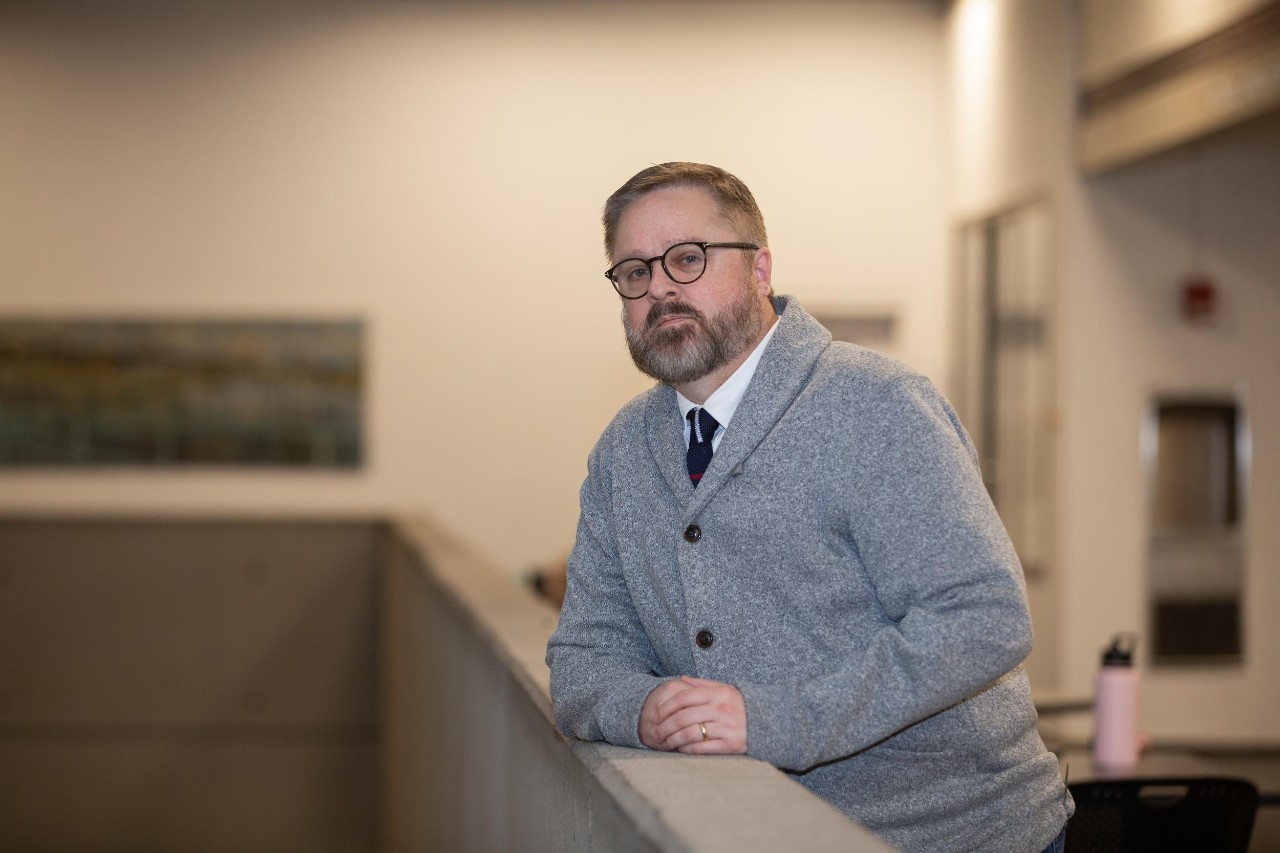
Featured image at top: UC Professor Jeffrey Blevins talked to Local 12 about ways voters can guard against being duped by disinformation on social media. Photo/Andrew Higley/UC Marketing + Brand
Related Stories
Sugar overload killing hearts
November 10, 2025
Two in five people will be told they have diabetes during their lifetime. And people who have diabetes are twice as likely to develop heart disease. One of the deadliest dangers? Diabetic cardiomyopathy. But groundbreaking University of Cincinnati research hopes to stop and even reverse the damage before it’s too late.
Is going nuclear the solution to Ohio’s energy costs?
November 10, 2025

The Ohio Capital Journal recently reported that as energy prices continue to climb, economists are weighing the benefits of going nuclear to curb costs. The publication dove into a Scioto Analysis survey of 18 economists to weigh the pros and cons of nuclear energy. One economist featured was Iryna Topolyan, PhD, professor of economics at the Carl H. Lindner College of Business.
App turns smartwatch into detector of structural heart disease
November 10, 2025

An app that uses an AI model to read a single-lead ECG from a smartwatch can detect structural heart disease, researchers reported at the 2025 Scientific Sessions of the American Heart Association. Although the technology requires further validation, researchers said it could help improve the identification of patients with heart failure, valvular conditions and left ventricular hypertrophy before they become symptomatic, which could improve the prognosis for people with these conditions.