Bats face an existential crisis, a new study offers hope
UC ecologist and bat expert Joesph Johnson weighs in on a new bat study featured in Salon

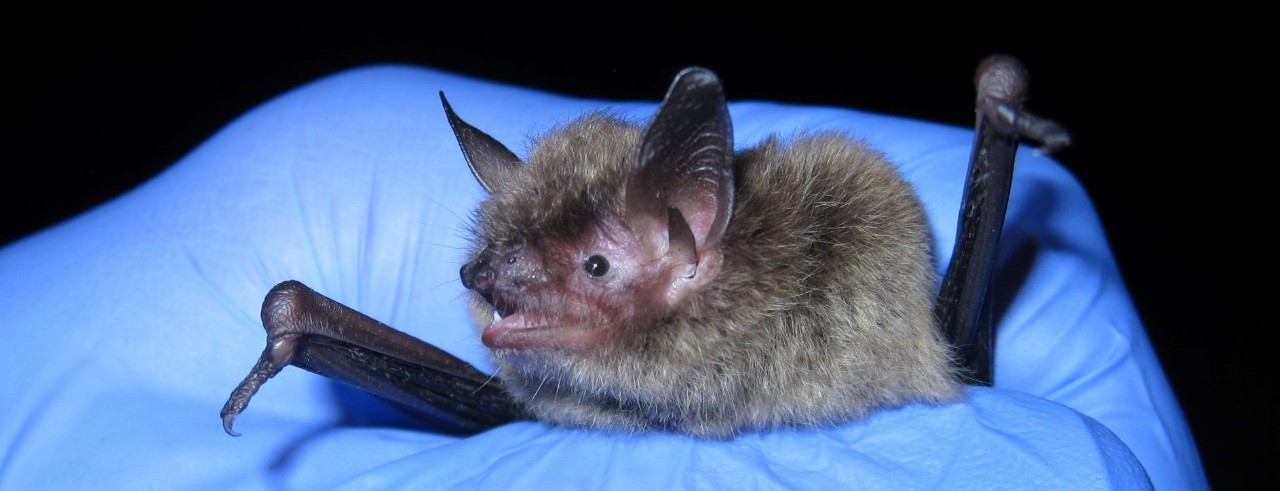
Bats are an essential part of the ecosphere that currently need human protection, says Joseph Johnson, an ecologist and assistant professor at the University of Cincinnati who studies the little brown myotis (Myotis lucifugus) — an endangered bat species in Ohio.
Johnson was recently interviewed by Salon for his opinion on a new bat study out of the University of Wisconsin–Madison. The study found that the fungal disease (called White-nose syndrome, which has been culling several species of bat populations since 2018) can be detected at the cellular level and is not as destructive when bats are active.
Calling the study “an exciting piece of work,” Johnson says it is also important to also impart the significance of the dwindling bat populations to lay persons, as bats tend to roost in tress, attics and barns during the spring when they give birth.
"Many people have such maternity roosts on their property. And it is here that populations grow each year and provide the possibility of recovery from [white-nose syndrome],” he says.
Johnson, in collaboration with the Ohio Department of Natural Resources, is the recipient of a grant from USFW to continue a 2021 bat project at UC, which he participated in while on faculty at Ohio University.
He joined UC’s School of Information Technology, in the College of Education, Criminal Justice and Human Services, in the fall of 2022.
Featured image at top of little brown myotis by Keith Christenson.
Impact Lives Here
The University of Cincinnati is leading public urban universities into a new era of innovation and impact. Our faculty, staff and students are saving lives, changing outcomes and bending the future in our city's direction. Next Lives Here.
Related Stories
Sugar overload killing hearts
November 10, 2025
Two in five people will be told they have diabetes during their lifetime. And people who have diabetes are twice as likely to develop heart disease. One of the deadliest dangers? Diabetic cardiomyopathy. But groundbreaking University of Cincinnati research hopes to stop and even reverse the damage before it’s too late.
Is going nuclear the solution to Ohio’s energy costs?
November 10, 2025

The Ohio Capital Journal recently reported that as energy prices continue to climb, economists are weighing the benefits of going nuclear to curb costs. The publication dove into a Scioto Analysis survey of 18 economists to weigh the pros and cons of nuclear energy. One economist featured was Iryna Topolyan, PhD, professor of economics at the Carl H. Lindner College of Business.
App turns smartwatch into detector of structural heart disease
November 10, 2025

An app that uses an AI model to read a single-lead ECG from a smartwatch can detect structural heart disease, researchers reported at the 2025 Scientific Sessions of the American Heart Association. Although the technology requires further validation, researchers said it could help improve the identification of patients with heart failure, valvular conditions and left ventricular hypertrophy before they become symptomatic, which could improve the prognosis for people with these conditions.