Antiretroviral abacavir linked with cardiovascular events in REPRIEVE trial
MedPage Today highlights UC-led trial analysis

People with HIV who took the antiretroviral drug abacavir (Ziagen) had an increased risk of major adverse cardiovascular events (MACE), according to an exploratory analysis of the REPRIEVE trial presented by the University of Cincinnati's Carl Fichtenbaum, MD, at the International AIDS Conference.
MedPage Today highlighted the findings that past use of abacavir increased the risk of MACE by 50% and current use increased MACE risk by 42%.
"Hopefully, with newer antiretrovirals and longer-acting therapy, perhaps this will become less and less of a problem as we're able to shift away and use other things to control HIV replication," said Fichtenbaum, professor in the Division of Infectious Diseases in the UC College of Medicine.
"Since there are many other options available — certainly in high-income countries — I think we have to consider the fact that the most important thing is controlling HIV replication, but that where we can, it may be helpful to avoid the use of abacavir," Fichtenbaum continued.
Read the MedPage Today article.
U.S. Pharmacist also highlighted the research. Read the U.S. Pharmacist article.
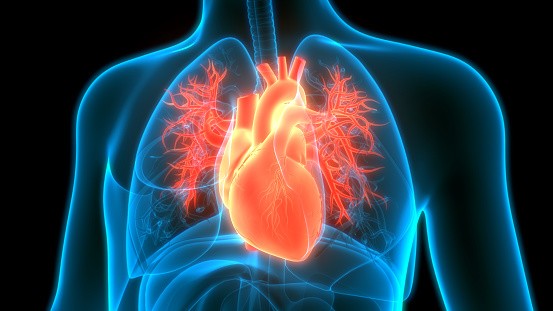
Featured photo at top of illustration of cardiovascular system. Photo/magicmine/iStock.
Related Stories
Sugar overload killing hearts
November 10, 2025
Two in five people will be told they have diabetes during their lifetime. And people who have diabetes are twice as likely to develop heart disease. One of the deadliest dangers? Diabetic cardiomyopathy. But groundbreaking University of Cincinnati research hopes to stop and even reverse the damage before it’s too late.
Is going nuclear the solution to Ohio’s energy costs?
November 10, 2025

The Ohio Capital Journal recently reported that as energy prices continue to climb, economists are weighing the benefits of going nuclear to curb costs. The publication dove into a Scioto Analysis survey of 18 economists to weigh the pros and cons of nuclear energy. One economist featured was Iryna Topolyan, PhD, professor of economics at the Carl H. Lindner College of Business.
App turns smartwatch into detector of structural heart disease
November 10, 2025

An app that uses an AI model to read a single-lead ECG from a smartwatch can detect structural heart disease, researchers reported at the 2025 Scientific Sessions of the American Heart Association. Although the technology requires further validation, researchers said it could help improve the identification of patients with heart failure, valvular conditions and left ventricular hypertrophy before they become symptomatic, which could improve the prognosis for people with these conditions.