Why are younger people getting cancer?
Cancer Center expert featured in U.S. News & World Report article

Overall colorectal cancer deaths and diagnoses are declining, but researchers continue to see rates increasing among young people.
“Colorectal cancer is now the number one cause of cancer death in people ages 20 to 49,” Ian Paquette, MD, University of Cincinnati Cancer Center physician researcher, professor and interim director in the Section of Colon and Rectal Surgery in UC's College of Medicine, told U.S. News & World Report. “There’s a lot of ongoing research in colorectal cancer, especially around the microbiome and the balance of bacteria in the gut, to better understand what’s driving this increase.”
Research is ongoing to identify the exact cause of the increase among younger adults, but risk factors include heavy alcohol consumption, a lack of exercise, obesity, tobacco use and a diet low in fruits, vegetables and milk.
“The body mass index of the average American has been slowly increasing which is a factor that increases the risk of early-onset cancer,” Paquette said. “Diets high in red meats, processed foods and the use of alcohol predisposes younger people to cancer.”
Effective strategies to lower your risk of colorectal cancer include:
- Avoiding tobacco
- Exercising regularly
- Getting screened regularly
- Limiting alcohol consumption
Read the U.S. News & World Report article.
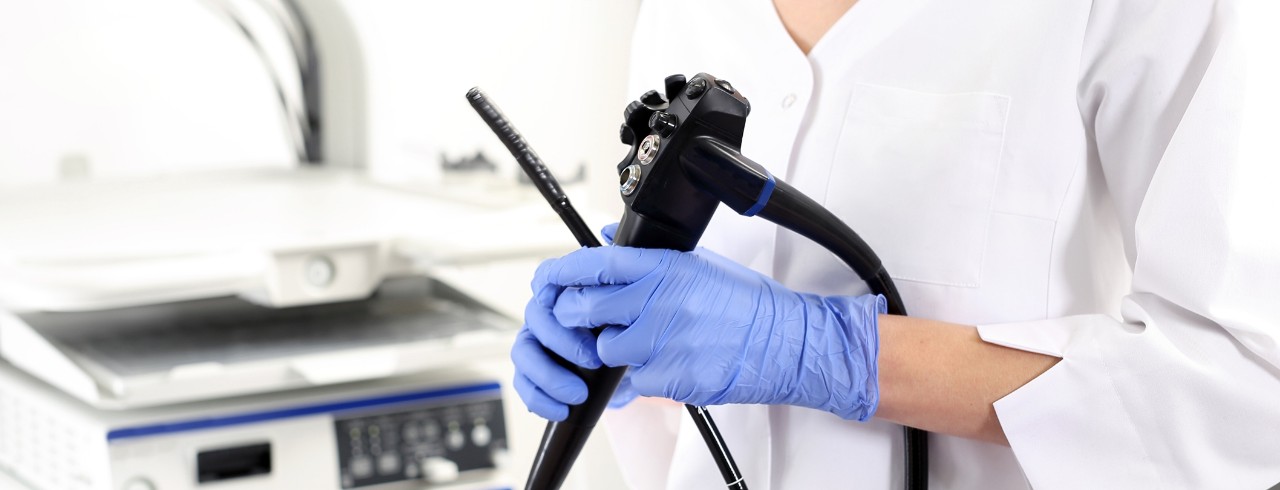
Featured photo at top of a medical professional holding a colonoscope. Photo/robertprzybysz/iStock.
Related Stories
Sugar overload killing hearts
November 10, 2025
Two in five people will be told they have diabetes during their lifetime. And people who have diabetes are twice as likely to develop heart disease. One of the deadliest dangers? Diabetic cardiomyopathy. But groundbreaking University of Cincinnati research hopes to stop and even reverse the damage before it’s too late.
Is going nuclear the solution to Ohio’s energy costs?
November 10, 2025

The Ohio Capital Journal recently reported that as energy prices continue to climb, economists are weighing the benefits of going nuclear to curb costs. The publication dove into a Scioto Analysis survey of 18 economists to weigh the pros and cons of nuclear energy. One economist featured was Iryna Topolyan, PhD, professor of economics at the Carl H. Lindner College of Business.
App turns smartwatch into detector of structural heart disease
November 10, 2025

An app that uses an AI model to read a single-lead ECG from a smartwatch can detect structural heart disease, researchers reported at the 2025 Scientific Sessions of the American Heart Association. Although the technology requires further validation, researchers said it could help improve the identification of patients with heart failure, valvular conditions and left ventricular hypertrophy before they become symptomatic, which could improve the prognosis for people with these conditions.